
Michael Fowler is the author of the DS HUNTER KERR INVESTIGATIONS series.
In 2010, after 32 years as a cop, and an even longer time as a passionate writer and lover of crime fiction, Heart of The Demon — the first in the DS Hunter Kerr series — materialised as the book I always told myself I could write.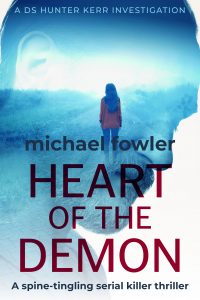
It is inspired by a true crime event. As a Detective Sergeant, I was following up information in relation to a girl who had been missing for a number of years, and much of her previous history was recorded on her original missing report that had been filed away and stored in the basement at Barnsley Police station.
Whilst seeking it out, I came across a large cardboard box, which, upon rooting through, I found it contained the court file and crime scene photos for a man called Peter Pickering, who was dubbed ‘The Beast of Wombwell,’ and I couldn’t resist rummaging through the contents to get an insight into his crimes.
Peter Pickering was first convicted of attacking two schoolgirls in 1966 and was jailed for six years.
In 1972, five months after his release, he abducted 14-year-old schoolgirl Shirley Ann Brody in his home town of Wombwell, near Barnsley, drove her to secluded woodland, where he raped her and stabbed her while wearing yellow washing-up gloves — a detail that gave rise to his other tabloid nickname, the “maniac in the marigolds”.
Following that murder he was locked up in a psychiatric hospital, but it was always believed he had committed more attacks and murders, and he was interviewed by detectives on numerous occasions over several decades. The focus of those interviews were the murders of 14-year-old Anne Dunwell, from Rotherham, in 1964, and 14-year-old Elsie Frost, from Bradford, in 1965.
He refused to cooperate. However, following another investigation, detectives found evidence linking him to the rape of a Sheffield woman, committed just weeks before he abducted and murdered Shirley Ann Brody, and last year, at the age of 80, he was convicted of that rape.
Early this year Pickering died, taking his secrets to the grave. The finding of the Peter Pickering case file in Barnsley Police Station basement became a light-bulb moment for me as a writer, and has not only provided some of the background for Heart of the Demon, but has also inspired another of my Hunter Kerr novels, Shadow of The Beast.
Michael Fowler is the author of the DS HUNTER KERR INVESTIGATIONS series.
Click here to order HEART OF THE DEMON now!
On Tuesday we attended the annual autumn Independent Publishers’ Guild conference, which is a great chance for us to find out more about the latest developments in the industry, get some ideas and inspiration for our own practices, and catch up with old friends. Here are our highlights from the day!
The conference opened with a keynote speech from serial entrepreneur Sam Conniff Allende, the author of self-help book Be More Pirate. He shared his thoughts on the importance of rule-breaking: challenging systems and taking risks to effect positive change and drive success. Sam also compared Golden Age pirates with modern entrepreneurs – in terms of their powerful branding and shrewd tactics!
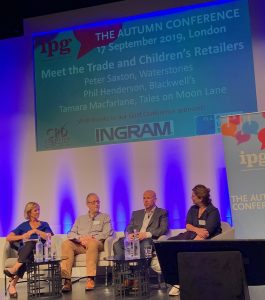
Booksellers Peter Saxton, Phil Henderson and Tamara Macfarlane
A talk on the importance of fresh branding and operations was led by Stephen Page of Faber and Faber, Nicola Usborne of Usborne Publishing, and Chris Bennett of Cambridge University Press. Each showed how developing modern-looking visual marketing campaigns, analysing previous successes and failures, and maximising the potential of their backlists keep their businesses moving forward.
A trio of trade and children’s retailers – Peter Saxton of Waterstones, Phil Henderson of Blackwell’s and Tamara Macfarlane of Tales on Moon Lane – brought us up to date on the latest trends in bookselling. A particularly welcome development is a surge in the popularity of books celebrating women in non-gender-stereotypical roles and inspirational stories for young girls.
Jeremy Yates-Round of Haynes Publishing showed how he keeps his business agile in a tough climate. Techniques included humorous and imaginative marketing campaigns, both licensing and being licensed by external brands, and offering customers different platforms to access content (e.g. via online apps).
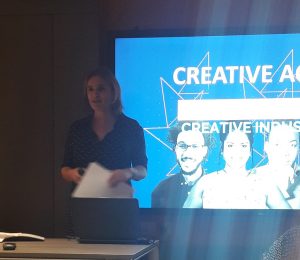
Josie Dobrin of Creative Access
Josie Dobrin of Creative Access and Rik Ubhi of Zed Books led an important discussion on how publishers can attract, welcome and maintain a diverse workforce. Practical tips for recruiters included undertaking unconscious bias training, checking recruitment data to see at what point in the selection process BAME candidates are excluded (and working to fix the filtering systems so that this happens less frequently), avoiding the ‘quick hire’, removing unnecessarily high barriers for entry-level jobs, and making existing BAME hires feel safe, listened to and valued.
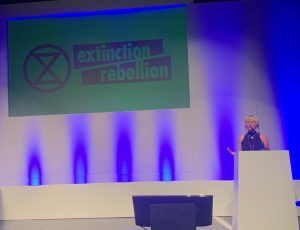
Claire Farrell, Extinction Rebellion co-founder
Clare Farrell, the co-founder of Extinction Rebellion (XR) – a climate change mitigation movement – gave a rousing speech on the realities of the climate emergency and the ways in which XR is putting pressure on governments to instigate action on a wider scale. She also explained how the publishing sector can take its own stand via actions as simple as using recycled paper for all books.
The conference wrapped up with a surprise singing lesson from author and musician James Sills – good fun for all!
On Saturday, Amy and I travelled to York to celebrate the winner of the RNA’s Joan Hessayon Award.
The Joan Hessayon Award is for a debut author who has had their book accepted for publication after passing through the Romantic 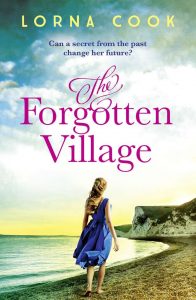 Novelists’ Association New Writers’ Scheme.
This year’s shortlist of fifteen included sweeping wartime romances, uplifting stories of self-discovery, and intriguing mysteries.
Our editorial director, Amy Durant, judged the shortlist alongside RNA Chair Alison May, Vice Chair Imogen Howson, and Simon & Schuster’s Sara-Jade Virtue.
This year’s winner is The Forgotten Village by Lorna Cook: a story of hope, new beginnings and unlooked-for love. Cook’s debut novel intertwines two love stories: one set in 2018, and one set in 1943.
In the present, twenty-eight-year-old Melissa is stuck on a lacklustre holiday in Dorset, with a boyfriend who seems more interested in surfing than working on their stale relationship. On a whim, she visits the nearby village of Tyneham, which was evacuated and closed during WW2 but is now open to the public. There she runs into Guy, a charming celebrity historian. Intrigued by a seventy-five-year-old photograph of Veronica Standish — the long-suffering wife of Tyneham’s tyrannical nobleman — Melissa enlists Guy’s help to find out more about her. They soon find themselves untangling a decades-old mystery to discover the fate of Veronica, her husband, and her secret lover.
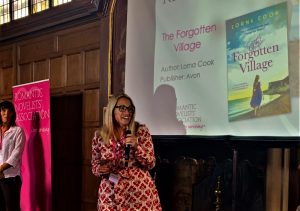
Joan Hessayon Award winner Lorna Cook
As well as skilfully navigating and developing two romantic plots, Cook should be praised for her deft interweaving of historical detail, her strong sense of voice and character, and her sensitive handling of one of the book’s more difficult themes: domestic abuse.
We would like to send a huge congratulations to Lorna — and to all of the authors who participated, and managed to overcome the huge hurdle of getting a publishing deal!
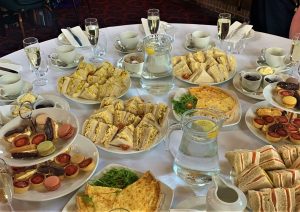
Afternoon tea!
As well as indulging in a wonderful Afternoon Tea before the ceremony, we also had the chance to catch up with two of our authors: Ros Rendle and Natalie Kleinman, both of whom have fabulous romantic fiction forthcoming with Sapere Books.
Ros’ Strong Sisters series will explore family relationships, rivalries, and love. Natalie’s Regency romances will feature spirited heroines, determined to succeed against the odds.
Image credits:
The Forgotten Village by Lorna Cook, published by Avon in 2019.
Featured image: Photo by Brigitte Tohm on Unsplash.
Hi Elizabeth! Welcome to the Sapere Books blog!
Elizabeth Bailey is the author of THE LADY FAN MYSTERY SERIES – romantic Regency crime novels, and THE BRIDES BY CHANCE REGENCY ADVENTURE SERIES.
Can you tell us a little a bit about what first got you interested in writing?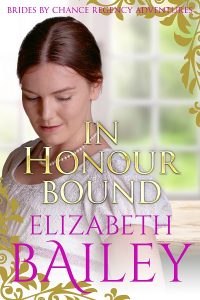
I can’t think of a time I didn’t write. I dabbled for most of my young and adult life, but I was in my thirties when I became a member of a co-operative writing group with the idea of sending out each other’s work. I wrote several short stories and then decided to write a historical romance, a genre I had been reading from a child beginning with the novels of Georgette Heyer. That book, though it never saw the light of day, was the turning point. I loved writing it and felt I had at last found my true metier. I’ve been writing fiction ever since.
Do you have set writing times?
Mostly I write my first draft early morning in bed after I’ve had my tea. If I can get between 500 to 1500 words written, I feel I’m making progress. I try to get it all down without research, leaving notes to myself within the text where I need more data. The murder or where it happens, I will usually check out before I start, unless I add something new and have to go and find out about it before I can get on. I can’t start at all until I have names of the main characters and a general idea of what is likely to happen in the first couple of chapters. I actually don’t usually know who the murderer is when I begin. Nothing like making life interesting for yourself!
Seeing as you write historical fiction, do you find you have to do a lot of research?
These days with many years of historicals of the same period behind me I am so familiar with the time that my research is mostly for specifics. I have many books collected over the years which furnish me with the detail I need. My main focus of research is in the area of the murder and the internet is a mine of information on the subject. You can find contemporary sources relating to anatomical matters, which means I can be as accurate as possible according to knowledge of the era. However, I do turn to current material for exact descriptions of what happens, for example, when someone is bludgeoned, knifed or otherwise injured. All of which is fascinating to read about.
What part of the writing process do you find most difficult?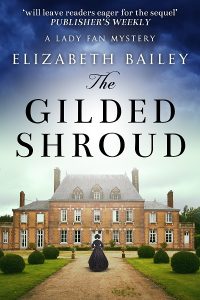
Struggling through against the odds when life intervenes. This happens and you just have to deal with it. It’s virtually impossible in this day and age to shut yourself away in an ivory tower to get your first draft done. I wrote a short book in a week once on a holiday. Another time I forced through 5000 words a day to get a novel done. But it’s not optimum. It doesn’t allow time for the filtering process that builds the minutiae of the story and generates ideas you hadn’t thought of until some trigger sets them off. Working steadily every day seems to build a book better, but it does mean you are subject to interruptions and getting back into it after a break is the hardest thing of all.
Do you find your characters start to control their own storylines?
Yes, they become totally real, and some characters are completely independent and go off in unexpected directions. The thing is, you invest them with life and then they become real people (albeit in a sort of ghost form in your head). They start behaving according to their character and you might have no idea of who they really are until they do this. Ottilia is a case in point. She was supposed to be a retiring female, letting Francis take the lead. Not a bit of it. She marched into centre stage the minute I set her on the page and stayed there. In the book I’m currently writing, I had a peripheral character take off in much the same way and seize quite a chunk of the story from Ottilia. Experience has taught me to run with it. I have a great belief in the Inner Writer knowing a great deal more than I do about the developing story. It really is like being two people sometimes.
Do you ever feel guilty about killing off characters in your crime series?
Apart from the initial dead body, I hesitate. The first death is the spur for the story, so that’s all right. We usually don’t know that person. But it’s very hard to kill off someone who has become a character in their own right. But that’s good, I think. It transfers to my heroine, who is allowed to have an emotional reaction to such a death.
Do you find it hard to know when to end a story?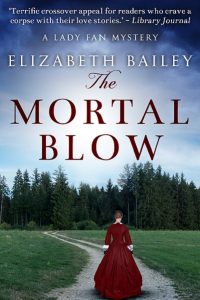
Usually the story comes to a natural conclusion. Then it’s just a matter of tying up loose ends and giving my lead characters a chance to mull and make decisions of their own. I like to keep the denouement fairly short. When the story is finished, that’s it. And there’s a maxim – always leave the reader wanting more. If you ice the cake too richly, they might be too satisfied to want another slice.
Which book by another author do you wish you had written?
Oh, that’s a tough one. For sheer quality perhaps, another long-time favourite, In This House of Brede by Rumer Godden. So subtle, engaging, insightful and just beautifully written. But then I would love to write like PG Wodehouse whose Jeeves and Bertie books I adore. I’ve had a go in a play I wrote for school when I was teaching drama, and I have a short story out in a similar style (To Catch a Thief). Or Terry Pratchett with such a discerning eye for the human condition.
Tell us something surprising about you!
When I was a teenager, I won two cups for target shooting with a 303 rifle. Now I couldn’t hit a haystack!
We (Amy and Natalie) will be at the 2019 Joan Hessayon Award Presentation, run by the Romantic Novelists’ Association.
The award is for a debut author who has had their book accepted for publication after passing through the Romantic Novelists’ Association New Writers’ Scheme.
This year our editorial director, Amy Durant, served as a judge.
The ceremony takes place on 14th September, and you can find out more here.


Laxton Village is believed to be the last remaining example in Europe where the Open Field System and Court Leet have been preserved. It boasts a unique 1,845 acre heritage estate — including 525 acres of unenclosed open fields — produces in excess of £230,000 per annum, and is of significant educational and curatorial interest. The village is now on sale for £7m.
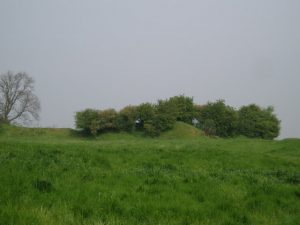
Castle mound: the site of an 11th-century castle in Laxton.
THE ESTATE
The Laxton Estate is situated in and around the picturesque village of Laxton, surrounded by rolling countryside. The village is linear and unusual in appearance, comprising 17 traditional red brick farmsteads in addition to a village pub and visitor centre. The majority of the estate is farmed under Agricultural Holdings Act (AHA) and Farm Business Tenancy (FBT) agreements. Each farm tenant benefits from a home farmstead and land let under AHA and/or FBT and a right to farm land within 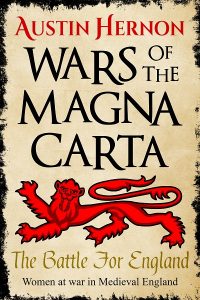 the open field system as administrated by Laxton Court Leet, an ancient manorial Court with legal status as a court of Law.
You can find out more about the history of Laxton from the Wars of the Magna Carta series. The first instalment, The Battle For England, features Laxton Castle, domain of the brave heroine Matilda.
Image credit:
Castle mound at Laxton, Nottinghamshire. Source: Wikipedia, contributed by Robert Goulden. Used under Creative Commons CC BY-SA 2.0 licence.
When did you first start writing? Did a specific event encourage you to start?
When I was six years old, I saw a TV programme about the Blitz, which as you can imagine was pretty alarming. I wrote a poem about it.
How much research do you do?
I am fascinated with the Victorian era and do a lot of research to try and get the details right. I read contemporary newspapers and journal articles, biographies and medical works. I study maps, census returns, directories, legislation, photographs, and art. I have about a hundred books just on the history of spiritualism.
Tell us about where you write / your writing habits.
I work from home and have a room which is my office. I don’t work set hours; even when I am doing the household chores, my mind is still working on my latest project or planning a new one.
What part of the writing process do you find most difficult? Starting, knowing when you’ve done enough research, the ending?
When I begin a project, I know where I am starting from and where I will end up, but I have to link the two in a way that makes sense. Every time I pause in order to find that natural link, I have to remind myself that I found it last time. It’s worked so far.
How real do your characters become and do they ever seem to control their own storyline?
They feel very real to me, and because I let themes develop naturally in my mind often the characters do things that I hadn’t necessarily planned but emerge from their personalities and situations, so sometimes they do take me by surprise.
Do you ever feel guilty about killing off characters or do you relish it?
Neither, but it is sometimes sad. It’s very hard writing about a character who I know is about to become a murder victim.
Do you find it hard to know when to end a story?
No, I know when it feels right to me.
What are you working on?
I am editing a new volume in the Notable British Trials series about the trial of the Mannings in 1849. I am also developing the plot for the fifth Mina Scarletti book, to be entitled His Father’s Ghost.
What are you reading right now?
Munich by Robert Harris.
What is your favourite book? Who is your favourite character?
I have read thousands of books and it is impossible to pick one!
What book do you wish you had written?
See above.
Do you love any genres/books that are very different from what you write?
Most of my reading is non-fiction: history, biography, true crime, psychology. In crime fiction, I tend to read books with modern settings or if historical, a very different time period from the one I write about.
Tell us something surprising about you!
I prefer pickles to sweets!
When did you first start writing? Did a specific event encourage you to start?
There has never been a time when I didn’t write. As a child, my idea of a perfect game was to tell a story to my teddies, then write it down. It was never a conscious decision, it was part of me then and it still is now.
How much research do you do?
It entirely depends on the story. For a while I wrote film scripts, mostly comedies, and they didn’t need any research. Likewise my first few attempts at novels (still languishing unpublished!). One story, The Music Makers took all its chapter heading from the wheel of the Major Arcana cards in the Tarot pack. Although I was a fairly proficient Tarot reader back then, I did research other, wider meanings, for the cards to add extra depth to the main character’s adventures.
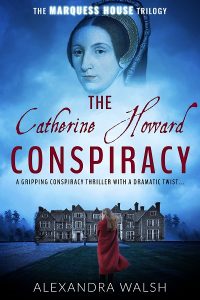
The Marquess House Trilogy, which has a split timeline comprising of a present day strand and a historical section has taken years of research. Book one: The Catherine Howard Conspiracy was actually not my intended starting place. The big reveal that appears in book two: The Two Elizabeths was the kernel of the idea for this story and, over the years, I have written many different versions of it trying to make it work. However, none of them were quite right and after several years of juggling work, life and researching Elizabethan England I realised the only way I’d be able to capture this monster of a story on paper was to split it into three separate tales, rather than trying to cram it into one book. Three books, one for each piece of jewellery: two ruby rings and a silver locket.
It was actually devastating because it meant starting again from the beginning. In true frustrated writer style, rather than face this unhappy truth, I wrote a comedy instead, entitled The Patron Saint of Married Women, which was set in the present day and needed very little research. In. Your. Face. History.
In the end, I caved in and began researching Henry VIII’s fourth and fifth brides. I also made the alarming decision to dump my two main characters: Isabella and Oliver. I never liked them much anyway. The name Perdita had been running around my head for a while. From reading Dodie Smith’s One Hundred and One Dalmatians when I was younger, I knew it meant Little Lost One and somehow this seemed appropriate for my main character. Then one morning, I woke up with the question: “Who is Piper?” running around my head. Immediately, I knew she was Perdita’s twin sister and something clicked into place.
The very very first version of this story featured Isabella (now gone) mourning her twin sister who had died under mysterious circumstances on an archaeological dig after she had unearthed a silver locket. The idea was that she had been murdered by MI One Elite. Strangely, the nasty old Watchers were there from the beginning, as was Mary Fitzroy, James Rivers and Alistair Mackensie. Jerusalem was always around too, although it took me a while to settle on its true nature. Warren Dexter was another one who survived the character cull. However, it wasn’t until Perdita and Piper popped up that the story suddenly opened up before me. Then, Kit arrived. He had been through a number of names and he finally found an identity because I quite fancied Kit Harington who plays Jon Snow in Game of Thrones. Yes, it’s an embarrassing admission but he was the inspiration for Kit and once he had his name, the last piece of the puzzle was in place and the story flooded out.
I’ve long since moved past my toe-curling crush, though. Ahem.
Anyway, in answer to your question, at present, several months of research and writing of detailed timelines. By gathering all the information into one huge chart, it’s easier to write fluently and present a more rounded and believable version of my historical periods.
Tell us about where you write / your writing habits.
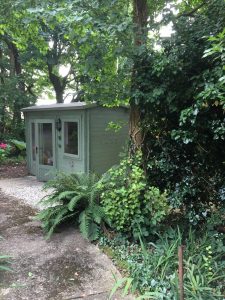
I have a purpose built writing hut in the garden with insulation and a heater. I write every day and, at the moment, am lucky enough to be able to treat it like my day-job.
What part of the writing process do you find most difficult? Starting, knowing when you’ve done enough research, the ending?
It varies. I love the lure of the blank page. Every piece of paper is an adventure waiting to unfold. Knowing when you’ve done enough research is a tricky one but there comes a point where you have to plunge in and see what happens. I don’t like writing endings, not because I don’t like them but because it means you’re saying goodbye to your characters.
How real do your characters become and do they ever seem to control their own storyline?
Very real. They all seem to end up taking over their own storylines. Sometimes, I even argue with them. Although perhaps I shouldn’t have admitted that…
Do you ever feel guilty about killing off characters or do you relish it?
Never! I worry about killing them off for different reasons. What about if I suddenly realise I need them again but they died in Chapter Four?!! EEEKKK!
Do you find it hard to know when to end a story?
Usually I know the end before I begin. The Marquess House trilogy has proved more troublesome though because in my head, it’s one long story, so realising I had to make three endings, instead of just the one at the very very end of book three, has taken a while to adjust to.
What are you working on?
Part three of The Marquess House trilogy. It’s working title was always Prince Oliver but I don’t think this works any more. The title will arrive when its ready.
What are you reading right now?
The Moon Sister by Lucinda Riley. It’s part five of her Seven Sisters series. I only recently discovered these books but I’m really enjoying them.
What is your favourite book? Who is your favourite character?
This is a tough one. How do you choose between so many friends? And also, do I go for something literary and make it look as though I’m very high brow or do I tell the truth?!
For a long time now, my favourite book has been Harry Potter and the Prisoner of Azkaban. I was going through quite a tough time when I began reading these books and, not only was Hogwarts a wonderful place to hide, I was awed by J K Rowling’s brilliance. Goblet of Fire had just been released, the films had been cast and the storm of Harry Potter was building. I never like making judgements on phenomena unless I’ve read/seen/visited them, so I bought the books. Philosopher’s Stone hooked me from page one. Chamber of Secrets worried me – who was Dobby? Was he good or bad? – but when I read the third book with its fabulous twist with Scabbers and the appearance of Sirius Black who had first been mentioned in chapter one of book one, I realised this was more than a series of children’s books. This was truly magical. I’ve asked for help at Hogwarts many times and it’s always been given.
My favourite character is Hermione Granger. Although Harry is pretty amazing too.
I also love Ballet Shoes by Noel Streatfeild and Moll Flanders by Daniel Defoe.
What book do you wish you had written?
Apart for the Harry Potter series? The God of Small Things by Arundhati Roy or The Passion by Jeanette Winterson.
Do you love any genres/books that are very different from what you write?
I try to read a broad cross-section of genres. If a story is well-written, it’ll grip you no matter what the genre. I try never to suffer from literary snobbery. Every book is worth trying, you may not make friends there but you don’t need to be rude!
Tell us something surprising about you!
I play musicals in the background while I write.
When did you first start writing? Did a specific event encourage you to start?
I can’t remember a time when I didn’t write something; poetry as a child, then on to short stories when my children were small, and then novels.
How much research do you do?
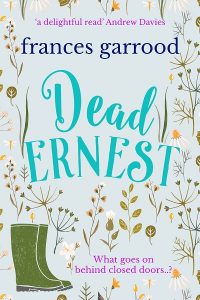
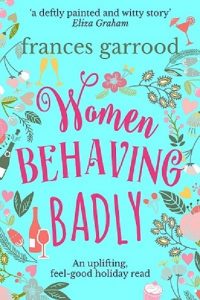
It depends. I had to do quite a lot for Dead Ernest as it was set during WW2, but often it’s just my own experience. I did once phone a safari park to find out how a monkey would behave if trapped in a car (for Women Behaving Badly), and they said they had no idea!
Tell us about where you write / your writing habits.
I’m afraid I don’t have any. I’m totally lacking in discipline, and I just write when I feel like it, at a desk in a corner of our bedroom. Not very professional, I’m afraid…
What part of the writing process do you find most difficult?
Starting, knowing when you’ve done enough research, the ending? I think the middle is difficult, but I’m not a planner, so I can get stuck anywhere. I usually just let the story take me where it wants to, and sometimes it doesn’t want to!
How real do your characters become and do they ever seem to control their own storyline?
They become very real, and I really hate letting go of them in the end. They certainly control the story to a great extent, especially when they’re speaking. I love writing dialogue.
Do you ever feel guilty about killing off characters or do you relish it?
A bit of both. But it’s also quite cathartic for me, because I was widowed fairly young, and I use my own experience of bereavement.
Do you find it hard to know when to end a story?
So far, my books have ended more or less of their own accord, but that could change (though I hope not).
What are you working on?
I’ve actually started three, and am waiting for one of them to take off. Two are sequels, and sequels are – I’ve discovered – a lot harder than I thought they’d be
What are you reading right now?
A little-known novel by Anthony Trollope (my favourite author): The Belton Estate.T I’ve read pretty well all his books, several more than once, and was delighted to find this one.
What is your favourite book? Who is your favourite character?
Without doubt, George Elliot’s Middlemarch. And my favourite character has to be Winnie the Pooh.
What book do you wish you had written?
At the moment, it’s Gail Honeyman’s stunning debut Eleanor Oliphant is Completely Fine. Otherwise, pretty well anything by Anne Tyler.
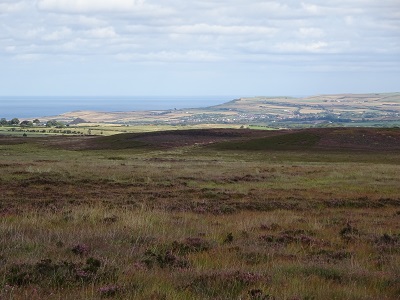
The North York Moors national park has one of the largest expanses of heather moorland in England covering an area of 554 sq miles. For centuries people have crossed this exposed, wild, boggy moorland for trade, social and religious reasons leaving a network of fragmented stone pathways that are lovingly walked and explored by hikers today. All who do respect this mainly inaccessible landscape, which is both beautiful and dangerous to traverse. But what tales these ancient paths could tell of the people who have trodden them over the centuries.
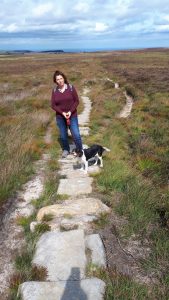
The oldest broken pathways, known locally as ‘Monks trods’ could date back to the Neolithic era. Certainly Roman soldiers have used some of the broader causeways near Whitby. The connection with monks stems from the medieval period when abbeys flourished within the region. Today we see the ruins of Whitby, Rievaulx, Guisborough and Mount Grace Priory to name but a few of these once great communities. These monasteries often housed large numbers of people and linked to other communities by the network of pathways. In Medieval times wool would be transported on them to ports such as Hull and from there to markets overseas.
The monasteries often owned farms and land miles apart. In For Richer, For Poorer I linked the two fictitious towns of Gorebeck and Beckton by one such trod that cuts across Gorebeck Moor. Gorebeck Abbey School was linked to Beckton Abbey by trade and the pathway, although rugged and unwelcoming it was known to Parthena. This was no easy route of escape by, especially at night time, it took courage and daring – but essentially local knowledge, or else it would certainly have been tantamount to a death wish. This summer I was caught out in a sudden horizontal rain storm on one of the Quaker’s Causeway, near Commondale and even with modern waterproofs and hiking boots the wind had a bitter chill.
Parthena’s pursuer, like Beth and Willoughby in To Love, Honour and Obey had to travel in single file as the stones were only designed to take a train of pack horses travelling in a line as goods were regularly transported by pack horse.
Beyond the medieval period the need to transport coal, charcoal, jet, alum and lime grew. Fresh fish from the coast needed to reach its market as quickly as possible whilst it was still fresh. Wagons would easily become bogged down in such conditions and so for centuries the pack horse was essential.
These are some of the legitimate uses for these ancient routes, as well as the need for communities such as The Quakers in the early eighteenth century to reach meetings and friend’s houses. They were also essential for people to reach the mills and towns for work as the centuries turned.
However, in the early nineteenth century, when many of my stories are set, smugglers also had local knowledge, could pay a man more than a farmer’s wage and they also needed to disperse landed contraband as quickly and efficiently as possible. Therefore, many of my stories have mentioned the use of the old trods for this purpose.
Once roads were built to cross the moorland then the need for the trods diminished and some of the ancient stone was reused for building. These roads may have even been built over the original paths as their way was the most direct. But what is left provides an interesting connection to the past and a way for people today to access this beautiful wilderness today.
When did you first start writing? Did a specific event encourage you to start?
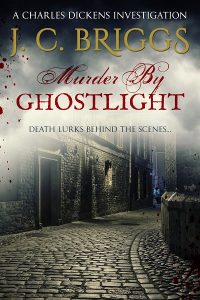
I started writing when I was a teacher. I first wrote short plays for performance. When I gave up teaching in 2012, it was the bicentenary of the birth of Charles Dickens. When I read that he had a secret desire to be a detective, I wondered if I could write the crime novel that I had always wanted to write, so I gave it a try with Dickens as my detective.
How much research do you do?
Because my novels are historical crime novels, I need to do a lot of research into Dickens’s life and times, and into nineteenth century forensics. I need to know what the Victorians knew about poison, or stabbing, or shooting, or drowning and post mortems in the mid-nineteenth century.
Tell us about where you write / your writing habits.
I write in a little room in my house. I often write sections of the novel long-hand and then type them up and make changes as I go. I always carry a notebook to jot down ideas when I’m on a train or waiting for someone – you never know what you might overhear!
What part of the writing process do you find most difficult? Starting, knowing when you’ve done enough research, the ending
I find it easy to start. Often the beginning of a novel comes from something I’ve read, especially something from Dickens’s letters. Then I get stuck in working out the plot, especially when I find that X couldn’t have done the murder at that point because she/he was somewhere else at the time!
How real do your characters become and do they ever seem to control their own storyline?
Very real – that’s why I enjoy writing a series. You can bring characters back. It’s very odd how characters you expected to play a minor part in the story start to develop in ways you had not planned and begin to play a major role. Then they seem to have a back story and you think: where did that come from?
Do you ever feel guilty about killing off characters or do you relish it?
It’s always satisfying to get rid of the murderer because that means the case is solved. And there have to be other victims – one murder doesn’t make a crime novel. You can’t help relishing the dramatic deaths, but sometimes you do feel sorry for the victim. Then you think: sorry, but you’ve had your lot, it’s time for another killing – keep up the suspense!
Do you find it hard to know when to end a story?
Not in the sense that you know it’s over when the case is solved, but you also have to think carefully about the very last paragraphs. You want to leave the reader thinking about the effects it has all had on the characters who are left and what their futures hold – if they have one.
What are you working on?
A novel which begins in Ferrara where Dickens went in 1844; I found a letter he wrote from there in which he describes some girls looking down into a stretch of water. It was twilight, the sun was setting and the walls of the castle were blood-red. Dickens writes that he knew the place although he had not been there before and that it chilled his blood. I wondered what those girls were looking at in the water and why Dickens was suddenly frightened. Murder?
What are you reading right now?
Bleak House
What is your favourite book? Who is your favourite character?
Great Expectations. Miss Havisham.
What book do you wish you had written?
So many, it’s too hard to choose, but there’s a wonderful book: Pinkerton’s Sister by Peter Rushforth, which is so rich in character and incident and full of all kinds of literary allusions that I can’t help wishing …
Do you love any genres/books that are very different from what you write?
One of my favourite authors is William Trevor; I’ve just finished The Silence in the Garden which is about Ireland before the First World War. I love fiction about Ireland.
Tell us something surprising about you!
I was the voice over in a television show in Hong Kong. I was a puppet named Violet the Vulture – I played her as a kind of avian Lady Bracknell. My husband, who wrote the show, was Barney the Bear, and we had a kangaroo called Alice Springs.
Are you working on a new series set in the Age of Sail? Have you written a naval thriller set during the World Wars? Are you passionate about seafaring stories? Sapere Books wants to hear from you!
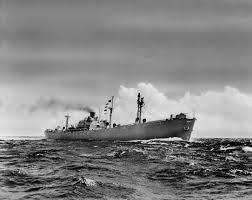
We are actively looking to acquire nautical fiction from both debut and established authors. We are particularly interested in historical naval fiction, nautical thrillers, and books in a series.
If you are an author who owns the rights to a previously published naval series, or a writer working on a new nautical novel, please get in touch and tell us about it!
Email our Editorial Director, Amy Durant, directly with some information about your nautical writing and a synopsis of your naval novel and we will get back to you as soon as possible.
We hope to hear from you soon!
Ellen Tyrell’s Nose and Other Suspicious Circumstances
With thanks to the British Newspaper Archive
I am looking for a drowned girl. My old friend, Professor Swaine Taylor will, no doubt, provide the grisly forensic detail in his Medical Jurisprudence: ‘the eyelids livid, and the pupils dilated; the mouth closed or half-open, the tongue swollen and congested … sometimes indented or even lacerated by the teeth …’
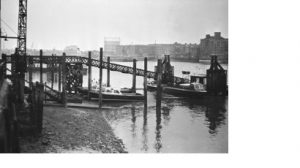
I need an inquest on said drowned girl; this is where the British Newspaper Archive comes in. There are drowned girls aplenty in London in the decade 1840-49. Poor things, dragged from the Thames, the Regent’s Canal, the Surrey Canal, the New River, the Serpentine, the lake in Regent’s Park, from under Waterloo Bridge – a favourite spot for those seduced and abandoned girls. There they lie stretched out on muddy shores and banks, their bonnets askew, one boot missing, or both, their faces pale like Millais’ Ophelia, or more likely, bloated and bruised, or half-eaten by decomposition – or rats. Their bodies sometimes float, buoyed up by petticoats – the effect of air retained by the clothes, or the presence of gases. Sometimes a thin hand grasps a clump of weed which, according to Professor Taylor, indicates that the victim went into the water alive. Did she fall or was she pushed? Suicide, most often.
I find the case of the suicide of two young sisters dragged from a Leeds canal in April 1847, tied together by a handkerchief. The handkerchief is pitiable somehow, and memorable. Dickens must have read of that case for he uses the same circumstance in Our Mutual Friend. Something of a thrill in contemplating that, but I need only one girl.
I need an unknown drowned girl, unclaimed, buried at the expense of the parish, and forgotten. Somewhere in a village, a mother wonders about her lost child. She will never know what became of her ruined darling. The Morning Post in February 1842 explains: ‘In London the bodies are taken to any obscure vault, public house, or police office. The Coroner directs the parish to advertise the body, often in vain.’
I find several cases of unidentified females in the newspaper archive. In July 1841, according to The Morning Advertiser, a young woman was pulled from the London Dock. She was never identified. I am intrigued by the report’s dark observation that ‘No one could walk into that water by accident.’ Unknown, too, is the identity of the ‘fine-made ’young woman taken from the Serpentine in October 1845 and deposited at St George’s Workhouse. Yet she has a distinctive mole on her left cheek, dark hair and hazel eyes. Surely somebody missed her. Seduced and abandoned, perhaps, like poor Eliza Luke found in the New River in April 1844.
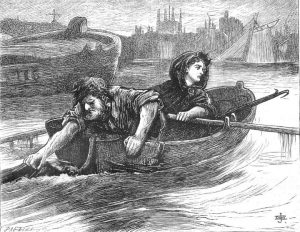
However, this is a crime story, so, naturally, I need a drowned, unknown, murdered girl. This is more difficult. Such is the damage done by the water, or the bridge, or the rocks of some lonely reach that it is often impossible to find enough evidence of murder. However, there is the case of Eliza Rayment found in the River Thames in October 1847. There is a deep cut under her chin. Four inches in length, an inch in depth, so reports Mr Bain, the surgeon, at the inquest, and there are ‘two arteries divided’. The wound might have been inflicted by the deceased, but ‘a person using the right hand would naturally make an incision on the left hand side.’ Eliza Rayment was right-handed. Mr Bain attributes death to the loss of blood from the wound. Poor Emma Ashburnham who was formerly Emma Meyer had once lived ‘in some splendour’ in York Road under the protection of ‘a gentleman of fortune’, but it is not known how she came to be in the river at Waterloo Bridge with a deep and ugly stab wound in her side.
Blood brings me to Ellen Tyrell and her nose. Ellen was found in the Surrey Canal in August 1845. Mr John Hawkins, the surgeon, finds an abrasion on the right side of the nose, but from the decomposition of the body he is unable to distinguish any other external marks of violence. Given that she was seen in the company of a man, not her husband, the night before she disappeared, the inquest is adjourned for the purpose of producing further evidence.
Oh, Eliza Rayment, what a mystery, what a suggestive tale, a married woman whose whereabouts were unknown for some days before your death. Who were you with? Emma, who was that ‘gentleman of fortune’? Alas, neither of you is for me, and Ellen, your nose, telling though it is, does not serve my purpose. I am ‘Oh, that I had been content with a cut throat, or a stabbing, but, in the interests of my plot, the victim must be strangled or I must rewrite the whole damned thing.
There is evidence I do like: the 1847 case of the unknown drowned young woman wearing a false plait at the back of her hair; the one in 1842 in which an umbrella is found nearby, bearing on its ivory handle the initials ‘F.H.’ And I like especially, the single earring she is wearing. I have a fancy for a single ruby like a drop of blood in my victim’s ear.
I dig deep into the newspaper archives and I find it – just the one, and the indefatigable Mr Bain is on hand to assist. The body was found in October 1848 near Battersea Bridge, much decomposed, appearing to have been in the water some time. Nevertheless, Mr Bain finds evidence of a ligature encircling the neck, though what this might have been he cannot say.
It is quite enough for me. Possible death by strangulation.
Oh, all right, I admit it: the body was that of a sailor. But, it did happen. Evidence of a ligature was found. I’ll just have to put an ‘s’ before the ‘he’. No one will know.
‘F.H.’? Names: Fanny? Florence? Flora? Ah, here’s a name in the archives: ‘Harvest’. I have her: Flora Harvest, the Grim Reaper cometh.
The Murder of Patience Brooke by J. C . Briggs
The Cooper Museum, housed in a small building in the heart of historic downtown Upland, offers a cozy and often crowded venue for local events. A favorite place to hang out with city residents, this cheery place often invites authors whose books feature the history of American towns and people, especially people from Upland, California.
I wrote my first edition of He Wrote Her Every Day in Upland and printed twenty copies in time to celebrate my mother’s 90th birthday. Based on letters Mom had saved from my father in Germany during WWII, the book was my mother’s gift to share with the family. This hard-cover version of their story includes photographs and follows a narrative using all the documents and souvenirs my mother saved. When I received an invitation to present my book on Author’s Day at the Cooper, I was delighted—and a bit apprehensive.
I decided to prepare a visual display of a few of Dad’s letters and many of the souvenirs. Did I mention that Mom saved everything? I needed three tables, but managed to make do with two. A three-foot square map mounted on a display board earned center stage, balanced between my tables. It was also a place I could hide if no one showed any interest in my book.
The map, sent to all the soldiers and their families from the Army post-war, depicts the route this Infantry division traveled from the beginning of the war until the final return of the last Occupation troops. So when the recommissioned Queen Mary finally brought Dad home, Mom already had the map of the route taken by his troops known as the Railsplitters.
Our afternoon of book signing invited walk-through traffic in the patio area outside of the small museum. A beautiful afternoon in California promised our group of about a dozen local authors a busy opportunity to talk to our neighbors about our books. I was hoping for a few sales and a chance to meet my fellow writers.
Flattered when the assistant curator pulled a chair up at my table, I smiled widely as he began to go through all of the V-mails, coins, K-ration kit remnants, and the seventy-five-year-old postcards that make up my father’s collection. He looked through the assemblage of bits and pieces that had been the focus of my writing for about a half hour before, at last, he raised his head and just said, “Wow!”
Hungry for some positive feedback, I answered by asking, “Wow what?”
His response was a surprise. “You should not have all of this sitting out here in the sun for anyone to handle. This should be in a museum.” I thought he was trolling for a donation to the Cooper, but no, he assured me that mother’s bits and pieces needed a place where scholars could read the primary documents and preserve them for posterity.
He told me about the National WWII museum in New Orleans, LA. It took me a year to do it, but Kim Guise, curator of the museum in New Orleans, guided me through the process and helped our family contribute the collection to them. Mom was tickled to sign the donation papers and make it official. The museum staff is currently working on a display of the letters and souvenirs of Private James William Hendrickson, Jr. It is, according to Guise, the largest collection of letters and documents from an individual American soldier.
This was exciting, but the best experience at the Cooper came on yet another day when my display had been transferred from the originals to mere copies. The Railsplitter Map held pride of place and looked as sharp and clear as the originals.
He Wrote Her Every Day will be published by Sapere Books and is coming soon!
Sapere Books is a digital and print-on-demand publisher of exciting new submissions and brilliant backlist books.
We are excited to be launching our first titles on March 1st!
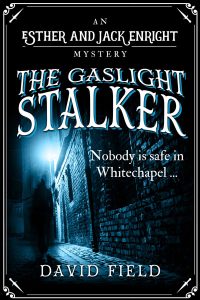
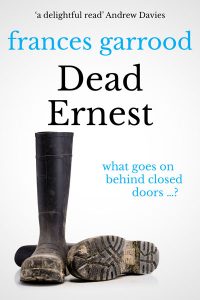
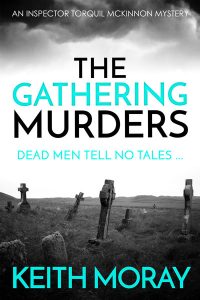
Our launch books include An Unquiet Ghost by Linda Stratmann – the latest novel in her intriguing Mina Scarletti mystery series; The Gaslight Stalker by David Field – a brand new voice in historical crime; Dead Ernest by Frances Garrood – a touching story of love and loss; and The Gathering Murders by Keith Moray – the start of his thrilling Scottish detective series.
Check out our AUTHORS page to see all of the brilliant writers who will be publishing their stories with us in 2018. We have lots of exciting announcements coming soon, including a brand-new series from award-winning Irish author, Cora Harrison, and Regency crime from best-seller Elizabeth Bailey.