

From historical sagas and legal thrillers to a pilgrim’s journey across France and Spain, there’s something exciting here for everyone. Scroll down to discover this month’s titles from your favourite Sapere authors.
May’s Fiction Releases

The Crowned Viper by Amy Licence is the sixth book in the Marwood Family Tudor Saga Series, set at Henry VIII’s court. When her uncle dies, newly-married Thomasin travels to London to settle his estate, and once more finds herself at the centre of court intrigue.
Shadows at the Manor by Cara Clayton is the third book in the Tapestry Tales Medieval Sagas. After a spate of robberies occur on the roads around the manor, seventeen-year-old Grace Amundeville d’Albert is determined to work out who is behind them. But could the culprit be close to home?
The Hunt for Boudica by Jeff Jones is the fourth instalment in the Legion of The Damned Roman Thrillers. Centurion Marcus Corvo and his Legion of The Damned are given a choice: face execution or accept another suicide mission — hunt down and capture Queen Boudica.
House of the Dancing Dead by Aola Vandergriff is an atmospheric Gothic mystery set in New Mexico. Abandoned by her partner and grieving the death of her mother, Christie Lynne agrees when her boss offers a year’s paid vacation in the mountains. But regrets are swift to follow when she arrives at the remote Harper abode, whose strange inhabitants sleep all day and dance all night. And when a horrifying discovery is made, everything around her is thrown into question.
The French Vendetta by Simon Michael is the eleventh novel in the Charles Holborne Legal Thrillers. When a rare gap opens in barrister Charles Holborne’s court diary, he and Sally seize the chance for their long-postponed honeymoon. But deep in the heart of rural Gascony Charles discovers a community still fighting the Second World War, where old crimes refuse to stay buried.
The Restless Wave by David Clancy is the fourth book in the Romulus Hutchinson Naval Adventures, set during the Second World War. While Romulus sees action in the Mediterranean for the Allied landings at Sicily and Salerno, as well as helping to lift the siege of Malta as part of Operation Pedestal, his twin brother Remus is once again unlucky enough to experience the wrong end of a torpedo strike.
The Scattering Murders by Keith Moray is the eighth crime thriller in the Inspector Torquil McKinnon Mystery Series, set on a remote Scottish island. When a well-liked farmer is found dead, Detective Inspector McKinnon soon finds himself with more than one mystery to solve.
An Angel’s Touch by Elizabeth Bailey is a touching Georgian romance featuring a spirited and passionate heroine. Can a young woman’s love bring a grieving recluse back into the world?
May’s Audio Releases

Lose yourself in a great audiobook this month!
Professor, friend, Soviet spy; who was the real Hugh Hambleton? Find out in Hugh Hambleton, Spy by Leo Heaps.
Two brothers are keen to start their naval careers. But could it all be over before they’ve barely begun? Find out in For Those in Peril by David Clensy.
Don’t miss this unique account of the Battle of the Atlantic from the perspective of a British destroyer captain in U-Boat Killer by Donald Macintyre.
Discover the unforgettable history of French intelligence agents and courageous British pilots who risked everything in the fight against Hitler in A House for Spies: SIS Operations into Occupied France from a Sussex Farmhouse by Edward Wake-Walker.
May’s Non-Fiction Releases

Hurricanes over Murmansk by John Golley tells the remarkable story of the RAF’s daring defence of the Soviet Union against the brutal Nazi onslaught of 1941. Drawing on first-hand accounts from RAF pilots as well as senior Soviet officials, Golley has crafted a thoroughly researched, vividly told account of bravery, sacrifice, and wartime ingenuity.
The Battle for European Skies by Chaz Bowyer is a comprehensive account of the savage aerial war fought over Europe during the Second World War. This book stands as a poignant tribute to the bravery and dedication of the men on both sides who took to the skies time and again, uncertain of their fate, in the service of their country.
To Drive the Enemy from Southern Soil by Michael W. Taylor draws upon the personal correspondence of Confederate Colonel Francis Marion Parker to recount the history of the brave men of the 30th Regiment North Carolina Troops, from its inception in September 1861 to its final surrender at Appomattox in 1865. The result is a deeply personal record of the daily life and cares of a Civil War soldier.
The Field of the Star is a searingly honest account of author Nicholas Luard’s pilgrimage along the Camino de Compostela, undertaken after the devastating illness and death of his eldest daughter.
Happy Reading! Team Sapere
Vibrant Voices. Sensational Stories. Beautiful Books.

We are thrilled to announce that we have signed three new instalments in the Tom Walsingham Mystery Series by C. P. Giuliani.
The series follows the espionage adventures of Tom Walsingham during the Elizabethan era in Tudor England.
In C. P. Giuliani’s words:
“I’m thrilled to be working with Sapere Books on three more instalments in my Tom Walsingham mystery series. As I researched the previous books, I kept coming across material and inspiration for more stories, so I proposed them to Amy Durant, and she accepted at once. This is one of the reasons why working with Sapere is so rewarding: the enthusiasm of a very skilled and friendly team.
“Following the death of Tom Walsingham’s influential kinsman and mentor, spymaster Sir Francis Walsingham, Tom thinks his career in intelligence is finished — but he will soon discover that one is never quite done with a life in espionage! As he becomes reluctantly entangled in the troubles of wayward poet Kit Marley and Queen Elizabeth’s physician Dr Roderigo Lopes, Tom will encounter new foes, new allies, visit new places, and grapple with new cases of murder and intrigue — and he will have to do it all without Sir Francis’s powerful network at his back.
“I can’t wait to plunge into Tom’s new adventures — actually, I’m already at work on Book Ten — and all because the lovely team at Sapere still make the journey as enjoyable and stimulating as they did with Book One.”
Death at Home is available from Amazon now.
Visit C. P. Giuliani’s website for all her latest news or follow her on X.
Linda Stratmann is the author of the Mina Scarletti Mysteries and the Early Casebook of Sherlock Holmes series.

Sherlock Holmes and the Aeronauts is set in 1879, at which time there had never been a successful crossing of the Channel from France to England by balloon due to unfavourable wind currents. One of the key themes in my book is a proposed competition to be first to make such a flight, with a large prize for the winner.
Some histories of ballooning include only brief accounts of the first east-to-west Channel flight which was made in 1883 by a Monsieur L’Hoste. Some histories do not even mention him. I determined to find out more about this neglected pioneer of aviation.
François L’Hoste was born in Paris on 2 August 1859, the second son of a well-to-do manufacturer of wrought iron goods. Aged twenty, he entered the aeronautical academy as a voluntary student, where he impressed his instructors with his skill, composure and courage. He was particularly inspired by a stirring lecture on the use of balloons during the siege of Paris, and the heroism of aerial experiments. His instructors had only one criticism: he was too eager — his enthusiasm and passion for adventure could barely be tempered even by the wisest advice.
The year 1883 was an important milestone in aviation history, the centenary of the first public demonstration of the Montgolfier hot air balloon. That May, during an ascent from St Omer in his gas balloon, L’Hirondelle, L’Hoste formed a new and all-consuming ambition. On arriving at Calais, he had encountered a southeast wind, which carried him over the Channel to within eight or nine miles of the English coast. A change in the wind reversed his direction, and he eventually landed in Holland. He was convinced that if he could locate and make use of favourable currents, it should be possible to cross from France to England. He shared this information with his friend and fellow enthusiast Monsieur Eloy, and they agreed to make the attempt on 5 June.
Their new balloon was named Pilâtre de Rozier in honour of the aeronaut who had first attempted the east-to-west crossing in 1785 in a hybrid hot air and hydrogen balloon. On that occasion, the balloon made little progress from Boulogne, before it was blown back over land. Soon afterwards it caught fire and plunged to earth. De Rozier and his associate, Romain, were both killed.
L’Hoste’s first attempt at a crossing was postponed due to an unfavourable wind. When he and Eloy set off on 6 June, they were heartened to find a southeast current, but it soon disappeared and they were carried back to France. After going back and forth twice more through torrential rain and fog, they made a hard landing in Lottinghen, east of Boulogne.
This failure only increased their determination. The next attempt was on 7 June, and L’Hoste decided that his chances would be better if he reduced the load by carrying only one man. He went alone. After some hours, his location largely obscured by fog, he descended for a better view. There was a large city below, and he thought he was in England, but on reaching land, he discovered he was in Dunkirk. Taking off once more, he soared above the clouds, hoping to detect where he was by the sound of waves, as he could see almost nothing through the fog. The balloon descended rather more than he intended, and he kept throwing out ballast until there was none left. The basket ditched in the sea and overturned, tipping L’Hoste into the water, where he tried to keep hold of the collapsing fabric of the balloon. Luckily, a sailing ship appeared on the scene. His cries for help were heard, and a rowboat was sent to rescue him. Soaked and exhausted, he stayed on board the ship for three days and he and his balloon were landed at Flushing.
On 14 July he tried again, but the winds were once more against him as he sailed through darkness and storms. After colliding with some treetops, he was carried across a canal and finally came to rest on some railway tracks. He barely had time to pull the basket off the line before the Rotterdam to Flushing express sped past. Two railway employees came to help him.
His next attempt on 13 August 1883 again ended in the sea, where he was rescued by a Dutch steamer, which took him to Amsterdam.
On 9 September, still confident of success, he started from Boulogne in a new balloon, the Ville-de-Boulogne. Descending sufficiently to enquire of some fishermen as to which level of current blew from the east, he continued to Cap Gris Nez, then descended into the easterly current. A little later, he saw the lighthouses of Dover. At 10.15 at night, he crossed the English coast and finally came to rest in a meadow. All around him were sheep. He decided to eat some pâté, sleep, and wait for daylight.
He was discovered in the morning by a shepherd called James Austin, and since neither spoke the other’s language, they were obliged to communicate with gestures. Austin eventually brought L’Hoste back to his farmhouse, where he met the family and was given tea. He was in Ruckinge, Kent. A farm wagon was hitched up to carry the balloon to the nearest railway station at Smeeth. L’Hoste arrived at Folkestone and a ship took him to Boulogne, where he was able to give the good news. English newspapers which had previously referred to L’Hoste’s repeated failures with some amusement, gave far less space to his success, although the Kent Times records both his voyage and discovery on a sheep farm.
L’Hoste’s crossing was no fluke. He repeated it on 7 August 1884. Then, on 29 July, 1886, he made the crossing a third time, accompanied by a new associate, Joseph Mangot. (Monsieur Eloy had made an ascent from the coastal town of Lorient on 14 July 1885 and was swept out to sea and lost.)
Joseph Mangot was born in Montdidier on 17 January 1867. He and L’Hoste made several ascents with the intention of experimenting with extended voyages, assisted by small satellite balloons to provide extra gas. In July 1886 they made a Channel crossing together from Cherbourg in a new balloon, Le Torpilleur (Torpedo boat). L’Hoste had already envisioned the possibility that balloons might be used for warfare and on the way, he demonstrated this by throwing artificial torpedoes onto passing ships. In England they launched artificial torpedoes at the docks and arsenals of London, before seeking a landing place.
Their departure for a longer flight to Eastern Europe took place on 6 November 1887. Le Torpilleur had been refurbished and renamed L’Arago after the astronomer François Arago. A passenger who travelled with them went only as far as Quillebeuf, and on 13 November, L’Hoste and Mangot headed out across the sea. They may have lost their bearings in the darkness, and it is thought they crossed the English Channel and passed quickly over the narrow Cornish peninsula into the Bristol Channel, and thence into the Atlantic. Neither L’Arago nor the young adventurers were ever seen again.
No pioneer is entirely forgotten. In 1896, a monument to L’Hoste and Mangot was erected in le Jardin des Tintelleries Boulogne. A modern hybrid balloon, which combines hot air and helium, is known as a Rozière.
References
La Catastrophe du Ballon l’Arago by Wilfrid de Fonvielle (Paris, 1888, Spectateur Militaire) This publication also includes Mes Ascensions Maritimes by François L’Hostehttps://archive.org/details/lacataastrophed00fonvgoog/page/n8/mode/2up
Traversée de la Manche de Cherbourg à Londres by Jospeh Mangot, précedée par La Préface d’un Frère (Paris, 1888, Spectateur Militaire)https://archive.org/details/traverseedelama00manggoog/page/n12/mode/2up
Kent Times, Saturday 15 September 1883, page 6, and other contemporary newspapers.
1881 English census: James Austin, shepherd and family, registration district East Ashford, Piece 949, folio 45 page 1.
We are delighted to announce that we have signed the eighth book in D. R. Bailey’s Spitfire Mavericks Thrillers series: action-packed aviation adventures set during the Second World War and featuring a team of vigilante pilots.
Additionally, we have signed the fourth book in the Secret Sirens Aviation Thrillers series: heart-pounding World War Two escapades with strong female leads.
In D. R. Bailey’s words:
“I’m very happy to be able to continue the journey of the Mavericks and the Sirens. I am grateful for the support and continuous care that Sapere Books has offered me as an author. Through Sapere, my fiction has had a chance to reach a wider audience, which is something every author desires.
“The eighth Spitfire Mavericks book will focus on the squadron’s role as part of D-Day and beyond, protecting the skies over Britain as Hitler unleashes his latest weapon on an unsuspecting populace. The fourth Secret Sirens novel will continue their adventures with dangerous stealth missions. Meanwhile, the banter, humour and general mayhem surrounding the respective characters will, of course, carry on unabated.”
Congratulations to Tony Rea, whose gripping military adventure, Bouncer’s Bomber, is out now!
Bouncer’s Bomber is the fourth book in the Gus Beaumont Aviation Thrillers series.
September, 1942
SOE pilot Gus ‘Bouncer’ Beaumont is beginning to feel the effects of an exhausting war. After making a bad navigational error he is taken off piloting duties and posted as liaison officer to a Free French bomber squadron.
But the pressure on him continues to build.
First there is the moral dilemma of bombing civilians, then the suicide of a comrade. And, to top off everything, he is accused of murdering a fellow RAF officer.
The murder investigation is dropped, but a cloud of suspicion hangs over Gus and the only way to clear his name is by tracking down the real killer.
Can Gus clear his name and mend his reputation? Will he return to fight in the skies?
Or will the stresses of war push him too far…?
Congratulations to Donna Gowland, whose absorbing murder mystery, The Missing Wife, is out now!
The Missing Wife is the first book in the Mary Shelley Investigation series.
1814, London
It isn’t easy being the daughter of the great Mary Wollstonecraft, harder still to navigate life without her. 16-year-old Mary Godwin is desperate for excitement and trapped in a family she feels stifled in, under the watchful, disapproving glare of her stepmother Mary, she is constantly battling for her father’s attention and approval.
So when the young Romantic poet, Percy Shelley, comes blazing into her life, she falls quickly and deeply in love with him. But Percy has plenty of demons. He is already married with a second child on the way, and he turns up to the Godwin family home with a bottle of laudanum, declaring he will end his life if he cannot be with Mary.
William Godwin forbids contact between them, but Mary’s heart aches for the man she believes to be her soulmate. And so she agrees to elope to Paris.
The excitement of the journey soon wears off and they arrive in the city weary, travel-sick and penniless, though luck finally seems to be on their side when they meet a man who offers them money to find his missing wife.
But with Mary becoming increasingly homesick and concerned for her future, will her love affair with Percy be all she had hoped for? Could the search for the missing wife set her on a new course of self-discovery?
Or will her first daring adventure prove to be her downfall…?
Congratulations to David Field, whose twisty Victorian thriller, The Retirement Murder, is out now!
The Retirement Murder is the ninth instalment in the Esther and Jack Enright Mystery Series – a traditional British detective series set in Victorian London and packed full of suspense.
London, 1898

The time has finally come for Percy Enright to retire from Scotland Yard. His nephew, Jack, is sad to lose a partner in the force, but Jack’s wife Esther is glad Percy won’t be getting her husband into any further scrapes.
It seems Esther’s relief might be short lived, though, when a senior officer collapses at Percy’s farewell ceremony.
It soon becomes clear that the officer was poisoned, and Percy delays retirement to help Jack track down the culprit.
It’s a daunting task that involves trawling through all the murdered officer’s recent cases in the search for someone who may still bear him a grudge.
But when it becomes clear the dead man may not have been the intended target, the investigation suddenly turns in a new direction.
Why are the police being targeted? Can Percy make one final arrest before he retires?
Or will the murderer outwit the Enrights in their latest case…?
Following the success of his many historical series, including the Sandal Castle Medieval Thrillers and Inspector Torquil McKinnon Mystery Series, we are delighted to announce that we have signed a new supernatural series set in Victorian London by Keith Moray.
In Keith’s words:
“The first book in the series is set in London in 1854. Jack Moon is a foundling, brought up in an orphanage and then a workhouse, where he and his best friend Danny are subject to regular beatings. Together they escape, but when Danny dies in tragic circumstances, Jack secretly buries his friend in a cemetery at night.
“Alone and living in a deserted and rat-infested warehouse, Jack starts seeing Danny’s ghost, who warns him that someone is out to kill him and worse, the girl he loves, too. This is Victorian London, with its criminal underworld, body-snatchers, phrenologists, séances, ghosts and ghouls.
“I am delighted to be writing another historical series with Sapere Books, who have permitted me to set my stories in a variety of times and places, from ancient Egypt and medieval England to a contemporary Scottish island. My new mystery series delves into the occult and the psyche of the Victorian mind. It is murky, sinister and just a little bit scary.
“And one of the main characters is a ghost.”
Congratulations to D. R. Bailey, whose thrilling aviation novel, The Night Angels, is published today!
The Night Angels is the second novel in the Secret Sirens Aviation Thrillers Series, heart-pounding Second World War escapades with strong female leads.
1943

Sisters Anna and Jennifer Nightingale are recruits in the top-secret Siren Squadron: a group of women trained in the RAF to fight against the enemy.
The Sirens are tasked with flying a series of night stealth missions as part of Operation Scorpion. The first mission is successful, and on returning to base they are told that new members will be joining their ranks.
Hopeful that this means the all-female squadron has been deemed a success, the sisters welcome the new recruits and start training them on the Mosquitos.
They head out on another night mission. But this time not everyone returns.
With a downed plane found empty off the English coast, fears grow that one of the Sirens hasn’t survived.
But the show must go on. And Anna Nightingale has to destroy the crashed plane so the Sirens can remain classified.
As their night missions continue, increased skirmishes with enemy pilots suggest someone may be leaking information to the Germans.
Have the Sirens been compromised? Can they find the mole?
Or will these daring female agents be forced out of the war…?
Congratulations to C. P. Giuliani, whose absorbing historical thriller, A Matter of Blood, is out now!
A Matter of Blood is a page-turning espionage adventure set in Tudor England. It is the sixth book in the Tom Walsingham Mysteries series.
London, 1588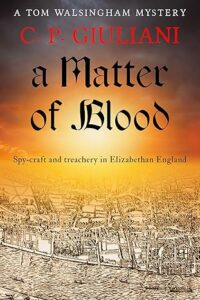
Mary Stuart, the deposed Queen of Scots, polestar of all Catholic intriguers, and a life-long danger to England has met the executioner’s axe.
But many of her supporters still hold influential positions in Paris and her death has not endeared England to the French.
Unbeknownst to the Queen of England, her spymaster, Sir Francis Walsingham, had more than a little to do with manipulating her into finally condemning her cousin.
And now a letter has been leaked exposing Walsingham’s secret to the Queen’s ambassador in Paris, Sir Edward Stafford.
There is no love lost between Stafford and Walsingham and the ambassador will happily expose his nemesis, no matter the consequences for England.
Walsingham instructs his cousin Tom to travel to Paris to quell the rumours and discover Stafford’s intentions. But then a troublesome Catholic leader, a kinsman of Stafford’s, is suspected to have been poisoned, and Tom finds himself embroiled in another mystery.
Can Tom win the trust of Stafford? Will he save his cousin’s reputation?
Or will the Parisians seek revenge on this hapless Englishman…?
Congratulations to Ava McKevitt, whose captivating mythical adventure, Nemesis of the Gods, is published today!
Nemesis of the Gods is the third book in the HERA Greek Myths Retold Series.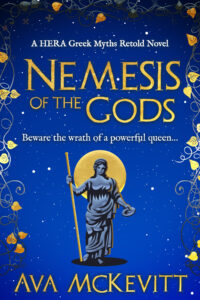
The Trojan War as you’ve never heard it before…
Since Homer first sang the songs of the Iliad and the Odyssey, the tale of the Trojan War has never been forgotten.
It is one of the most revered stories in the cosmos’s long and complicated history for humans and gods alike.
But there are details within Homer’s narratives are not yet known, and a new side to this age-old tale of love and glory.
That side is Queen Hera’s. Wife, mother, goddess; Hera’s role in Olympus is infamous, but her story has only been told by famous men. Never from her own mouth.
Hera’s tale is one of adventure, heroism, and glory but it doesn’t shy away from the heinous crimes committed by the heroes. And the faults and weaknesses of her brutal husband, Zeus.
She is ready to put the record straight once and for all…
We are thrilled to announce that we have signed three new instalments in the Tom Walsingham Mysteries Series by C.P. Giuliani.
The series follows the espionage adventures of Tom Walsingham during the Elizabethan era in Tudor England.
In C.P. Giuliani’s words:
“Tom Walsingham sleuths on! I’m thrilled to have signed up three more adventures featuring my Elizabethan detective and spy with Sapere Books. I have great plans for Tom. He will be tasked with recovering a misplaced foreign ambassador — whose mission could change the course of Anglo-Spanish relations; he’ll become involved in a personal investigation when death strikes at his family home, Scadbury Manor; and poor Tom will find himself in prison when his money troubles and Sir Francis Walsingham’s plans collide. Plenty of mysteries and dangers lie ahead for Tom!
“I’m really happy to be working with Sapere, whose welcoming and stimulating atmosphere and competent, friendly and helpful team have made (and are making) my publishing journey a truly lovely adventure.”
Congratulations to D. R. Bailey, whose exciting aviation adventure, Tip and Run, is out now!
Tip and Run is the sixth book in the Spitfire Mavericks Thrillers series: action-packed novels set during the second world war and featuring a team of vigilante pilots.
Winter, 1942
Flight Lieutenant Angus Mackennelly and his team of Mavericks are informed that a new kind of raid is being perpetrated by the Luftwaffe nicknamed a ‘Tip and Run’.
The planes arrive over the Channel, flying extremely low to avoid radar detection, drop bombs and make a quick getaway. These nuisance raids are designed to disrupt the allies and keep their defences on high alert.
Angus takes a trip to the site of the most recent bombing to see if he can discover more about it. And he makes an extraordinary find – a flat piece of stone with an Ace of Spades playing card attached. This was undoubtedly the calling card dropped by the pilot.
Angus is convinced that the same pilot will try again, and he makes it his personal mission to catch the ‘Ace Raider’.
So begins a deadly game of cat and mouse between the Mavericks and the Luftwaffe invaders.
Who will emerge victorious? Can Angus track down and defeat the raider?
Or will the German Ace lure the Mavericks to destruction…?
Congratulations to Ava McKevitt, whose absorbing historical adventure, A Goddess Scorned, is out now!
A Goddess Scorned is the second book in the HERA Greek Myths Retold Series.
The Queen is back … and she’s out for revenge…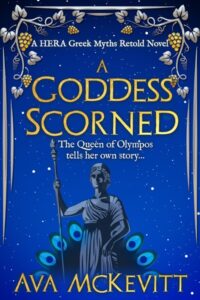
The Goddess Hera, Queen of Olympos, has endured thousands of years of lies being spread about her. And now she is ready to set the record straight.
The Muses were employed by Hera’s brother-husband Zeus to craft a narrative that makes him a hero – and makes Hera a deceiver and a harlot.
But Queen Hera is sick of history favouring controlling men and demeaning the women suffering beside them.
As the patron goddess of women, marriage, and motherhood, it is Hera alone who can set the record straight and redeem her reputation – and the reputation of many women like her – from the slander that has so far been spread.
What really happened under Zeus’s rule? What part did Hera play?
And how did she really feel about the great King of the Gods…?
In this behind-the-scenes blog series, Sapere Books authors offer an intriguing insight into how, where and why they write.
Today, we are delighted to spotlight Daniel Colter, author of the Knights Templar Thriller Series.
Writers are a strange breed.

The view from Daniel’s window
We invent friends in our heads, decide how they speak, what they wear, where they go, then spend countless hours conversing with them. No two writers share the same head-friends, oddly, despite running in the same social circles. Neither do any two writers develop a story the same way.
Specific routines keep us on track, or don’t (looking at you, internet), and each work proceeds at its own pace. Most writers are one of two species: a plotter or a pantser. A plotter maps out each scene, chapter, and verse before putting fingers to keyboard. Pantsers fly by the seat of their pants, beginning with an idea, then writing towards a vaguely defined ending. I mapped out my first novel, Brotherhood of Wolves, but tossed the map aside by chapter 3. I found pantsing more rewarding, and still do, because much of the fun (and frustration) is writing myself into a corner and finding a path out.
My novels are historical fiction, where history provides setting, culture, and place. History can also frame the plot. Story is given precedent over history, however, because the goal is to entertain, not to educate. One or more characters are historical persons and the fictional protagonist lives within their orbit. Historical fiction should stay true to history and the fiction takes flight where history grows murky — which it usually does, especially the further back in time one travels. The murk is where the fun begins, in my opinion, and its where the what if fleshes out the story, where the pantser finds out what happens to his head-friends.
Writers are also strange creatures.
Some writers have habits, like a dog that circles exactly three and a half times before lying down, and these rituals are intended to fuel creativity. Isabel Allende started her first novel on January 8, 1981, and that day became a ceremonial start date for all her subsequent works. The poet Friedrich Schiller kept rotten apples in his desk and, when his mind needed a jolt, he would give one a sniff.
 My writing rituals are more mundane and less … smelly. I start with two (not one, not three) cups of coffee. I keep a stuffie of Curious George on my desk, in honour of Curious George Rides a Bike, the first book I read cover-to-cover. I say hello to George each morning.
Ritual also comes from my father. He was a painter and writer and used a second-hand desk as his art space. I acquired that desk, set to rehabbing it, but foolishly sanded the top to expose wood veneer over composite. I left his dried paint splashes along the edges, though, and I touch them when I write. They make me think of him, and thinking of him puts me in a creative mood. I told him I had begun writing historical fiction, his favourite genre, but he passed away before reading Brotherhood of Wolves. I often wonder what he would think of my series, and suspect he would be pleased (except for the part where I ruined his desk).
In this behind-the-scenes blog series, Sapere Books authors offer an intriguing insight into how, where and why they write.
Today, we are delighted to spotlight C.P. Giuliani, author of the Tom Walsingham Mysteries Series.

C.P Giuliani’s garden house
Every year, as soon as summer comes, I move my writing to the garden house. It’s not really cooler, as temperature goes, but it feels summery and pleasant. I love the tall ceiling, the terracotta floor, the desk that used to belong to my great-grandfather, and the view onto the garden. There’s a little pond outside the French windows, and the birds bathing or drinking are, I confess, something of a distraction — but they also provide a cheerful break whenever I find myself stuck. A paragraph refusing to take the right shape? A character mutinying? A dull passage? I step away from the desk and watch while the blackbirds play in the water — and, more often than not, a solution will suggest itself.
For all its rustic pleasantness, the garden house has decent Wi-Fi — which is rather essential when my pile of reference books is not enough to confirm some detail — and is equipped with an electric kettle to make cup after cup of tea, which is a fundamental of my writing method.
In truth, beyond the insane amounts of tea, I have little in the way of a writing routine. Working in theatre means that my hours are flexible. Sometimes I write in the morning, sometimes very late at night, sometimes both; sometimes I must snatch the odd hour here and there, between a rehearsal session and a meeting with the techs. One thing I do is to always keep a notebook with me. Through the years, I’ve learnt to keep a dedicated notebook for each project, beside a general one for everything and anything: notes, stray ideas, snatches of dialogue overheard or imagined, lists, questions… It’s the general notebook that I carry around, so I can jot down anything that occurs to me — to be transferred to the relevant one later. This means that I do some of my writing at the theatre, at the vet’s, as I stand in a queue at the Post Office…
My family, friends and colleagues have developed a high degree of amused tolerance for my ‘Notebook Moments’, when I drop whatever I’m doing to take a note; strangers are occasionally a little put out until I explain that, for one thing, I’m prone to forgetting what I don’t write down and, for another, sometimes an idea will present itself in a very iridescent shape, little more than a flicker of colour under the surface of the water — and will need to be recorded quickly and thought through in writing, at least a little, if it’s to be of any use.
So to recap, I’m absent-minded, easily distracted, forgetful, and can’t keep a routine… I suppose it’s no wonder that a quiet, pleasant place like the garden house is important to my writing process.
In this behind-the-scenes blog series, Sapere Books authors offer an intriguing insight into how, where and why they write.
Today, we are delighted to spotlight David Field, author of numerous historical series including the Bailiff Mountsorrel Tudor Mystery Series and the New World Nautical Saga Series.
I’ve always written stories, even as a child, then I progressed from childhood scribbles to more serious attempts at literary glory on an old upright Olivetti typewriter (one of those with a red and black ribbon, if you’re old enough to remember) when my handwriting graduated from ‘untidy’ to ‘execrable’.
Reluctantly I then honoured my mother’s wish, and my father’s insistence, and got a ‘real job’ as a criminal trial lawyer, which was about as relaxing as standing on one leg on the top outer ledge of The Shard in London, without the reassurance of a safety harness. To relieve the stress I decided to start working on a novel — but what should I choose for a genre?
A good friend of mine who already earned a precarious living as a novelist was insistent that one should always write about things that one knows, and by this stage I knew two things outside my professional straightjacket — some history from my schooldays, and the streets of my home town, Nottingham. During the final years of my working life I spent stolen moments imagining the lives of those living in Nottingham during the Luddite Riots, and In Ludd’s Name was eventually published by a boutique publishing house owned by an old school friend.
Bitten by the bug, and buoyed up by having finally been published, I grew ambitious, and searched the history books for possible storylines, most notably from that most colourful of periods of English history, the Tudor era. The literary world seemed to be awash with Henry VIII, Anne Boleyn, Elizabeth I and even ‘Bloody Mary’, but two seminal characters from that era seemed never to have received much attention from novelists.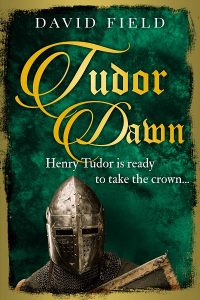
First was the progenitor of the Tudors, the boy from Wales, Henry VII, and I climbed inside his head to bring to the pages that followed his boyhood imprisonment in a bleak castle in South Wales, his youthful exile in Brittany, his triumphant return at the head of a ramshackle army that deposed Richard III at Bosworth, and his love match with Elizabeth of York that brought the Wars of the Roses to an end in the nursery rather than on the battlefield. To my delight, and secret surprise, I found a publisher — Sapere Books — and Tudor Dawn was launched.
Then — unbounded joy and amazement! — Sapere wanted another one, so this time I focused on a butcher’s son from Ipswich who rose from obscurity to become Archbishop of York, Papal Legate for life, Lord Chancellor and the diplomacy coach of choice of Henry VIII. Cardinal Thomas Wolsey’s spectacular downfall was just as dramatic, and The King’s Commoner was published, as testament to the fact that I had a second novel in me.
Dozens of titles have since been published, all by Sapere Books, and all ‘historical’ in genre. As one of the characters in Alan Bennett’s delightful creation, The History Boys, says of history — ‘It’s just one ******* thing after another’, and so it has been for me.
Congratulations to Suzanne Parsons, whose thrilling aviation adventure, Secrets in the Sky, is published today!
Hertfordshire, 1910
After a childhood spent carted around the country by her restless mother, Ayda de Corsi finds stability when they settle at the Bound estate in Hertfordshire. And she finds a friend in Lord Bound’s son, Adam.
When a collection of flying machines owned by aviator Thomas Shuttleby is secretly stored at the Estate, Adam hopes flying may gain him notice from his parents and he trains to become a pilot.
Initially, Ayda’s life moves in a different direction, but eventually Adam secretly teaches Ayda to fly and she realises she has found her passion.
When war breaks out in 1914, Adam joins the Royal Flying Corps, while Ayda heads to London as a typist on the promise of a secret, civilian role as Britain’s only female dispatch pilot.
But as a woman, she is not taken seriously, and she finds her flying craft are sabotaged and someone is going to great lengths to stop her from succeeding.
A gifted aviatrix, Ayda must battle to overcome prejudice to fight for her place in a man’s world.
Can Ayda and Adam survive the war? Will Ayda manage to make her mark?
Or are the odds stacked against this daring aviatrix…?
We are delighted to announce that we have signed a new series of historical naval adventures by Daniel Donato.
In Daniel’s words:
“The series follows English privateer Gideon Locke during Queen Anne’s War, which engulfed the colonies from Newfoundland all the way down to the Caribbean. With the Royal Navy tied up back home, it largely fell to privateers to protect the colonies.
“The story begins in 1707 with Gideon newly returned from a disastrous privateering venture, leaving him destitute and shunned by his fellow privateers. His fortunes change, however, when a charismatic captain recruits Gideon on his next venture. But by the time Gideon realizes that change in fortune was for the worse, it’s too late, and he finds himself caught up in a plot to kidnap the son of a prominent English Governor and deliver him to the French.
“As the series progresses, we’ll see Gideon fight to redeem himself, earn a reputation and climb in rank until he’s ultimately in command of his own vessel.
“I was very fortunate to meet Amy Durant at the Historical Novel Society Conference in Texas last year, and even more fortunate that she was interested in this series. It’s a dream come true to be working with a publisher like Sapere Books who understand that there’s quite a hunger out there for historical action and adventure.”
Congratulations to Keith Moray, whose gripping Medieval mystery, The Minstrel’s Malady, is published today!
The Minstrel’s Malady is the fifth book in the Sandal Castle Medieval Thrillers series: historical murder mysteries set in Yorkshire.
1330, Yorkshire, England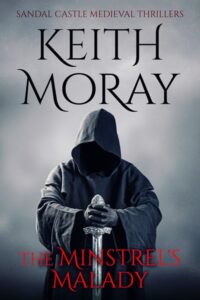
Edmund of Woodstock, the Earl of Kent, is executed for High Treason against King Edward III.
At his trial, it is claimed that a demon was conjured up by a monk versed in the Dark Arts, who told him that his brother, King Edward II, still lived.
Keen to quell rumours of sorcery that could do untold damage to the royal house and to the country, Sir Richard Lee, Sergeant-at-Law, is instructed by Sir Roger Mortimer and Queen Isabella, the king’s mother, to seek out the monk who delivered the message.
When a minstrel is struck down by a seizure before Sir Richard’s court, many believe the man to be possessed of a demon. Richard’s assistant, Hubert of Loxley, is given the task of riding to Cawthorne Priory to deliver the minstrel into the care of the monastery hospital.
Also at the priory is the anchorite, Sister Odelina, blessed with visions and the power to heal the sick.
But when a number of sinister deaths take place at the priory, blame falls upon the minstrel and the demon inside him.
Are the deaths the work of evil spirits? Or is there a murderer in their midst…?
With panic on the rise, can Sir Richard discover the truth before evil strikes again…?
Congratulations to
A Deadly Complot is the fourth book in The Tom Walsingham Mysteries series.
England, 1586
Tom Walsingham has been tasked with keeping watch over the network of spies recruited by his spymaster cousin, Sir Francis Walsingham.
After intercepting a series of letters sent to and from Chartley Castle, where Mary Queen of Scots has been imprisoned, the spies have infiltrated a ring of Catholic plotters. Led by the zealous Anthony Babington, the conspirators plan to murder Queen Elizabeth and replace her with Mary, thus restoring Catholicism to the realm.
With most of the plotters under careful observation, the spies have only to wait for the right moment to have them arrested. However, when one of the spies’ couriers — Isaac Finch — is murdered, it seems that Babington’s conspirators may suspect that they have informers in their midst.
Fearing that Finch may have been forced to reveal the spies’ plans, Tom vows to find out who killed him.
As he follows the sinister trail, Tom discovers that there is no shortage of people who may have wished Finch harm. And with the queen and the realm under threat, the pressure is on to solve the mystery before any more of Sir Francis’s recruits are lost…
Have Sir Francis’s spies been discovered? Is there a traitor in their midst?
And can Tom unravel the courier’s fate before Babington’s plotters act on their treasonous scheme…?
Congratulations to Austin Hernon, whose captivating medieval adventure, The Abandoned Queen, is out now!
The Abandoned Queen is the second book in the Berengaria of Navarre Medieval Trilogy: Early Plantagenet novels set during the Third Crusade and the reign of Richard the Lionheart.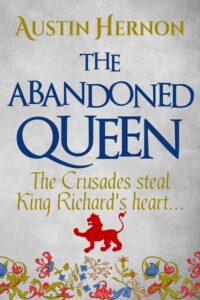
1191
Having married Richard the Lionheart, Berengaria of Navarre is now preparing herself for the turbulent life of a queen.
Though he has not yet secured an heir, Richard is determined not to settle down until he has recaptured Jerusalem from the Saracen forces. Vowing to stay by his side for as long as possible, Berengaria accompanies him on the perilous voyage to the Holy Land.
Caught up in battle plans, Richard has barely a moment to spare for his new bride. And after witnessing a sea battle and a deadly siege in Akko, Berengaria is left disturbed by the king’s ruthlessness.
Surrounded by misery and bloodshed, the young queen begins to understand the true cost of war. And as Richard becomes ever more consumed by his ambitions, she starts to wonder whether their marriage will ever have a chance to flourish…
Will Richard survive his brutal Crusade? Will he and Berengaria return to England in triumph?
Or will the horrors of war tear their marriage apart?
Congratulations to Neil Denby, whose absorbing Roman adventure, Optio, is out now!
Optio is the third book in the Quintus Roman Thrillers series: action-packed, authentic historical military adventures set in Ancient Rome.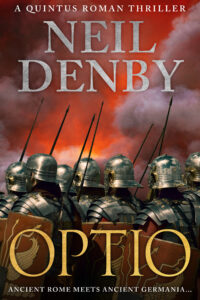
Julius Quintus Quirinius, Decanus of his contubernium, has failed in his mission to secure a bridgehead in Britannia for the emperor Augustus.
Despite their failure, they have collected valuable intelligence from the British tribes that they are keen to share with Augustus, hoping that will restore their reputation.
Together with his rescued comrades, Quintus flees the misted isle of the enemy and begins the long and treacherous journey home.
Once they locate the remnants of their cohort, Quintus is promoted to Optio and tasked with leading his men against rebel Germanic tribes.
Success could mean a fast route back to Rome and the favour of the emperor. But failure means an almost certain death.
When disaster strikes, can Quintus rescue the honour of Rome and lead the cohort to safety?
Or will the odds once more refuse to fall in their favour…?
We are thrilled to announce that we have signed three new instalments of the Early Casebook of Sherlock Holmes series by Linda Stratmann.
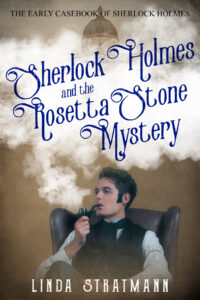
Book 1 in the Early Casebook of Sherlock Holmes series
The series follows the adventures of Sherlock Holmes and his acquaintance Mr Stamford during their years at St Bartholomew’s Medical College.
In Linda’s words:
“I am delighted to have signed with Sapere for three more books in the Early Casebook of Sherlock Holmes series, my chronicle of his youthful adventures. In these next three we will meet a young Mycroft, enter the world of theatrical illusions, and encounter a devious confidence trickster with a mysterious device.
“My grateful thanks are due to the dedicated team at Sapere Books, for their invaluable support, and the friendly encouragement of the growing family of Sapere authors.”
Congratulations to Daniel Colter, whose absorbing historical adventure, Fortress of Crows, is out now!
Fortress of Crows is the second book in the Knights Templar Thriller series: action-packed, Crusader military novels set during the Medieval era.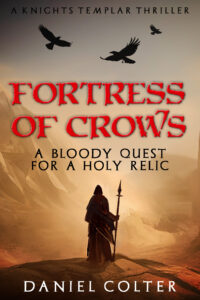
The Judean Desert, 1186
Finn of Struan, a Templar knight, has orders to find the Copper Scroll, a relic describing where priceless treasures from Solomon’s Temple were hidden away.
He is also charged with protecting a relic hunter, one who procures religious relics, as she unravels the tangled web of clues held in the ancient text.
But rival relic hunters also hunt the scroll. And their leader, Le Scélérat, the Evildoer, will stop at nothing to get it.
Greed rules the hearts of many, turns friend against friend, and Finn’s quest soon becomes a bloody fight filled with deceit and death.
Will he and his loyal Brothers survive murderous enemies? Can Finn complete his quest? Or will Templar bones rot in the bleak wastes of the Judean?
Congratulations to Linda Stratmann, whose atmospheric historical mystery, Sherlock Holmes and the Legend of the Great Auk, is published today!
Sherlock Holmes and the Legend of the Great Auk is the fifth Victorian crime thriller in the Early Casebook of Sherlock Holmes series.
London, 1877
The unveiling of a new specimen of the extinct Great Auk leads to accusations of fraud against the British Museum and a ferocious attack on the exhibit by ornithologist Charles Smith.
Sherlock Holmes is tasked with saving the reputation of the museum, but before long, Smith is found murdered.
Police think it was a random robbery gone wrong but when Holmes examines the crime scene, he is sure there is more to it.
Aided by his loyal friend Mr Stamford, Holmes is determined to discover if the museum has something to hide.
Is there more to the legend of the Great Auk? Why has this exhibit attracted so much controversy?
Could more lives be in danger…?
Congratulations to David Field, whose gripping nautical adventure, Pirates and Patriots, is out now!
Pirates and Patriots is the first novel in The New World Nautical Saga Series: historical adventures set during the reign of Elizabeth I and beyond.
England, 1554
Fifteen-year-old Francis Drake is realising his dream of sailing on the open seas. After training with his cousins William and John Hawkins in their naval business, he takes his first commission upon the Bonaventure.
But when disaster strikes the ship and Francis saves the men with his quick-thinking, he makes an enemy of the captain, who threatens to charge Francis with mutiny.
Francis must seek a new path to make his fortune and he joins with the Hawkins brothers to search for glory in foreign lands.
But trading on the world stage is already being dominated by Spanish and Portuguese explorers and so Francis must act quickly if he wishes to make his mark.
And as one Tudor queen makes way for another, and Spanish relations grow ever tenser, Francis Drake may soon be needed to help save his country from the threat of war…
Congratulations to Patrick Larsimont, whose thrilling World War II adventure, The Raiders and the Cross, is out now!
The Raiders and the Cross is the second book in the Jox McNabb Aviation Thrillers series: action-packed, authentic historical adventures following a young RAF pilot during the Second World War.
Winter, 1940
Enemy raiders are bombing Britain’s cities relentlessly. Casualties are high and morale is at an all-time low.
Jox McNabb and the rest of No.111 Squadron train to become night fighters to take on the raiders inflicting such carnage on Britain’s cities.
But then tragedy strikes and Jox is devastated by the loss of those close to him.
Scarred physically and emotionally, he recovers slowly. Seeking a fresh start, he volunteers to serve in the turbulent skies of besieged Malta.
But this new location quickly becomes just as dangerous as the last.
Can Jox forget the tragedy that haunts him? Will he survive the murderous assault of the Luftwaffe?
And can a desperate Malta withstand the relentless onslaught?
Congratulations to Neil Denby, whose action-packed military adventure, Legionary, is out now! Legionary is the first book in the Quintus Roman Thrillers series.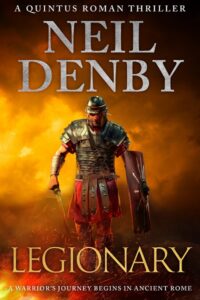
17 BC
Julius Quintus Quirinius, like many citizens in the years after Rome’s civil wars, must volunteer with the Roman army or be sold into slavery.
Keen to prove his worth, he becomes a member of the IXth Legion, but after only six months his cohort suffer a brutal defeat, the result of stupidity and cowardice.
Cowardice in a legionary carries a heavy punishment: the sentence of decimation – to live or die at the whim of the gods with the unlucky ones clubbed to death by their fellow soldiers.
Ursus, the man killed in Quintus’ group, lays a heavy charge on the youth, asking him to look after the remaining men and to take care of his family back in Rome.
Keen to fulfil Ursus’ last wishes, Quintus helps lead his cohort south to defeat the tribesmen skulking in the mountains in the hope that the IXth legion’s reputation will be restored.
But if they win the fight, their reward may not be the prize they had hoped for… And it soon seems as if returning to Rome is further out of reach than ever…
Congratulations to Graham Brack, whose fabulous historical mystery, The Lying Dutchman, is published today!
The Lying Dutchman is the sixth book in the Master Mercurius series: atmospheric crime thrillers set in seventeenth-century Europe.
1685, The Netherlands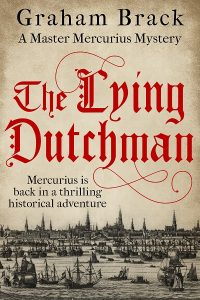
Master Mercurius has once again been summoned to The Hague by Stadhouder William of Orange. And a letter from William is never good news.
King Charles II of England has died and William, with his wife Mary, is now next in line to the throne once the current king, James II dies.
But Charles II’s illegitimate son, the Duke of Monmouth, has put a spanner in the works.
Monmouth is being encouraged to stage a rebellion and take the English throne. William needs to stop him so as not to jeopardise his own claim, but he also wants to keep Monmouth as an ally.
So, Mercurius is ordered to travel once again to England, and this time on an even more dangerous mission. He must plant a letter containing Monmouth’s invasion plans at court so that James summons an army in response and scares Monmouth off.
The only problem is that if Mercurius is caught and tried for espionage, the punishment is certain death…