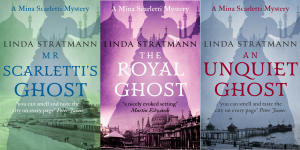

This is the first question for the crime writer, I’ve discovered. A tad macabre, but that’s the genre.
Hello there, victim, how would you like to die? I can strangle, bludgeon, knife or poison you, just for starters. But if that ain’t good enough, let’s be inventive. The sky’s the limit. The other day someone got mirrored to death in Midsomer Murders!
Problem is, the moment you decide how to kill someone, you’ve immediately got to find out what that’s going to do to their body. Enter medical research. That leads backwards to what your sleuth can and can’t notice and what it will tell her. She has to work out how it was done before she can figure out who dunnit.
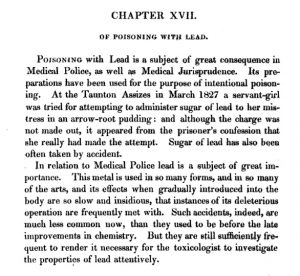 Just to complicate matters, when you set your crime in a historical context, you’ve got to find out what your medical man would have known at that time. Which isn’t what he knows now by a long chalk. At which point, thank heavens for the internet!
I turned up the most marvellous contemporary treatise on poisons on Google books, which tells me exactly what was known or thought about it, as well as how to recognise it, for every possible poison you could think of, and some you couldn’t. This was for the third book in my Lady Fan Mystery series. You can also dig up lots of accounts of horrific 18th century murders, which is extremely helpful, thank you, generating plenty of ideas.
There’s a strange satisfaction about killing victims off, I find. Does this mean I’m a closet murderer? Let’s be charitable, and say that it’s pure imagination and the writer’s mind. After all, I may kill them, but I’m also revenging their deaths and seeing that justice is done.
The other thing I’ve found is that you can’t avoid the inevitable exposition where your sleuth says how it was done. I’ve managed to steer clear of the cliché of gathering suspects together for the purpose, though, and tried to make it a natural part of the investigation process. But as a reader I wouldn’t be satisfied if the puzzle wasn’t somehow explained.
I don’t honestly think I’m going to spend too long worrying over the how-am-I-going-to-kill-you question. Ideas for future books seem to leap out at me with images of full-blown murders ready made. And the other common denominator? When I start writing the book, I haven’t a clue who dunnit or why. The fun of the genre is surprising myself with the answer.
It’s a truism that history is a set of facts left to posterity by the winners, and for historical novelists like me there’s always another ‘take’ on every so-called ‘fact’ we’re taught at school. A prime example of that is the enduring legend of ‘The Princes in the Tower’.
The first to get their stories organised were the Tudors who benefitted considerably from the unexplained disappearance from the Tower of London of the Yorkist royal heirs Edward, Prince of Wales, and Richard, Duke of York. 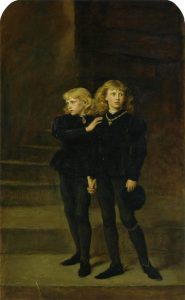
When Henry Tudor defeated Richard of Gloucester in an obscure field in Leicestershire we now know as ‘Bosworth’ (even though that town didn’t exist then), there was no one left on the Yorkist side to challenge his claim to the throne, given that the princes were no more. But it was essential to point the finger away from ‘the person most likely’ – the obvious suspect for the disappearances/deaths, and the Tudor propaganda machine swung into action.
Sir Thomas More possible lived to regret the assistance he gave to Henry VIII in perpetuating the myth that the person behind the disappearances of the princes from the Tower had been a close relative of theirs, namely their uncle. But More was the first to point the written finger at Richard of Gloucester, particularly after Sir William Tyrell, during the reign of Henry Tudor, allegedly confessed to having done the job in the pay of Richard. But tortured men will eventually say whatever their torturers want to hear, and the alleged confession came, second hand, through the mouth of the torturer.
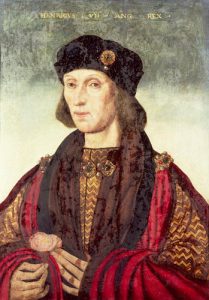 Never one to miss an opportunity to ingratiate himself with a royal patron, that literary prostitute William Shakespeare built Thomas More’s accusation into a horror story of a crook-backed, slew-footed, psychopathic freak who did away with anyone who stood between him and the throne. Actors such as Laurence Olivier and Benedict Cumberbatch then provided us all with a visual image to go with the verbal hype. The net result of all this ‘fake news’ was that we all grew up believing that Richard III had done for the two little boys under his guardianship.
But spin the wheel 180 degrees, and there was someone else who benefitted equally from a sudden absence of Yorkist claimants to the English throne. He had an alibi, of course, because at the most likely date of the crime – the Summer of 1483 – he, Henry Tudor, was in exile in Britanny.
But back home in England, ‘Mummy’, the formidable, wily, scheming Margaret Beaufort, was preparing the runway for her favourite son’s safe landing with an invasion force. She also had a useful second son – Henry’s half-brother the Duke of Buckingham – who was Lord High Constable of England, with responsibilities that included security at the Tower of London. Go figure, as they say.
Having written a novel from the Tudor perspective (The Flowering of the Tudor Rose), and having suffered death by blog from dedicated ‘Ricardians’, I took up the case for the defence in Justice for the Cardinal, due for publication by Sapere Books later this year. The central character in this novel is Richard Ashton, grandson of the Duke of York who escaped from the Tower, only to be executed under his assumed name of ‘Perkin Warbeck’ by a paranoid Henry VII.
‘You pays your money . . . .’, as the old saying goes. The jury will forever remain out on who really ordered the murder of the princes. In the meantime, we historical novelists can play on both halves of the pitch.
The heroine of the Mina Scarletti books is not based on a specific individual; however when I created my diminutive protagonist two people were in my thoughts, one of whom I knew personally.
Eva was the aunt of a friend of mine. She had a very severe distortion of the spine, but the thing that I remember most about her was her sweet smile. I never got to know her well and she died when I was a child.
Annie Jane Fanny Maclean was delicate and very small, due to the curvature of her spine and she walked with a limp. In 1879 aged 33, she inherited some family property. She also attracted the attention of Lewis James Paine, a 49 year old insurance salesman in need of money. 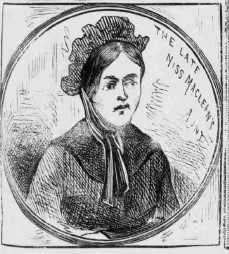
Unknown to Miss Maclean, Paine was a married man, although he denied it when challenged by her suspicious family. By July that year they were living together as husband and wife. Annie had been a moderate drinker, but Paine plied her with alcohol, sometimes forcing her to drink it against her will, and as she fell more and more under his control, he withheld food.
In September, in a very weakened state, she was induced to sign a deed making over her property to Paine. In less than a month she was dead.
Paine was tried for the wilful murder of Annie Maclean at the Central Criminal Court in February 1880. The question for the jurors was had Paine deliberately set out to kill, or had he caused death through recklessness and negligence? He was found not guilty of murder but guilty of manslaughter.
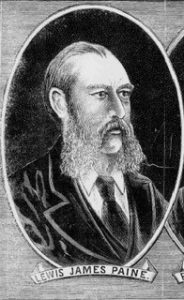 Paine made a long statement to the court, claiming innocence, but the judge, who clearly despised him, stated bluntly that he didn’t believe a word of it. He stated that Paine was guilty of manslaughter ‘in about as cruel and barbarous circumstances as I ever remember having heard of. . . . Had you been guilty of murder, you would most unquestionably have been hanged, as you richly deserve to be.’ (Times 25 Feb 1880 page 11) Paine was sentenced to imprisonment for life. He died in 1897.
In commenting on the case, The Times pointed out that the victim’s appearance was not an insignificant fact, and this led me to reflect on the vulnerability of women in the Victorian marriage market, especially those with a disability, who if they had property could be manipulated by cruel and unscrupulous men.
Marriage and motherhood were considered to be the primary and most desirable roles for Victorian women, and Miss Maclean must have seen Paine, perhaps her only wooer, as her chance of happiness.
In Mina Scarletti, who has been told by her doctors that she must never think to marry, I have created a heroine who is able by her unique insight and force of will to make a challenging and fulfilling life for herself.