

Ahead of the publication of The Restless Wave, the fourth book in the Romulus Hutchinson Naval Adventure Series, author David Clensy takes a closer look at why Operation Pedestal was such a critical moment in the Second World War.
By the summer of 1942, Malta was perilously close to defeat. Isolated in the centre of the Mediterranean, the island had endured almost two years of relentless siege. Axis aircraft and submarines had reduced its ports, airfields and towns to rubble, while starvation and fuel shortages threatened to bring military operations to a standstill. Yet Malta remained strategically indispensable. From its harbours and airstrips, British forces could strike at Axis supply lines to North Africa, choking Rommel’s Afrika Korps just as it prepared for a decisive push towards Egypt.
Operation Pedestal was the Allies’ last throw of the dice to save the island. Conceived as a massive convoy operation and executed at extraordinary risk, it stands as one of the Royal Navy’s most hard-fought and costly triumphs of the Second World War.
It is at the heart of The Restless Wave, the fourth book in the Romulus Hutchinson Naval Adventure series: action-packed, authentic historical adventures following twin brothers fighting with the Royal Navy and the Merchant Navy during the Second World War.
Rom is now a first lieutenant, rapidly getting the chance to show his mettle on the bridge, seeing action in the Mediterranean for the Allied landings at Sicily and Salerno, as well as helping to lift the siege of Malta as part of Operation Pedestal.
In this blog, I wanted to take a closer look at why the operation was so significant.
Malta under siege
By mid-1942, Malta’s position was desperate. Previous attempts to resupply the island had suffered severe losses, with convoys harried from the air by the Luftwaffe and Regia Aeronautica, and attacked at sea by submarines and fast torpedo boats. Fuel for aircraft and ships was critically low, forcing the RAF to limit operations at the very moment when air defence was most urgently needed. Food stocks were so reduced that rationing had reached near-starvation levels for both civilians and servicemen alike.
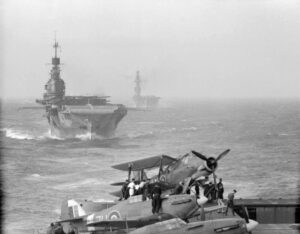
HMS Victorious’ flight deck showing HMS Indomitable and HMS Eagle
Despite this, the island continued to disrupt Axis operations. Intelligence from signals interception and reconnaissance imposed a heavy toll on shipping bound for North Africa. The Axis understood that neutralising Malta was essential. The Royal Navy knew that losing it could turn the Mediterranean decisively against the Allies.
Launched in August 1942, Operation Pedestal was the largest and most heavily escorted convoy yet to attempt to supply the island. Fourteen merchant ships were assembled, carrying food, ammunition and fuel. Their cargo included aviation fuel in bulk and, most critically, the oil tanker SS Ohio, the survival of which would prove vital to keeping the island in Allied hands.
The escort was formidable. Under the command of Admiral Sir Neville Syfret, the Royal Navy committed two battleships, four aircraft carriers, seven cruisers and more than thirty destroyers. It was an extraordinary concentration of naval power, reflecting the strategic stakes involved. Even so, planners knew losses would be heavy. The convoy had to pass through the narrow Sicilian Channel, within range of Axis airfields, submarines and surface craft.
Running the gauntlet
The convoy sailed from Gibraltar on 10 August 1942. Almost immediately, it came under attack. Axis aircraft struck repeatedly, launching coordinated bombing and torpedo attacks designed to overwhelm the escorts. U-boats and Italian submarines waited ahead, while fast torpedo boats prepared night assaults.
The Royal Navy’s carriers played a crucial early role, providing fighter cover that blunted the worst of the air attacks in the opening days. However, as the convoy pressed eastwards, the carriers were forced to turn back in accordance with operational limits, leaving the merchant ships increasingly exposed.
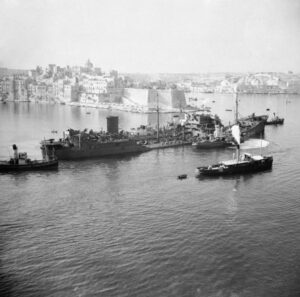
SS Ohio arrives at Malta
Losses mounted. The aircraft carrier HMS Eagle was sunk by submarine attack. Several cruisers and destroyers were badly damaged or sunk while defending the convoy. Merchant ships were picked off one by one, yet the escorts continued to fight tenaciously, laying smokescreens, counterattacking submarines and engaging enemy surface forces at close range.
At the centre of the drama was SS Ohio. Heavily damaged by bombing and torpedo strikes, the tanker was left barely afloat. Her engine failed, her deck was shattered, and she was down by the bows. Yet abandoning her was not an option. Without her fuel, Malta’s air defences and naval forces would grind to a halt.
In one of the most remarkable episodes of the naval war, Royal Navy destroyers and minesweepers refused to give up. Ohio was lashed between escorting ships and painstakingly shepherded towards Malta, under constant threat of further attack. When she finally entered Grand Harbour on 15 August, broken-backed but still afloat, she was greeted by cheering crowds. It was also the Feast of the Assumption, later commemorated on the island as the day Malta was saved.
A landmark moment
Of the fourteen merchant ships that set out, only five reached Malta. The Royal Navy suffered grievous losses: a carrier, two cruisers, a destroyer and numerous aircraft. By any conventional measure, it was a costly operation.
Yet strategically, Operation Pedestal was a success. The supplies that arrived, especially the fuel carried by Ohio, enabled Malta to survive the siege. Within weeks, the island’s air and naval forces were back in action, once again savaging Axis supply lines to North Africa. This pressure played a significant role in undermining Rommel’s offensive and set the conditions for the Allied victory at El Alamein later that year.
For Malta, the convoy became a defining moment, later recognised through the award of the George Cross to the island as a whole. For the Royal Navy, Pedestal remains one of its most hard-fought convoy battles, a stark reminder that maritime logistics, often overlooked, can determine the outcome of entire campaigns.
The Restless Wave is available to pre-order now.
Stay up to date with David’s news and latest releases here.
Image credits: Operation Pedestal Carriers and SS Ohio are from Wikimedia Commons (public domain).
From medieval intrigues and Tudor mysteries to absorbing accounts of momentous battles, there’s something exciting here for everyone. Scroll down to discover this month’s titles from your favourite Sapere authors.
March’s Fiction Releases
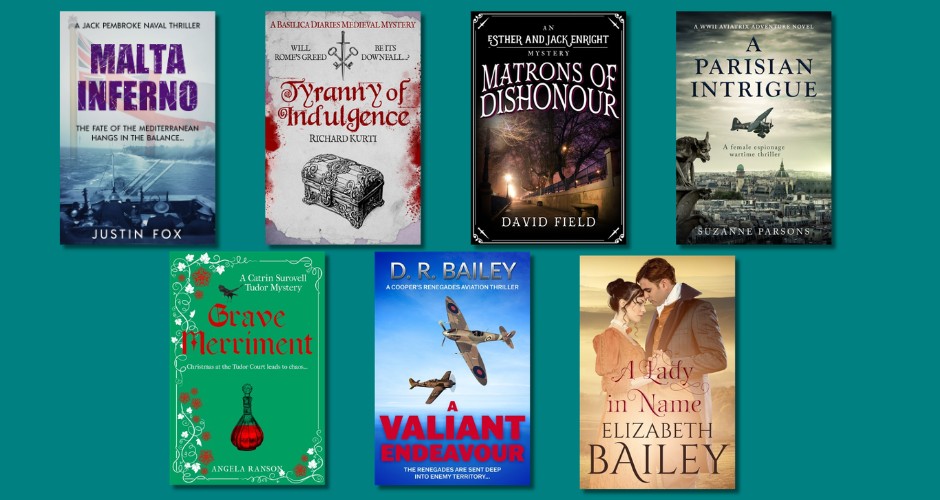
Malta Inferno by Justin Fox is the fourth book in the Jack Pembroke Naval Thrillers series. In this instalment, Lieutenant Jack Pembroke and his small escort ship, HMSAS Southern Gannet, join a secret convoy from Egypt to relieve the beleaguered island of Malta.
Tyranny of Indulgence by Richard Kurti is the fifth book in the Basilica Diaries Medieval Mysteries series. Determined to accelerate the building of St Peter’s Basilica, the new Pope, Leo X, initiates the selling of indulgences, whereby the rich can buy forgiveness for their sins.
Matrons of Dishonour by David Field is the thirteenth book in the Esther & Jack Enright Mysteries series. Jack is tasked with assuring his superiors that rumours of unlawful assaults on suffragettes in police custody are baseless. But when he learns otherwise, he is obliged to reassess his loyalties.
A Parisian Intrigue by Suzanne Parsons is the first book in the WWII Aviatrix Adventures series. Miriam Nugent and her fiancé, Archie Bowater, are both doing their bit for the war effort. While Archie struggles to get to grips with flying Spitfires, at Bletchley Park Miriam quickly makes her mark fixing the machines that will decode enemy messages.
Grave Merriment by Angela Ranson is the third book in the Catrin Surovell Tudor Mystery series. It’s Christmas at Whitehall Palace, but Lady Catrin Surovell cannot find her celebratory spirit. The queen has asked her to stop a brute who has forced the waifs of London to work for him. And it seems the culprit may be someone at court…
A Valiant Endeavour by D. R. Bailey is the second book in the Cooper’s Renegades Aviation Thrillers series. American pilot Cooper Donahue has been sent to the RAF base at Banley to train with the British Mavericks Squadron. Before long, he finds himself flying sorties along the Sussex coast, where the threat of dogfights with the Germans lurks around every corner.
A Lady in Name by Elizabeth Bailey is a heart-warming Georgian romance. When Lucinda Graydene’s father imparts a shattering secret on his deathbed, her world is turned upside down. Bereft, she confronts the author of her unorthodox origins — but instead she finds his heir. And the autocratic Stefan Ankerville, Earl of Pennington, takes charge of her life, despite her protests.
March’s Fiction Backlist Releases
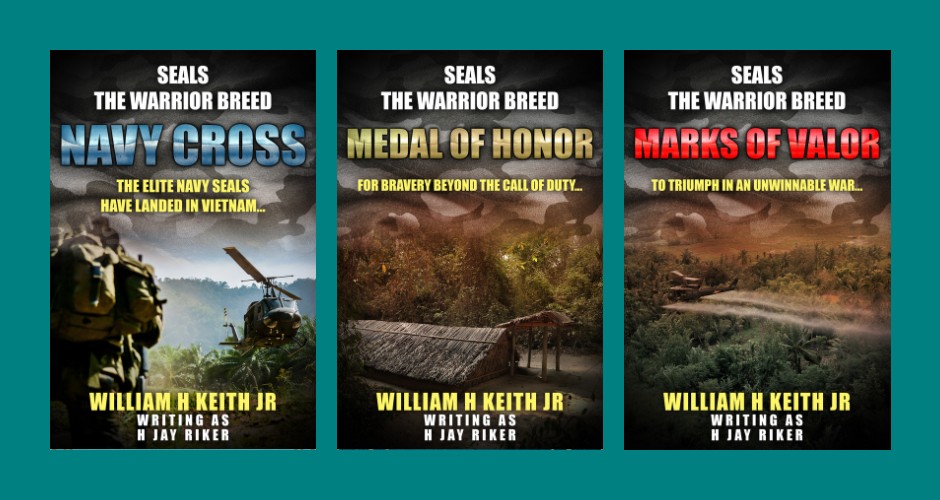
We are pleased to announce that the fourth, fifth and sixth instalments of H. Jay Riker’s gripping SEALS: The Warrior Breed series are out now. Don’t miss these action-packed military adventures, following the U.S. Navy’s elite commando demolition unit.
March’s Non-Fiction Releases
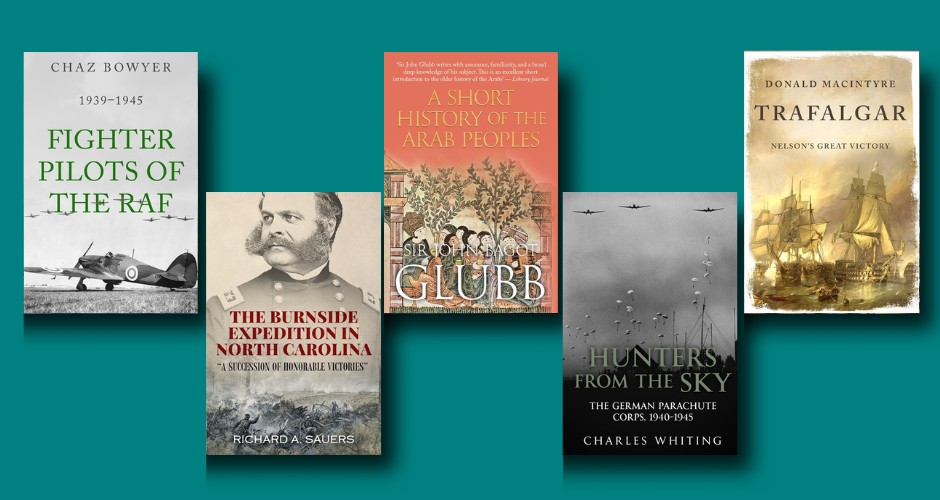
Fighter Pilots of the RAF by Chaz Bowyer is a powerful and deeply human portrait of the men who risked everything in the skies over Europe. Drawing on meticulous research, Bowyer goes beyond the famous names to uncover the untold stories of twenty pilots — many of whom received little public recognition, yet were crucial in the fight against the Luftwaffe.
The Burnside Expedition in North Carolina by Richard A. Sauers is a definitive account of Union General Ambrose E. Burnside’s North Carolina Campaign — a pivotal moment in the American Civil War.
A Short History of the Arab Peoples by Sir John Bagot Glubb draws on the author’s considerable knowledge of the Arab world gleaned from his time spent living and working in the region to explore its history, culture and politics. Spanning from the seventh century to the mid-twentieth century, this book brings to life several tumultuous and extraordinary periods of history.
Hunters From the Sky by Charles Whiting tells the fascinating true story of the Fallschirmjäger — the elite German Parachute Corps — and their role during the Second World War, 1940–1945.
Trafalgar: Nelson’s Great Victory by Donald Macintyre charts the dramatic prelude to the momentous battle — from Horatio Nelson’s rise to fame at the battles of the Nile and Copenhagen, to Pierre-Charles Villeneuve’s bold attempt to unite French naval forces in the Caribbean, before slipping past the British blockade to challenge their command of the seas.
Happy Reading! Team Sapere
Following the success of his Romulus Hutchinson Naval Adventure Series, we are delighted to have signed a new naval military series by David Clensy.
In David’s words:
“U-Boat Aces will be a sweeping, seafaring saga that charts the rise and fall of Germany’s submarine elite across two world wars.
“Spanning three decades, from 1914 to 1945, the five-book series will follow a handful of officers from idealistic cadets to disillusioned veterans, set against the relentless evolution of undersea warfare. Readers will travel the world alongside some of history’s most ruthless U-boat commanders, in a series that will be charged with the claustrophobic conditions of life aboard the German U-boat fleet.
“I am delighted to be working with Sapere Books once again on a second series of action-packed, authentic historical adventures. The team at Sapere brilliantly understand the passions of their audience, making them an absolute delight to work with.”
The Romulus Hutchinson Naval Adventures follow twin brothers fighting with the Royal Navy and the Merchant Navy during the Second World War. The third instalment in the series, The Mighty Ocean, is available to pre-order now.
Sign up to David’s newsletter and stay up to date with his news and latest releases here.
Featured image credit: German U-boat UB 14 with its crew from Wikimedia Commons (public domain).
Ahead of the publication of The Mighty Ocean, the third book in the Romulus Hutchinson Naval Adventure Series, author David Clensy takes a closer look at the infamous Arctic Convoy PQ17, which plays a central role in the story.
In the summer of 1942, a fleet of merchant ships set out from Iceland on a mission that would become one of the most extraordinary episodes of the Second World War. Convoy PQ17 was tasked with delivering vital supplies to the Soviet Union via the Arctic route — a lifeline for the Eastern Front. What followed was a disaster on a route that Churchill himself described as “the worst journey in the world.”
The Arctic convoys were not for the faint-hearted. Ships faced freezing seas, drifting ice, and relentless daylight that made them easy prey for enemy aircraft. PQ17 comprised thirty-five merchant vessels carrying tanks, aircraft, ammunition and food — escorted by destroyers, cruisers, and a distant covering force, including battleships. The stakes were immense: without these supplies, Soviet resistance against Hitler could falter.
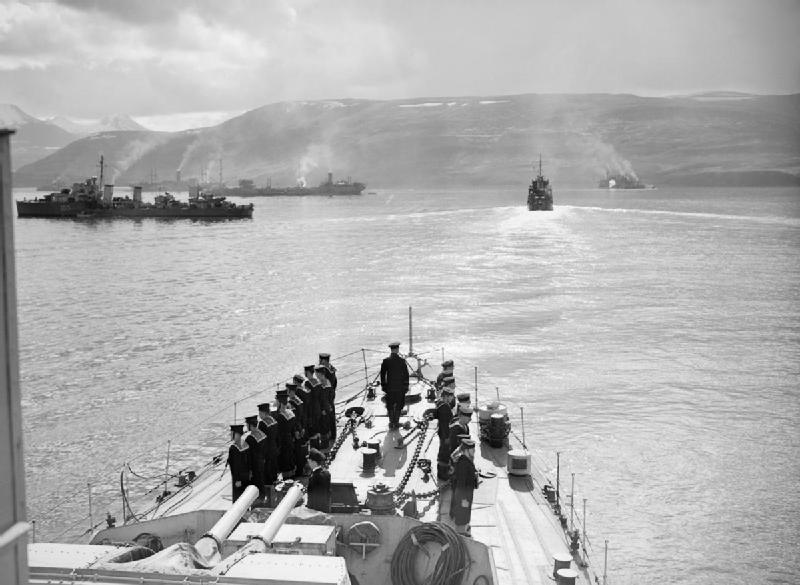
The shadow of the Tirpitz
As PQ17 steamed towards the Barents Sea, British intelligence warned that the German battleship Tirpitz might sortie from its Norwegian fjord base. The mere threat of this leviathan — supported by cruisers and U-boats — was enough to trigger alarm in the Admiralty. On 4 July 1942, First Sea Lord Admiral Dudley Pound made a fateful decision: he ordered the convoy to scatter and the escorts to withdraw.
The order to scatter left the merchant ships defenceless in hostile waters. German aircraft and U-boats pounced. Over the next few days, PQ17 was decimated. Of the thirty-five ships that sailed, only eleven reached Archangel. Twenty-four were sunk, along with thousands of tons of cargo and hundreds of sailors. It was the worst loss in the history of the Arctic convoys.
Survivors recalled scenes of horror: ships ablaze, men clinging to rafts in freezing seas, strafed by enemy aircraft. Rescue was often impossible. Yet amid the carnage, acts of courage shone through — crews who stayed at their guns until the end, and those who risked their lives to save shipmates. For many, the ordeal lasted days as they drifted in icy waters, praying for a miracle.
HMS Ayrshire
Lieutenant Leo Gradwell RNVR commanded HMS Ayrshire (FY 225), a modest anti-submarine trawler pressed into convoy escort duty for PQ17. When the Admiralty ordered the convoy to scatter, Gradwell refused to abandon his charges. Instead, he gathered three merchant ships — Troubadour, Ironclad and Silver Sword — and led them northwards toward the Arctic ice pack, determined to seek safety rather than face destruction.
With no charts at hand, Gradwell navigated by sextant and a pocket geographic guide, eventually finding refuge amid the ice fields. When the convoy became stuck, he orchestrated an ingenious defence: the vessels were all painted white — with linen covering the decks — and their cargo of Sherman tanks formed a defensive perimeter armed for anti-aircraft use. This silent white convoy successfully eluded Luftwaffe aircraft while trapped in the ice.
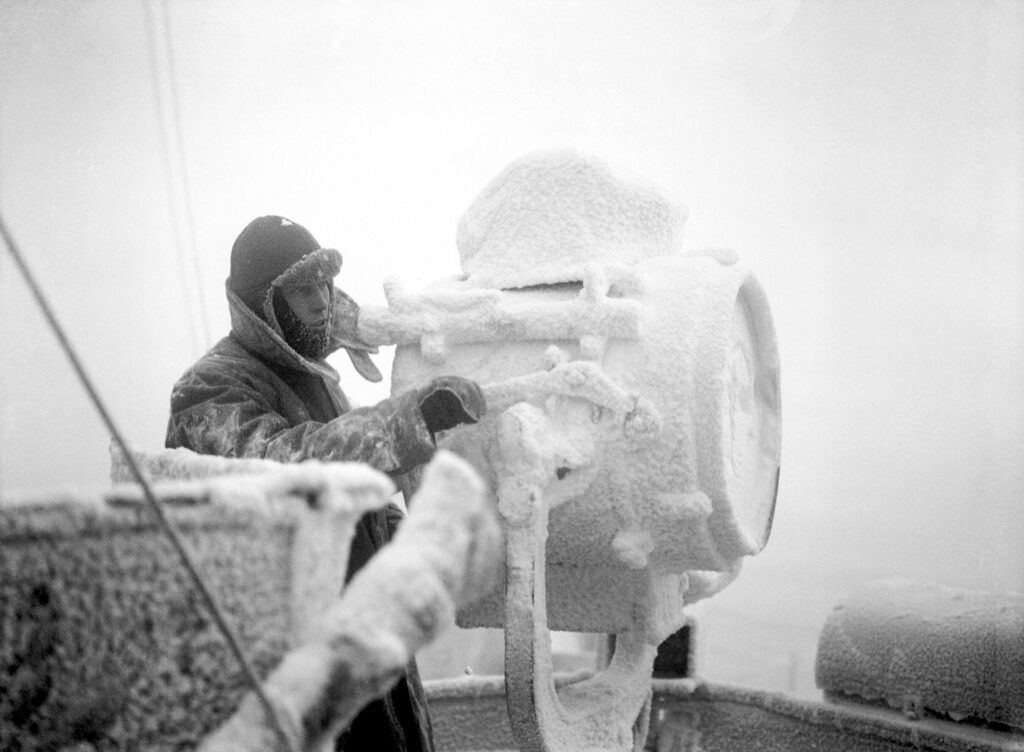
Eventually, the vessels slipped free of the ice and made their way to Matochkin Strait, where they were met by Allied corvettes. Together, they completed the journey to Archangel, arriving on 25 July 1942 — a remarkable feat, given the chaos elsewhere in PQ17. For his outstanding improvisation and leadership under fire, Gradwell was awarded the Distinguished Service Cross later that year.
The PQ17 disaster sparked outrage and soul-searching. Critics condemned the scatter order as premature, arguing that Tirpitz never engaged the convoy. The episode strained Allied relations, with Stalin furious at the losses. Yet the convoys continued, and lessons were learned: future operations featured stronger escorts and better coordination. Despite the risks, the Arctic route remained a vital artery until war’s end.
The Mighty Ocean is available to pre-order now.
Stay up to date with David’s news and latest releases here.
Image credits: Both the image of PQ17 in Hvalfjord and HMS Sheffield are from Wikimedia Commons (public domain).
From twisty mysteries and Roman adventures to exciting tales of historical privateers — there’s something exciting here for everyone. Scroll down to discover this month’s titles from your favourite Sapere authors.
January’s Fiction Releases
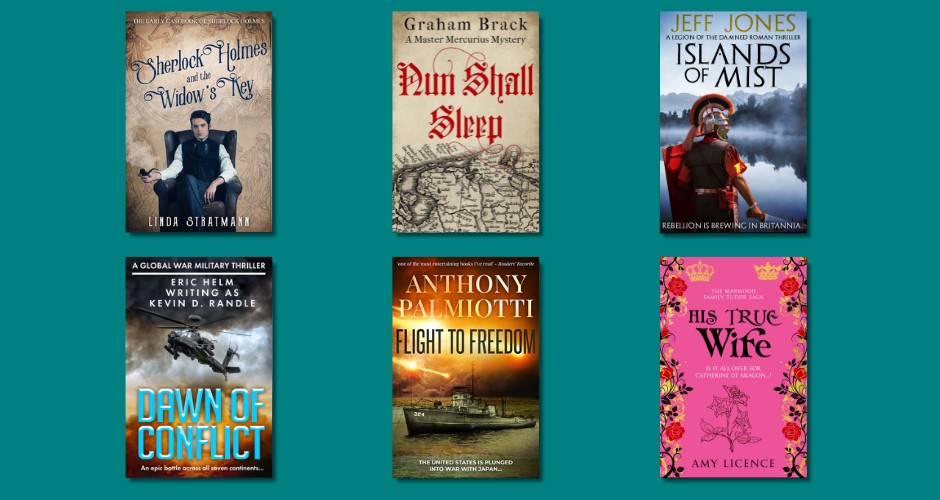
Sherlock Holmes and the Widow’s Key by Linda Stratmann is the tenth book in The Early Casebook of Sherlock Holmes series. In this instalment, Holmes and Stamford investigate the death of a mysterious widow — and make a gruesome discovery in the process.
Nun Shall Sleep by Graham Brack is the ninth book in the Master Mercurius Mystery series: atmospheric crime thrillers set in seventeenth-century Europe. In his latest adventure, Mercurius is drawn into strange — and possibly sinister — happenings at a convent.
Islands of Mist by Jeff Jones is the third book in the Legion of the Damned Roman Thrillers series: action-packed military adventures set in Ancient Rome. For their latest mission, Centurion Marcus Corvo and his men must prevent or crush a suspected rebellion in Britannia.
Dawn of Conflict by Eric Helm is the first book in the Global War Military Thriller Series. In this alternative-history thriller set in the late twentieth century, a series of stunning geopolitical changes destabilizes a dozen major governments around the globe, pitching the armies of each nation into world warfare.
Flight to Freedom by Anthony Palmiotti is a tense World War Two naval adventure. When the Japanese bomb Pearl Harbor, the United States is plunged into war. As one of the few remaining ships in the region, the Tanager is called to evacuate Army nurses and those fleeing from the enemy.
His True Wife by Amy Licence is the fifth book in The Marwood Family Tudor Saga series. In the latest instalment, Catherine of Aragon prepares for the Legatine Court, while lady-in-waiting Thomasin Marwood awaits a marriage proposal from the man she loves.
January’s Fiction Backlist Releases
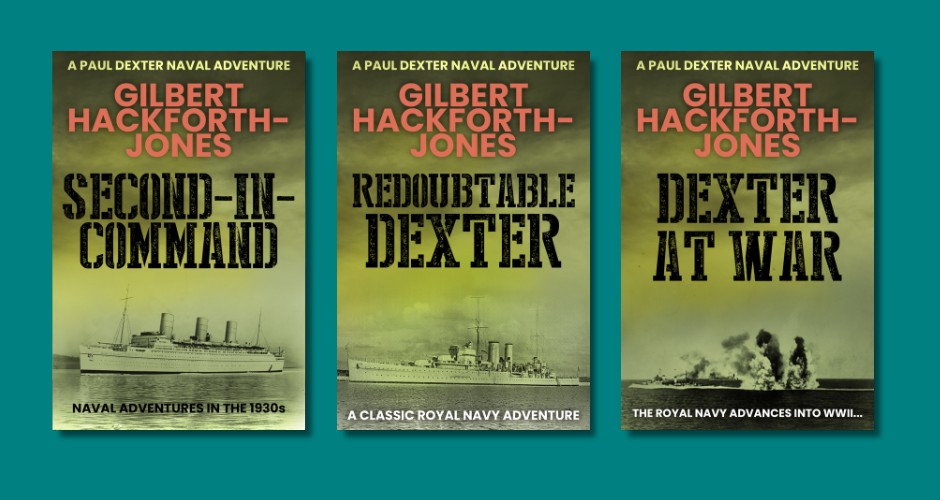
We are pleased to announce that the fifth, sixth and seventh instalments of Gilbert Hackforth-Jones’ gripping Paul Dexter Naval Adventures series are out now! Don’t miss these entertaining and action-packed tales of life at sea.
January’s Non-Fiction Releases
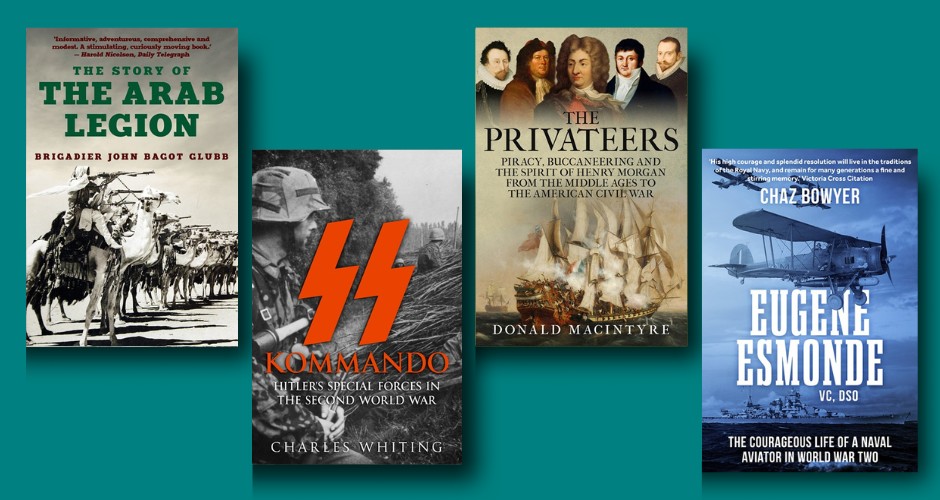
The Story of the Arab Legion by John Bagot Glubb is a fascinating personal account of the development of the Arab Legion as a formidable fighting force from the 1930s to the Second World War.
SS Kommando by Charles Whiting is a compelling read for anyone interested in Kommando operations throughout World War Two — the men involved, their leaders and rivals under the Führer, and the desperate tactics employed in the face of defeat.
The Privateers by Donald Macintyre charts the golden age of privateering — from its Elizabethan origins, through the daring exploits of British and French buccaneers against Spanish treasure ships, to its eventual outlawing and brief revival during the American Civil War.
Eugene Esmonde, V.C., D.S.O. by Chaz Bowyer is a moving biography of a remarkable pilot who received a posthumous Victoria Cross for courageous but fatal actions during World War Two.
Happy Reading! Team Sapere
We are delighted to announce that we have signed the fourth book in Justin Fox’s Jack Pembroke Naval Thrillers series: action-packed British Navy stories set during the Second World War.
Below, Justin tells us more about the series and what to expect from the latest instalment:
“During my national service in the South African Navy back in the 1980s, I learnt about the clashes that took place in the South Atlantic during World War Two. Most South African warships were converted fishing trawlers or Norwegian whalers, hastily fitted with a few guns and depth charges to take on Nazi U-boats and raiders. I was astonished to learn that more than 150 Allied ships had been sunk in South African waters, mostly by German and Japanese submarines.
“Before embarking on my series of novels, I needed to do a lot of research to get the period and events right. I spent time in the British National Archives, Imperial War Museum and the British Library in London, as well as the archives of the South African Naval Museum in Simon’s Town.
“The first two novels in the series tell the story of Jack Pembroke, posted from Britain to serve on escort ships based at the Cape. In the next two novels, Pembroke and his ship HMSAS Gannet are sent up north to Egypt, where they join a flotilla escorting Allied convoys around the eastern Mediterranean. Malta Inferno deals with a fateful convoy to the beleaguered island and Pembroke’s traumatic time there. Each novel can be read as a standalone story.
“Given my background as a travel journalist, I’m the kind of writer who needs to visit and experience the locations of my novels. So, for this novel, I spent considerable time in Malta, trying to find the old haunts of the sailors during the war. Visiting the locations brings valuable authenticity to the writing … and it’s also a good excuse to travel to fascinating places. The next Jack Pembroke novel is set in Madagascar, so that’s where I’m bound!”
Malta Inferno is available to pre-order now.
Visit Justin’s website for all his latest news.
With the forthcoming publication of In Danger’s Hour, the second book in his Romulus Hutchinson Naval Adventure Series, author David Clensy takes a closer look at the events surrounding Operation Excess during the Second World War.
In January 1941, the Mediterranean was a tense theatre of war. The British Royal Navy, stretched thin and under constant threat from Axis forces, launched a bold and complex operation known as Operation Excess. It was a high-stakes convoy mission designed to deliver vital supplies to Malta, Greece and Alexandria, while simultaneously striking a blow against enemy naval and air power in the region.
The convoy itself was a patchwork of merchant vessels and warships, departing from Gibraltar and heading eastward through waters teeming with danger. Malta, then under siege and of immense strategic importance, was a key destination. Supplies were desperately needed to sustain its defences and civilian population. The convoy was escorted by a formidable force of Royal Navy ships, including aircraft carriers, cruisers and destroyers, all tasked with protecting the vulnerable merchantmen from attack.
Operation Excess was a particularly challenging task for the Allied forces. Italian and German aircraft launched repeated assaults, particularly as the ships neared Sicily. The Royal Navy’s carrier-based aircraft, including Fairey Fulmars and Swordfish, fought valiantly to repel the attacks, often flying in difficult conditions and against superior numbers.
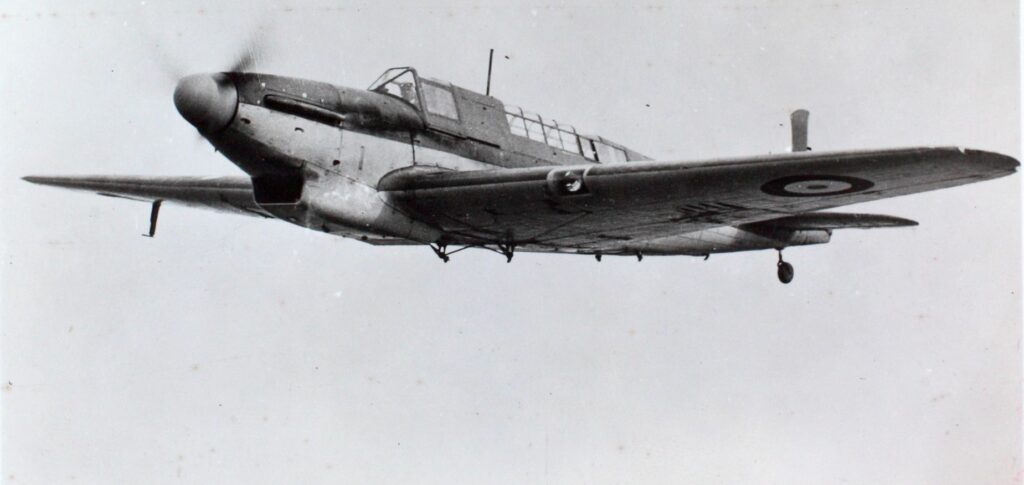
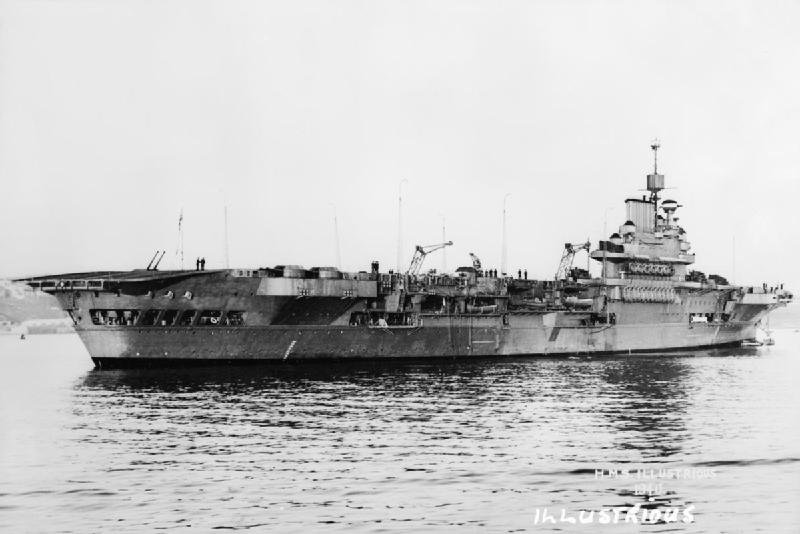
One of the most dramatic episodes of the operation occurred on the 10th of January, when HMS Illustrious, a key British aircraft carrier, came under ferocious air attack near Malta. The damage was severe, and casualties were high. Yet the carrier remained afloat and was eventually able to limp into Grand Harbour, where she became a symbol of resilience for the Maltese people.
Meanwhile, other elements of the operation were unfolding. British forces used the opportunity to launch diversionary attacks against Italian positions in the Dodecanese and to reinforce troops in Greece.
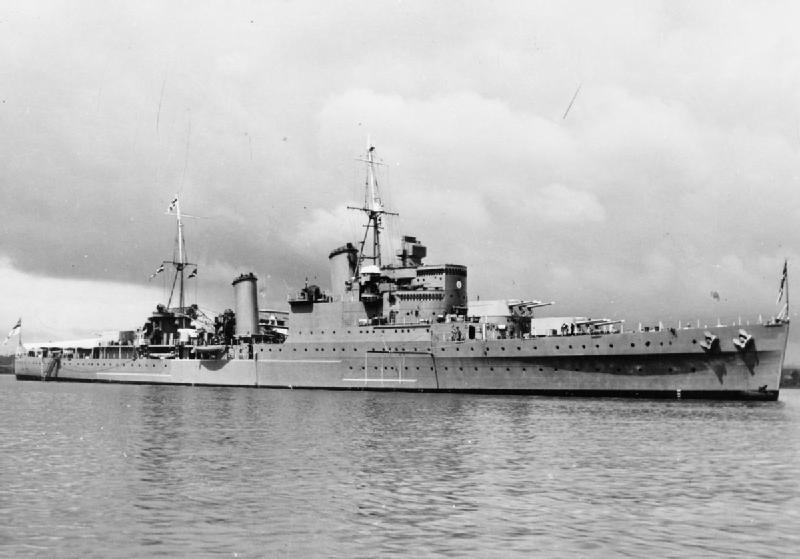
As part of Force B, HMS Southampton’s role was to transport troops from the Aegean to Malta before joining the main convoy. On the 11th of January, while operating south of Sicily, HMS Southampton came under sustained attack from German dive bombers of the Luftwaffe’s X Fliegerkorps. The Stukas struck with deadly precision, scoring multiple hits that ignited fires and caused catastrophic damage. With the cruiser listing and engulfed in flames, the order was given to abandon ship. HMS Southampton was eventually scuttled by torpedoes from HMS Gloucester to prevent her from falling into enemy hands.
Though the operation came at a cost, it was ultimately deemed a success. Supplies reached their destinations, and the Royal Navy showed it could still operate effectively in contested waters. Operation Excess was more than a supply run. It was a statement of intent, a show of defiance against Axis control of the Mediterranean.
November 2025 sees the release of In Danger’s Hour, the second book in the Romulus Hutchinson Naval Adventure Series. Following their earlier adventures in For Those In Peril, we follow twin brothers Romulus and Remus throughout 1941, from the Mediterranean to the coast of West Africa. It covers a series of key strategic operations, including Operation Demon — the British-led evacuation of Allied forces from mainland Greece in April 1941. At the opening, readers will join our central character, Rom, as he faces an enemy attack while serving on HMS Southampton at the height of Operation Excess.
In Danger’s Hour will be published on the 28th November 2025.
Stay up to date with David’s news and latest releases here.
Congratulations to David Clensy, whose thrilling war-time naval thriller, For Those In Peril, is published today!
For Those In Peril is the first book in the Romulus Hutchinson Naval Adventure series.
Liverpool, 1939
Twin brothers Romulus and Remus Hutchinson grew up in a proud seafaring Liverpool family. So when war breaks out in Europe, they are both keen to sign up and do their part.
With their parents’ consent, both boys join up on their 16th birthday in October 1939 – Romulus as an RNVR sub-lieutenant on a Royal Navy destroyer and his brother as a deck hand with their father’s employer, John Holt & Company.
But with Romulus’s sadistic training officer seemingly intent on breaking the cadets’ spirits before their careers have even set sail, he struggles with the intense training.
There is no time for doubts, however, as the two brothers are quickly thrown into combat.
With Operation Dynamo around the corner, will the Hutchinson brothers both make it out alive…? Can they make their mark as their forefathers did before them?
Or will the bottomless deep claim yet more victims…?
We are delighted to announce that we have signed a new naval fiction novel set during the Second World War by Anthony Palmiotti.

Anthony Palmiotti
In Anthony’s words:
“When searching for subjects to write about, I look for little-known stories or actions within bigger events that emphasize the strength of character and the contributions made by ordinary people — the individuals that make a difference to the outcome. Invariably, it is the strength of character of the common man or woman that determines the outcome — that makes the difference between winning and losing. It could be a single heroic action or simply a steadfast stubbornness. It might be the will to go on when common sense says this is not a good idea. They are the unknown people who make the seemingly impossible, possible.
“Operation Pedestal was just one convoy in a war that saw hundreds of convoys. Malta was just one island in a sea of islands. What makes these two different is that they faced extreme odds and yet, through a steadfast perseverance, they beat the odds. The citizens of Malta and the common men on the convoys showed an uncommon resolve. They simply did not give up, even when giving up was the smart thing to do.
“My take on Malta during the summer of 1942 and Operation Pedestal is not a history but a novel. A novel allows the writer to get personal. It not only offers the facts, but, hopefully, a feel for what it’s like when ordinary people are asked to do extraordinary things.”
Discover more about Anthony here.
Congratulations to Tim Chant, whose thrilling naval adventure Vengeance at the Falklands, is out now!
Vengeance at the Falklands is the fifth book in the Marcus Baxter Naval Thriller Series: action-packed historical adventures following former Royal Navy officer Marcus Baxter during the early 1900s and through the First World War.
Winter, 1914
Lieutenant Marcus Baxter is working in the supply department at HM Dockyard Devonport, when word arrives that the German East Asia Squadron has destroyed a British squadron at the battle of Coronel.
Baxter seizes an opportunity to impress the First Sea Lord, Jackie Fisher, during a snap inspection of the dockyard and secures an appointment to HMS Astute, a scout cruiser, which is being sent to join the squadron in the South Atlantic.
Surviving a storm in the mid-Atlantic, Astute has a run-in with a mysterious passenger liner sailing under the Stars and Stripes, and duels with a German light cruiser stalking the rich hunting grounds off the South American coast.
After an intense engagement, which sees the Astute fleeing along the coast to Montevideo for emergency repairs, Baxter once again encounters the suspicious liner. And this time he is determined not to let it get away.
Baxter risks everything to sneak aboard, and makes a shocking discovery. He needs to reach the safety of the Falklands before any intelligence falls into the wrong hands.
But with the enemy on his tail, the race along the South Atlantic won’t be an easy one…
Congratulations to Justin Fox, whose thrilling military adventure, Hell Run Tobruk, is out now!
Hell Run Tobruk is the third book in the Jack Pembroke Naval Thriller series: authentic British Navy war stories set during the Second World War.
December, 1941
Lieutenant Jack Pembroke is ordered to join a convoy and sail his small escort ship, HMSAS Gannet, from the Royal Navy base in Simon’s Town, South Africa, to Egypt.
With the Mediterranean all but closed to maritime traffic, and Rommel’s forces rampaging through North Africa, it seems unlikely that Gannet will survive the coming battles.
Jack arrives in Alexandria and is soon thrust into the action, escorting ships running supplies to the beleaguered town of Tobruk in Libya.
With the pressure building and ships around him being sunk by enemy bombers, Jack must deal with his own PTSD while leading his men to safety.
And with Tobruk surrounded, about to fall to Axis forces, Gannet is still trapped in the port…
Can Jack lead his men to safety? Will he make it out of Tobruk in one piece?
Or will this Hell Run be his last…?
We are delighted to announce that we have signed Anthony Palmiotti’s American Merchant Marine series set during World War II.

Anthony Palmiotti
In Anthony’s words:
“Thank you, Sapere Books, for allowing my series to sail on.
“World War II was, perhaps, the most dangerous of all times for American Merchant Marines and British Merchant Navy seamen. Particularly in the early years, these civilian seamen had less chance of surviving the war than their comrades in the traditional military services. The series starts just as things are heating up when a young third mate, Patrick Welch, joins the tramp freighter Arrow. Throughout the first three books in the series, Patrick, and the crew of the Arrow, deal with Nazi U-boats, unforgiving weather and are part of a little-known rescue of Norwegian civilians from the far north.
“The goal of these novels is to highlight the contribution and sacrifice of these civilian warriors. And, of course, tell a good sea story!”
We are delighted to announce that we have signed a new series of historical naval adventures by Daniel Donato.
In Daniel’s words:
“The series follows English privateer Gideon Locke during Queen Anne’s War, which engulfed the colonies from Newfoundland all the way down to the Caribbean. With the Royal Navy tied up back home, it largely fell to privateers to protect the colonies.
“The story begins in 1707 with Gideon newly returned from a disastrous privateering venture, leaving him destitute and shunned by his fellow privateers. His fortunes change, however, when a charismatic captain recruits Gideon on his next venture. But by the time Gideon realizes that change in fortune was for the worse, it’s too late, and he finds himself caught up in a plot to kidnap the son of a prominent English Governor and deliver him to the French.
“As the series progresses, we’ll see Gideon fight to redeem himself, earn a reputation and climb in rank until he’s ultimately in command of his own vessel.
“I was very fortunate to meet Amy Durant at the Historical Novel Society Conference in Texas last year, and even more fortunate that she was interested in this series. It’s a dream come true to be working with a publisher like Sapere Books who understand that there’s quite a hunger out there for historical action and adventure.”
Congratulations to David Field, whose enthralling naval adventure, Westward To Freedom, is out now!
Westward To Freedom is the third Tudor/Renaissance novel in The New World Nautical Saga Series – historical novels set during the reign of Elizabeth I and beyond.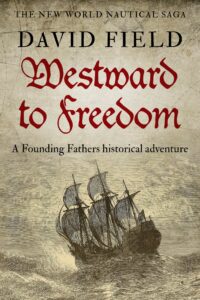
1607
The English Separatists seek only the right to be allowed to worship in their own way in their humble North Nottinghamshire village, but their beliefs are anathema to King James.
When they are given cause to believe that their clandestine meetings have come to the notice of the authorities they move to Gainsborough with a view to taking ship to the Low Countries.
After being betrayed three times they eventually make it to the comparative safety of Holland, but even there they are in danger of persecution.
So in one final throw of the dice they sign up to be members of a ‘settler’ community financed by merchant adventurers.
But to start their new life they must survive the perilous crossing on The Mayflower.
And the wilderness waiting for them on the other side is not quite what they had hoped for.
Will they succumb to the elements, disease or starvation?
Or will fortune shine on this assembly of pilgrims and finally allow them a sanctuary of their own creation?
Congratulations to Tim Chant, whose page-turning nautical adventure, The War for Tripoli, is out now! The War for Tripoli is the third book in the Marcus Baxter Naval Thrillers series.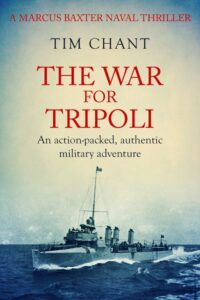
1911
Itinerant seaman Marcus Baxter has landed in Constantinople. Short of funds and lacking allegiance to any government, he is keen to sell his services to the highest bidder.
With Italy intent on capturing the Ottoman provinces of Tripolitania and Cyrenaica, it seems that war is on the horizon and fighting men will soon be in demand.
As a battle-hardened sailor, it isn’t long before Baxter is approached by Hiram Bogue, an American sea captain in league with the Committee of Union and Progress — an Ottoman revolutionary organisation.
Enticed by the amount of money on offer, Baxter agrees to train new recruits aboard the Residye, a proposed blockade runner, as well as overseeing the refit of the vessel.
With the growing threat of attack by the Italian navy, the assignment grows ever more dangerous.
And when war finally erupts, Baxter is forced to propel his inexperienced crew and ill-equipped vessel into action.
But with such a formidable enemy, will he survive long enough to claim his earnings…?
Justin Fox is the author of the Jack Pembroke Naval Thriller series: authentic British Navy war stories set during the Second World War.
I grew up around boats and the sea has always been an important part of my life and my writing. Our family spent holidays in an old house in Simon’s Town, the former Royal Navy base in South Africa, and from an early age I knocked about in anything that floats: rowing boats, sailing dinghies, windsurfers and yachts. My reading as a boy was also nautically orientated, particularly naval yarns by the likes of Douglas Reeman, Patrick O’Brian, Nicholas Monsarrat and CS Forester.
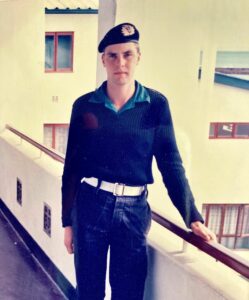
Midshipman Justin Fox, aged 17.
After leaving school, my two years of national service in the South African Defence Force were spent in the navy, based in Simon’s Town. During that period, I had six months at sea on a replica medieval caravel sailing down the Atlantic from Portugal to South Africa in a re-enactment of the voyage of Bartholomew Dias in 1487. The first book I ever wrote (never published) was the story of that voyage.
When I later joined Getaway travel magazine as a photojournalist, I volunteered for any boating assignment: sailing a brigantine around the Seychelles, a felucca down the Nile, a pirogue to Timbuktu, island-hopping by catamaran around Madagascar, taking the mail ship to St Helena Island and sailing a dhow up the Kenyan coast (which provided material for my Somali pirate novel, Whoever Fears the Sea, published by Sapere).
My Jack Pembroke series is inspired by my love of history and the sea, but I also aimed to bring to the fore a theatre of World War II that is not well known and is little written about: the fighting off the South African coast that resulted in the loss of more than 150 Allied ships.
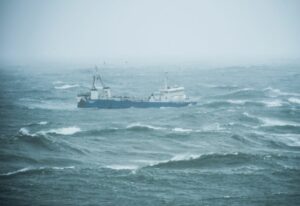
View from Justin’s flat in Cape Town.
I live in a flat in Cape Town and my desk overlooks the city’s anchorage. Watching the ships come and go each day, I often think of the war years when thousands of vessels were routed around the Cape. When a convoy was in town, Table Bay would be crammed with more than fifty ships, all of them needing protection. In place of today’s yachts and pleasure craft puttering jauntily out of the V&A Waterfront, minesweepers and anti-submarine vessels would make their daily round of the bay.
During the war, the Cape of Good Hope became a vital strategic point on the sea route around the continent and was particularly important during the North African campaign. Once Italy entered the war in 1940, the Mediterranean became too dangerous for Allied convoys, and most were diverted around the Cape. Much preparation was needed before Nazi warships made their way to Africa’s southern tip. The Royal Navy base in Simon’s Town had to be expanded and reinforced, and a fledgling South African Navy created almost from scratch.
First came the German surface raiders, then the U-boats. They attacked within sight of the coast and near the entrance to the harbours of Cape Town and Durban. There are incredible stories of heroism and cloak-and-dagger raids around our coast. For instance, one U-boat slipped into Table Bay and its captain allowed his crew on deck to see the bright lights of Sea Point (of course, all German cities were blacked out at the time). There are many apocryphal stories that surfaced in the folklore of coastal towns, such as German sailors coming ashore and playing soccer with Nazi-sympathising locals, spies passing on information about Allied ship movements and farmers replenishing U-boats around Cape Agulhas.
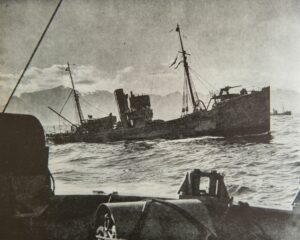
Cape Town minesweepers during WWII.
Like many South African children of my generation, I had a fascination with World War II. I built model ships and aeroplanes, played war games in our suburban garden and devoured books about the great campaigns. But I was always mildly disappointed that most of the stories were about the North, and that South Africa seldom featured in the accounts.
During my time in the navy, I began to learn a little bit about the battles fought in local waters and became interested in the exploits of South Africa’s ‘little ships’. If the actions of raiders, U-boats and convoys were soon forgotten by the general public after the war, the exploits of minesweepers and anti-submarine vessels hardly received mention at all. Yet the industrious, daily patrols by these ships kept South African ports open and took the fight to the U-boat wolf packs. It is that story that forms the backdrop to the first two Jack Pembroke adventure novels, The Cape Raider and The Wolf Hunt.
Congratulations to Justin Fox, whose thrilling wartime adventure, The Wolf Hunt, is out now! The Wolf Hunt is the second book in the Jack Pembroke Naval Thriller series.
1941
Lieutenant Jack Pembroke has found a new home and new love at the Cape, but it will all hang in the balance with the arrival of the enemy in South African waters.
With the Mediterranean all but closed to maritime traffic, and Rommel’s forces rampaging through North Africa, this sea route is vital to supplying the Allied forces in Egypt.
But German U-boats have been sent by Admiral Donitz from their bases on the west coast of France to cripple the convoy route.
Jack is put in command of a small anti-submarine flotilla in the Royal Navy base of Simon’s Town, South Africa.
But he has very little time to train his officers and men, and prepare his ships, for the arrival of the Nazi wolf packs.
With the Cape under attack, Jack has to escort a vital convoy from Cape Town to Durban.
But with the enemy U-boats lying in wait in the storm-ravaged waters, he’ll be luck to make it out alive…
Congratulations to Tim Chant, whose exhilarating nautical action novel, Mutiny on the Potemkin, is published today!
Mutiny on the Potemkin is the second book in the Marcus Baxter naval thriller series: action-packed, authentic historical adventures following former Royal Navy officer Marcus Baxter during the early 1900s.
 Marcus Baxter may have survived one naval battle, but his troubles are far from over.
Despite serving with the Russian navy aboard the Yaroslovich, he is arrested by the Tsarist secret police for conspiracy and sent west on the Trans-Siberian railway to St. Petersburg. Competing factions within the secret police disrupt his journey and he finds himself in Odessa.
Odessa, though, is in the grip of revolutionary riots and Baxter finds himself trapped in the city as violence and anarchy spreads.
The crew of the Potemkin has mutinied, killing most of the officers and bringing the battleship into port.
When Baxter realises a friend is trapped in the carnage, he is determined to get onboard the battleship.
But will he make it out alive?
Click here to order Mutiny on the Potemkin
Are you working on a new series set in the Age of Sail? Have you written a naval thriller set during the World Wars? Are you passionate about seafaring stories? Sapere Books wants to hear from you!
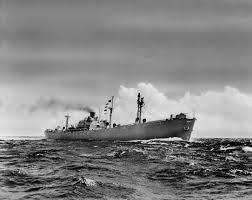
We are actively looking to acquire nautical fiction from both debut and established authors. We are particularly interested in historical naval fiction, nautical thrillers, and books in a series.
If you are an author who owns the rights to a previously published naval series, or a writer working on a new nautical novel, please get in touch and tell us about it!
Email our Editorial Director, Amy Durant, directly with some information about your nautical writing and a synopsis of your naval novel and we will get back to you as soon as possible.
We hope to hear from you soon!