

To mark the publication of Indomitable, the second book in the Newt Beresford Naval Adventures, author Jonathan Eyers takes a closer look at the Battle of the Chesapeake — one of the most crucial naval engagements in United States history.
In the 250 years since the United States declared its independence from Great Britain, the American struggle for freedom has become a key part of the country’s glorious story. Most of the story is true, of course, but it is also fair to say that the level of accuracy depends on who is telling it.
Ask your average American what the turning point for the war was and most will say the Battle of Yorktown in October 1781. And they wouldn’t necessarily be wrong. This was the last major land battle of the War of Independence; the British didn’t just lose, but were forced into the humiliation of surrendering an entire army. It led to the resignation of the British Prime Minister and a subsequent vote in Parliament to begin negotiations to end the war — in effect, recognising American independence.
But ask historians, especially maritime historians, what the turning point for the war was and most will that say the Battle of Yorktown was only lost by the British because a month before they had also lost the Battle of the Chesapeake. Once you look at who fought in this battle, also known as the Battle of the Capes, you start to understand why it is so little known, despite being so important.
After all, it’s arguably the most decisive battle of the American War of Independence — but not a single American fought in it.
At this point it’s crucial to understand the broader context of the entire war from a European perspective. For the British, what started as a bit of unrest in Massachusetts, which they expected to be able to put down with the same ease they put down unrest elsewhere in the Empire, had turned into a prolonged, deeply unpopular war. For the Crown and the government, the need to keep fighting it was a matter of pride. For a lot of the British, however, the American colonies were an offshoot of the motherland, full of their own relatives (however distant), unlike most other British colonies.
For the French, meanwhile, the War of Independence was a splendid opportunity. It was entirely in the interests of the French that the British, their main rival for power not just in Europe but across the entire world, get bogged down, distracted and exhausted by a fight an ocean away. Cities and schools across the US are named after the Marquis de Lafayette, but the French contribution to the American cause was far more extensive than its most famous volunteer.
Indeed, France poured so many resources into what for them effectively became a proxy war with the British that it almost bankrupted itself. It continued to support it, however, in the expectation that after finally winning independence due to French assistance, the newly free United States would be so grateful to France that it would become almost a vassal state, with American trade dominated by France. Instead, the likes of Thomas Jefferson and Alexander Hamilton pushed to begin trading with Great Britain again almost immediately there was peace. France had no way to recoup its huge financial losses, and the resulting financial crisis was a key factor in France’s own Revolution. But that’s another story.
Even before George Washington’s men arrived at Yorktown, on the southern bank of the York River in eastern Virginia, Lafayette was there making trouble for the British. The British had been led to believe the American and French forces were preparing for a major attack on New York, and here General Cornwallis was mustering his forces. He soon found his army surrounded and besieged by the Americans and the French, at which point he became dependent on the Royal Navy either bringing reinforcements or evacuating British forces via Chesapeake Bay.
So the French blockaded it. Cornwallis’ position was soon rather dire. If the Royal Navy didn’t break that blockade, he stood little chance against the combined forces of the Continental Army and their French allies. Under Rear Admiral Sir Thomas Graves, a British fleet of nineteen ships of the line sailed from New York. The French fleet of twenty-four warships, under Lieutenant Général des Armées Navales François Joseph Paul de Grasse, left Chesapeake Bay to meet them.
The British initially had the weather gauge, so believed they had the advantage, even if they were outnumbered. Ships of the line were so named precisely because they were intended to sail in single file, parallel to the enemy’s line, firing broadsides at the other side until one side lost sufficient ships to realise they couldn’t win, so disengaged and withdrew.
In the Battle of the Chesapeake, however, the British and French fleets converged at an angle, rather than forming parallel lines. This meant the vanguard saw brutal close-quarters fighting, whereas ships bringing up the rear on both sides barely participated in the battle at all. Much has been written about why the Royal Navy fleet failed, beyond being somewhat unexpectedly outnumbered, but that loss sealed the fate of General Cornwallis and his army. Without relief or escape by water, the British forces at Yorktown were brought to surrender in under six weeks.
You can see why the story of the Battle of the Chesapeake doesn’t get told quite so often as that of the Battle of Yorktown, or the Battle of Saratoga in 1777, which convinced France to ally with the American revolutionaries in the first place. No Americans fought in it, so it’s not as glorious a part of the narrative as Yorktown. The British lost it, and with it the war, and defeats never get quite the same attention as victories. And as for the French, it was the last major naval victory of L’Ancien Regime, which lost its heads a few years later precisely because it impoverished the French to bolster the Americans.
But it’s a fascinating and exciting battle to explore in fiction, which is why I have put it at the heart of Indomitable, the second book in the Newt Beresford series. To the men of Royal Navy ships like the fictional third-rate ship of the line HMS Indomitable, caught up in the noise and terror of a sea battle, they would have been unaware that history was being written all around them. For Newt and his fellow midshipman Banks, the Chesapeake is a battleground of another sort, as their rivalry mirrors that of the British and the French. Only one of them can come out of it with all the glory, too.
Tenacious and Indomitable are available from Amazon now.
From naval adventures and military thrillers to the biography of an aviation legend, there’s something exciting here for everyone. Scroll down to discover this month’s titles from your favourite Sapere authors.
August’s Fiction Releases
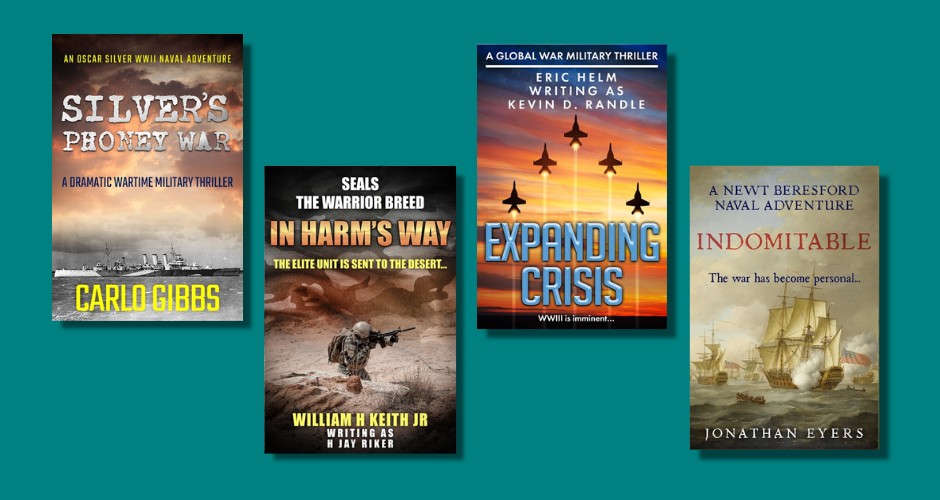
Silver’s Phoney War by Carlo Gibbs is the first book in the Oscar Silver WWII Naval Adventures series. With Britain’s war effort gathering pace, young Oscar Silver has received his conscription orders. But while Oscar tries his best to get to grips with life in the Navy, the enemy is lurking just around the corner…
In Harm’s Way by William H Keith is the seventh book in the SEALS: The Warrior Breed series: action-packed military adventures following the U.S. Navy’s elite commando demolition unit. The unit are tested as never before — on a daring rescue in a desert land that’s ready to explode…
Expanding Crisis by Eric Helm is the third book in the Global War Military Thriller series. The global threat is heating up in this alternative-history military adventure set in the late twentieth century.
Indomitable by Jonathan Eyers is the second book in the Newt Beresford Naval Adventures series: Age of Sail historical adventures set in the 18th century. Will British naval officer Newt Beresford manage to prove his worth in the most decisive battle of the American Revolutionary War?
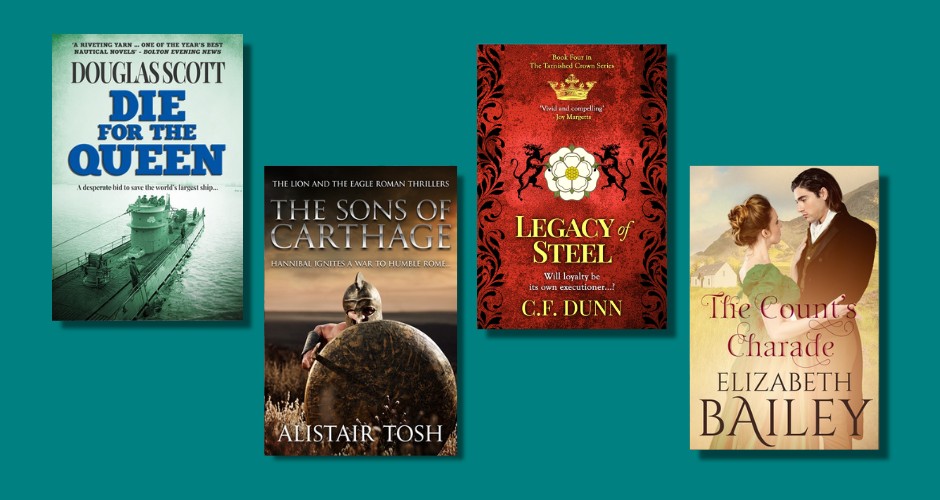
Die for the Queen by Douglas Scott is a wartime naval thriller full of military action and adventure. As the world’s biggest ship begins her maiden voyage, it should be a famous day for Britain, but the occasion is marred by a smokescreen of secrecy, bluff and counterbluff. Out of a background of peacetime intrigues, conflicting loyalties and star-crossed romance, a story of compelling power emerges — which surges to a nail-biting climax as the Queen Elizabeth slips from the Clyde and heads to the open sea…
The Sons of Carthage by Alistair Tosh is the first book in the Lion and the Eagle Roman Thrillers series: military adventures set in Ancient Rome. Carthaginian general Hannibal Barca leads his formidable army across the treacherous Alps, intent on striking at the heart of Rome itself. But as the armies of Carthage and Rome clash for control of Iberia, only one can emerge victorious…
Legacy of Steel by C.F. Dunn is the fourth book in The Tarnished Crown series: Wars of the Roses historical fiction set in Medieval Europe. Isobel Langton’s husband, Robert, has returned from North Africa, but he is not the man who left almost a year before. His exploits at sea defeating Barbary pirates are hailed as a great victory, but they have left him unpredictable and withdrawn. While Isobel struggles to preserve her marriage, King Edward fights for his reputation. Will Isobel lose her husband forever? And can she find a way to prove her family’s loyalty to the Crown…?
The Count’s Charade by Elizabeth Bailey is a heart-pounding love story set in Georgian England. Grace Dovercourt never thought she’d ever fall in love. But her settled life is turned upside down when she discovers a fugitive hiding in one of her outbuildings — and at death’s door. Will she risk all to keep him alive? And can she trust him with her heart?
August’s Fiction Backlist Releases
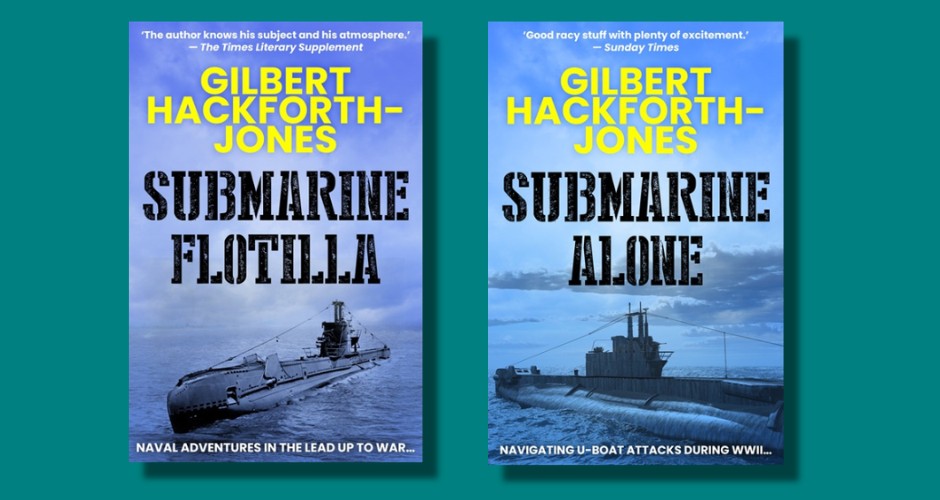
We are pleased to announce that two new action-packed submarine adventures by Gilbert Hackforth-Jones are out now!
Royal Navy Lieutenant Commander Charles Compton is recalled to take command of H.M. Submarine N27. Compton is thrown straight into the deep end and must use every ounce of his ingenuity and energy to survive.
HMS Steadfast is patrolling for enemy raiders. The weather worsens. It becomes impossible to distinguish friend from foe, but destroying an enemy vessel could change the course of the war…
August’s Audio Releases
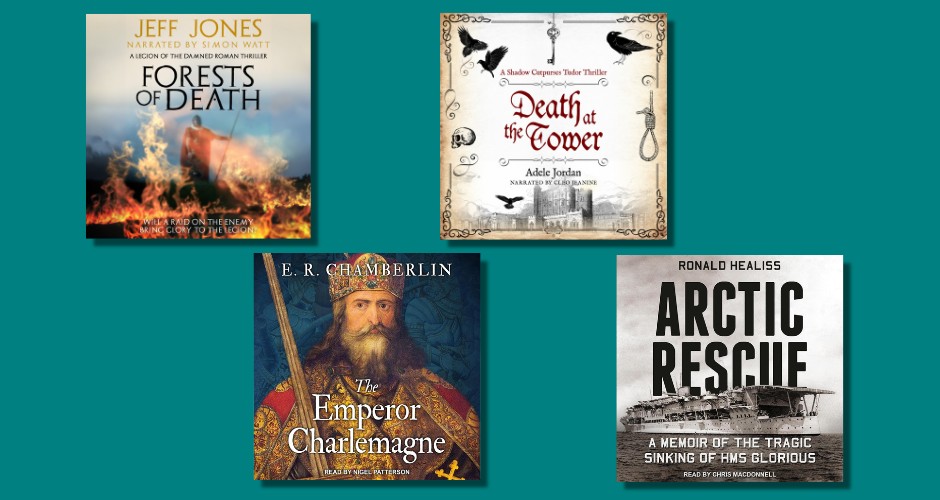
Lose yourself in a great audiobook this month!
The battle-hardened Legion of the Damned return in this Roman military adventure in Forests of Death by Jeff Jones.
Discover an engrossing biography of one of the greatest rulers of the medieval period in The Emperor Charlemagne by E. R. Chamberlin.
Thief turned espionage agent Gwynnie Wightham is tasked with hunting down a spy in the Tudor court in Death at the Tower by Adele Jordan.
Don’t miss the moving World War Two memoir that uncovers a forgotten naval catastrophe in Arctic Rescue by Ronald Healiss.
August’s Non-Fiction Releases
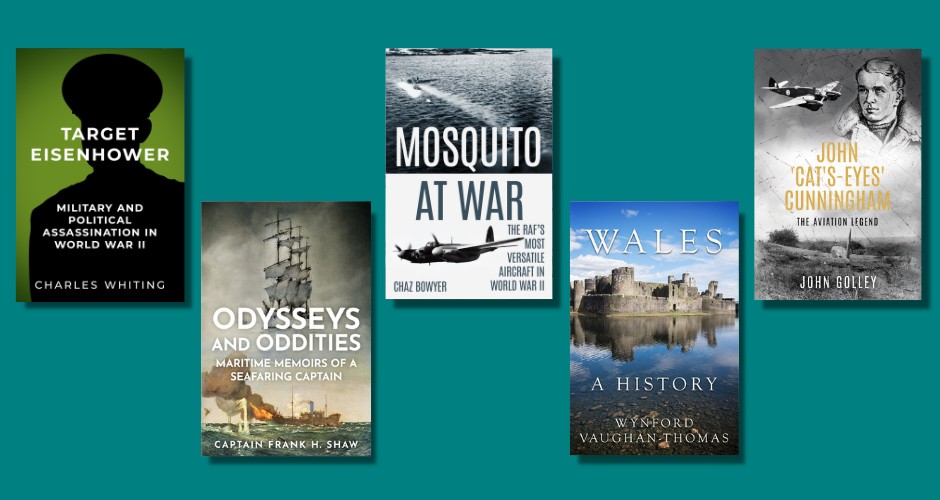
Target Eisenhower by Charles Whiting sheds new light on the hidden story of military and political assassination during World War Two. Whiting exposes this clandestine conflict, revealing the operations, agents, and motives behind both Allied and Axis assassination attempts which, had they succeeded, could have changed the direction of the entire war.
Odysseys and Oddities: Maritime Memoirs of a Seafaring Captain by Frank H. Shaw recounts his extraordinary career in the Merchant Navy and his service as a captain during the First World War. With warmth and humour, he recalls the curious characters he sailed with, the hardships and pleasures of life afloat, and the remarkable adventures he experienced both at sea and ashore.
Mosquito at War by renowned aviation historian Chaz Bowyer charts the story of the RAF’s most versatile aircraft in World War Two, from conception through every theatre in which it served, from Britain to Burma, revealing why this much-loved aeroplane proved uniquely suited to such a wide range of wartime roles.
Wales: A History by Wynford Vaughan-Thomas is the perfect read for anyone interested in the development of the Welsh nation, from the arrival of the Celts, the Saxon invasions and the Norman Conquest, through the age of the Princes, the forced union with England and the rule of English monarchs, to the rise of Methodism, the Industrial Revolution and the devastation of the two world wars. This is an essential introduction to a remarkable nation’s story.
John ‘Cat’s-Eyes’ Cunningham: The Aviation Legend by John Golley tells the extraordinary life of one of Britain’s greatest aviators. Golley’s biography follows John Cunningham’s remarkable career from pre-war training to wartime combat, and into the high-risk world of post-war test flying. It is the portrait of a pioneering aviator at the forefront of aviation’s most dramatic advances.
Happy Reading! Team Sapere
Vibrant Voices. Sensational Stories. Beautiful Books.

From action-packed naval thrillers and gripping stories of military heroism to captivating travel memoirs, there’s something exciting here for everyone. Scroll down to discover this month’s titles from your favourite Sapere authors.
April’s Fiction Releases
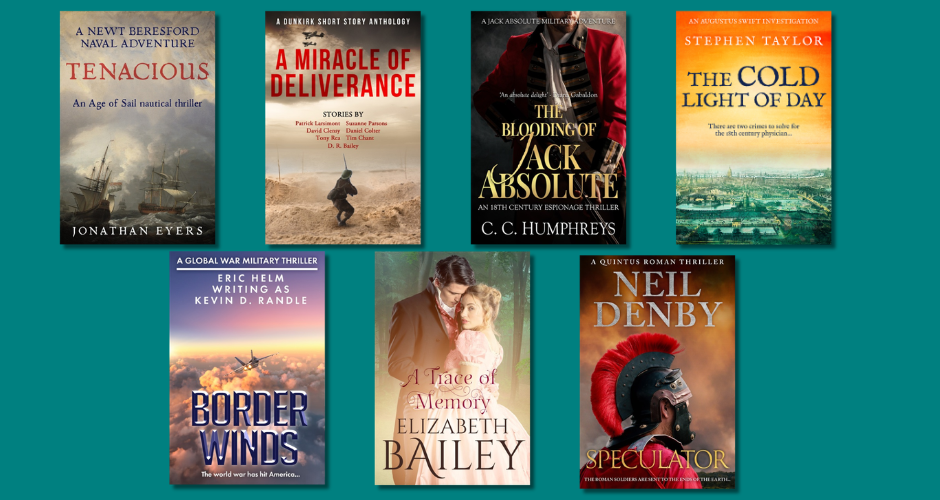
Tenacious by Jonathan Eyers is the first book in the Newt Beresford Naval Adventures series: Age of Sail historical adventures set in the 18th century. When Newt Beresford joins the frigate HMS Tenacious, he soon finds himself increasingly isolated on a ship full of whispered secrets, coded names, mysterious symbols and threatening messages.
A Miracle of Deliverance: A Dunkirk Short Story Anthology is a collection of linked short stories that commemorate the evacuation of Dunkirk in 1940. From a British soldier reflecting on the chaos of war, to a naval lieutenant doing his best to save the army from complete disaster, each of these stories reveals the heroic actions and deeply moving stories of the men and women who took part in this remarkable evacuation.
The Blooding of Jack Absolute by C. C. Humphreys is the first book in the Jack Absolute Military Adventure series: page-turning historical thrillers set in the 18th century. Can young Jack endure bloody battles in a wild landscape?
The Cold Light of Day by Stephen Taylor is the second book in the Augustus Swift Investigations series: chilling historical mysteries set in 18th-century London. Can Augustus Swift track down the ‘Beast of London’ before there are any more deaths?
Border Winds by Eric Helm is the second book in the Global War Military Thriller series. The world war has reached America’s backyard in this alternative-history military adventure set in the 20th century.
A Trace of Memory by Elizabeth Bailey is a quirky historical romance set in Georgian England with an intriguing twist. How can Elaine trust her heart if she can’t remember who she is?
Speculator by Neil Denby is the sixth book in the Quintus Roman Thrillers series. Centurion Julius Quintus Quirinius and his comrades are pushed to their limits in this action-packed military adventure set in Ancient Rome.
April’s Fiction Backlist Releases
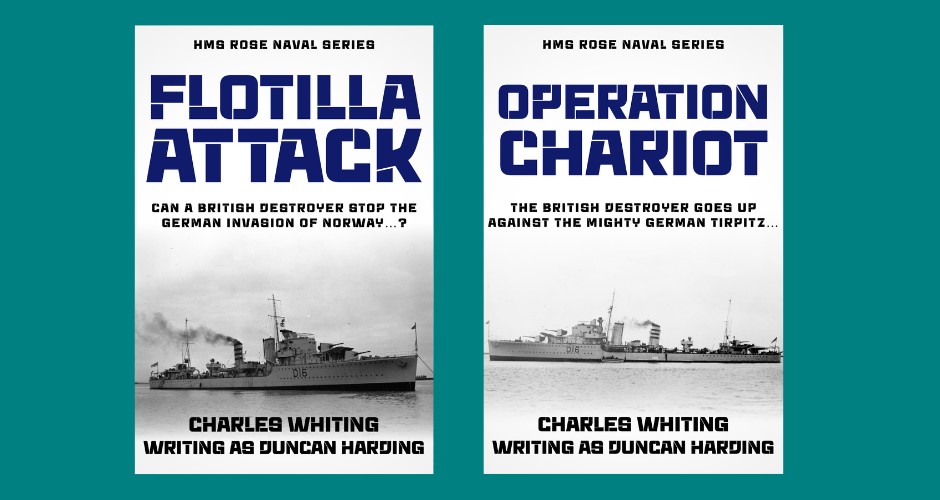
We are pleased to announce that Flotilla Attack and Operation Chariot by Charles Whiting writing as Duncan Harding are now available from Amazon. Don’t miss these page-turning historical naval adventures set during the Second World War.
April’s Audio Releases
Lose yourself in a great audiobook this month!
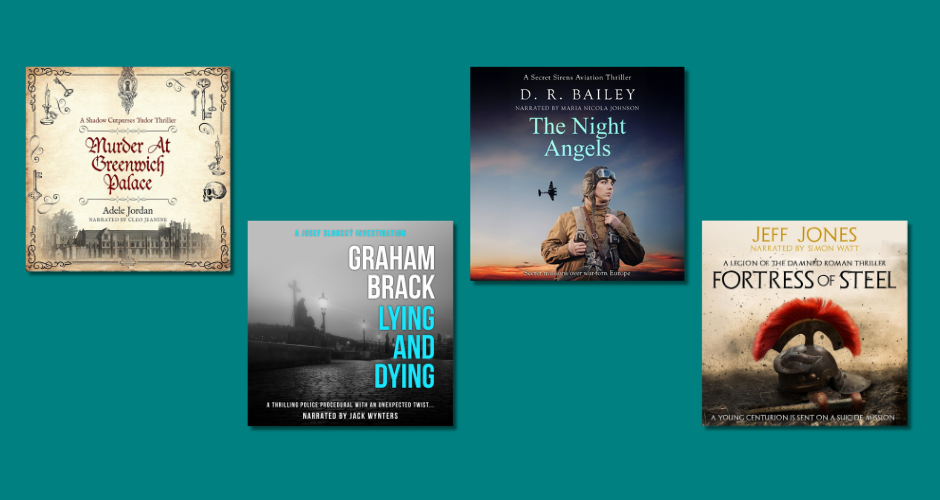
Can an enterprising thief unmask a murderer? Find out in Murder at Greenwich Palace by Adele Jordan.
Discover a thrilling police procedural with an unexpected twist in Lying and Dying by Graham Brack.
The war is intensifying for the Secret Sirens in The Night Angels by D. R. Bailey.
A young centurion is sent on a suicide mission in Fortress of Steel by Jeff Jones.
April’s Non-Fiction Releases
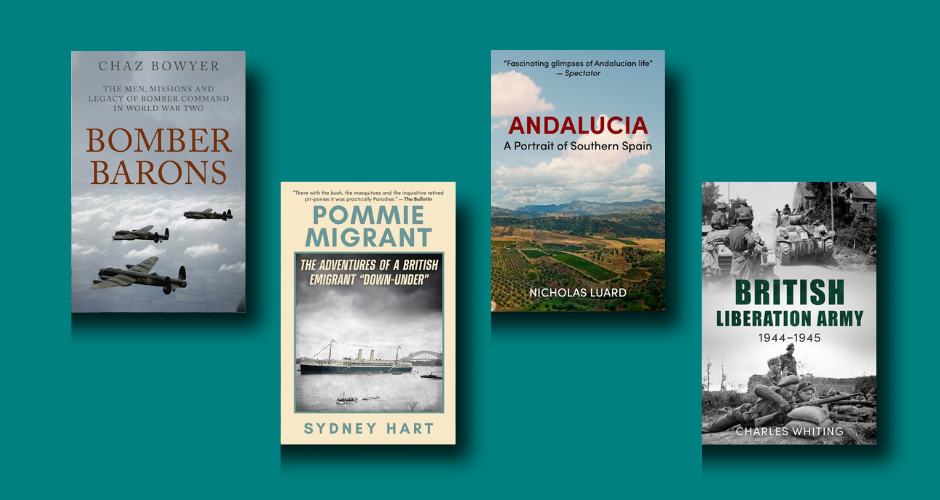
Bomber Barons by Chaz Bowyer is a powerful and compelling history of Bomber Command and the extraordinary men who risked everything in the skies over Nazi Germany.
Pommie Migrant by Sydney Hart is a vivid and entertaining memoir of a “Ten Pound Pom” who left post-war Britain to begin a new life in Australia, capturing both the highs and lows of the migrant experience.
Andalucia by Nicholas Luard offers a vivid portrait of the region’s landscapes, traditions, and tumultuous past — a must-read for everyone who loves travel, history, and Spain.
British Liberation Army: 1944–1945 by Charles Whiting is a gripping account of the British Infantry’s final push to liberate Europe from Nazi control in the last year of the Second World War, 1944–1945.
Happy Reading! Team Sapere
Vibrant Voices. Sensational Stories. Beautiful Books.

The winners of Sapere Books’ second writing competition have now been announced. Sapere Books pitched six briefs that writers could choose from for their entries, ranging from naval thrillers to Gothic mysteries. The winners have now been chosen – one for each of the six categories – and they have been offered a five-book contract to turn their pitches into a series.

Top row: Jennifer Bruton, David Clensy and Lucy Smith. Bottom row: Jonathan Eyers, Clare Hawkins and Julian Barr.
Amy Durant, editorial director, said: “We had an unbelievable response to this year’s competition with an incredibly high standard of entrants. It was not easy, but we picked our winners due to their clear knowledge of the period they were writing in and brilliant storytelling that left us all wanting to read more. We are very excited to be adding so many talented writers to our Sapere family.”
The Bletchley Park Codebreaker series brief was won by debut author Jennifer Bruton. Jennifer said: “The courageous contributions of the women at Bletchley Park have long held a special place in my heart. To be able to share their story in collaboration with a publisher like Sapere Books is a dream come true.”
Assistant editor Matilda Richards said: “Jen’s brilliantly authentic entry not only provided a detailed description of what Bletchley Park was like for the codebreakers who worked there during the Second World War, but also captures the horrors of war for the soldiers fighting on the front line.”
The World War Two Naval Thriller series brief was won by indie author David Clensy. David said: “I am delighted to be working with Sapere Books on this series, which will allow readers to immerse themselves in the kinds of extraordinary experiences endured by our Royal Navy and Merchant Navy sailors during the Second World War. It is an honour to have this opportunity to commemorate the dedication of a generation who served our nation so valiantly.”
Editorial assistant Claire Smith said: “David’s inspired use of twin main characters joining up to the Royal and Merchant Navies is a fantastic way to explore the thrilling action and perils faced by both services during the war.”
A series chronicling the lives of England’s Medieval Queens has been won by debut author Lucy Smith. Lucy said: “I’m delighted to have been selected by Sapere to write a new series about England’s medieval queens. I can’t wait to immerse readers in the fascinating medieval era and tell the stories of the remarkable Plantagenet women.’
Assistant editor, Natalie Linh Bolderston, said: “Lucy’s submission pulled me straight into the knotty intrigues of medieval Europe. Eleanor of Aquitaine is such a compelling historical figure, and Lucy has done a fantastic job of capturing her cleverness and defiance.”
Non-fiction writer Jonathan Eyers has been chosen to write the fictional Age of Sail naval series. Jonathan said: “I am very pleased my new series will set sail with Sapere Books. I can’t wait for readers to follow Midshipman Newt Beresford across the oceans, into the heart of battle, and up the ranks. I can only hope his adventures are as thrilling and fun to read as they are to write.”
Matilda Richards said: “Jonathan’s well-researched submission showed a passion for the era and a good insight into life aboard ship during the eighteenth century. I’m excited to read more!”
Fantasy author Julian Barr is the winner of the King Arthur Origins brief. Julian said: “Combining historical grit with the otherworldly, the Arthurian Chronicles captures the tragedy and epic scope of this timeless myth. The series situates the legend in sixth-century Britain, following Arthur as he rises from beer-swilling mercenary to true nobility. It’s an honour to work with Sapere Books on bringing the series to life, and I am very grateful that they selected my pitch.’
Editorial assistant Helen Jennings said: “As soon as I started reading Julian’s submission I was immersed in Arthur’s world. His knowledge of Arthurian legend shines through in an exciting series proposal, and his storytelling is vivid and compelling.”
And finally, historical novelist Clare Hawkins is the winner of the Gothic Houses brief. Clare said: “I was delighted to have my entry selected. I love writing to a brief that offers plenty of scope for creating unique plots and characters in engaging historical settings.”
Natalie Linh Bolderston said: “Reading Clare’s submission, I was struck by the strength of her voice and how deftly she planted the seeds of the central mystery. With Clare’s shrewd sense of pacing and her close attention to her story’s setting, it is clear that she has a gift for creating a sinister atmosphere.”
Runner-up spots have also been offered to the following authors, with the prize being three-book contracts to work on a new series: Lynn Bryant, Melanie Golding, Philippa Elliott, Claire Dunn, Christopher Cevasco, Megan Clarke, Samantha Wilcoxson, Jules Larimore, Laura Karim and Carlo Gibbs.