

C. F. Dunn is the author of The Tarnished Crown Series: Wars of the Roses historical fiction set in Medieval Europe.
“Double, double toil and trouble” — Shakespeare’s famous refrain from Macbeth — remains one of the most recognisable lines in Western literature. When it was first performed in the early seventeenth century, Shakespeare was drawing on a long tradition of folklore and belief that his audience would have immediately understood. Even if some of the finer details escaped them, they knew the framework: witchcraft, prophecy, and the unsettling idea that unseen forces might determine human fate.
Fast forward to the twenty-first century, and many still imagine witches as medieval figures — women ducked, pricked, and burned amid cries of superstition. In truth, the great witch hunts of Europe belong not to the Middle Ages but to the Early Modern period, from the sixteenth century onwards. From a medieval perspective, witchcraft as we now think of it was relatively uncommon. The frenzied persecutions of later centuries would have seemed alien to most people of the fourteenth or fifteenth centuries.
In fifteenth-century English law there was no specific statute making witchcraft a capital offence. The Church regarded it largely as a form of heresy — a spiritual error, not a criminal conspiracy. It was not until the Witchcraft Act of 1542 that England paved the way to criminalise witchcraft as punishable by death. Before then, most cases resulted only in fines, penance, or public admonition.
The meaning of ‘witchcraft’ in the Middle Ages also differed from the later concept. The boundary between magic and medicine was fluid. Healing practices incorporated charms, incantations, astrological timing, and a range of -mancies — divination by fire (pyromancy), by names (onomancy), or by reflections in mirrors or water (scrying). Medieval healers drew on classical learning, Christian devotion, and folk wisdom alike. A prayer could be as powerful as a potion, an amulet as trusted as a relic.
This was not sorcery in the later, sinister sense, but an expression of a worldview in which the divine and natural worlds were deeply intertwined. The medieval cosmos was one in which the supernatural existed alongside the physical — a realm of possibilities where God, angels, and spirits could all play a part in human health and fate.
By the later Middle Ages, however, witchcraft and divination began to intersect with politics. When accusations touched those close to the throne, the implications became far more serious. The Church might have seen such practices as misguided or at worst, heresy; the state viewed them as potentially treasonous.
Terminology was crucial. ‘Witchcraft’ often implied healing or protection and was tolerated to a degree. But necromancy—a form of divinationthat involved summoning the dead to foretell the future — crossed a dangerous line. When divination involved predicting the monarch’s death, it fell under the crime of “compassing or imagining the death of the king”, one of the key clauses of Edward III’s Treason Act of 1352. Necromancy became not only a spiritual threat but a political weapon.
An infamous example is that of Eleanor de Cobham, Duchess of Gloucester. Accused in 1441 of “treasonable necromancy” for attempting to divine the death of Henry VI, she was sentenced to life imprisonment. Her alleged accomplice, Margery Jourdemayne, the Witch of Eye, was convicted of heresy and burned at the stake. Eleanor’s real offence, however, was more political than supernatural: she denied the allegations of necromancy and treason, but admitted to having sought potions to help her conceive a child with her husband, Humphrey, Duke of Gloucester, whose proximity to the line of succession made him many enemies.
Eleanor’s case was not unique. Similar accusations were levelled against Walter Langton, bishop of Coventry and Lichfield in the early fourteenth century, and later against Jacquetta of Luxembourg and her daughter Elizabeth Woodville, queen to Edward IV. Each was a figure of power and influence, close to the throne and a focus for political attack. When an enemy could not be defeated in open conflict, an accusation of sorcery could prove equally effective and more difficult to defend.
In 1477, the Oxford scholar John Stacy, a man with previous form and known as a magnus necromanticus (great sorcerer) and astrologer of repute, was accused of “imagining the king’s death by necromancy.” Under torture he implicated Thomas Burdet, a member of the household of George, Duke of Clarence, brother to King Edward IV. It was perhaps no coincidence Burdet was also a main suspect in the penning and deployment of seditious writings that questioned Edward IV’s legitimacy and his right to rule — as well as that of his heir.
The oft quoted, but unsubstantiated Prophecy of G has also been linked with subversive writings supposedly foretelling that Edward IV’s rule would be followed by someone with a name beginning with G. As Edward’s son and heir was another Edward, the prediction in itself was treasonable.
It might have been an unfortunate coincidence for the hapless duke that his name was George, or perhaps convenient for those who would malign him before — or after — his death. Whether the Prophecy of G was merely apocryphal, the reference to it in later writings nonetheless reflected a common perception that the power of divination could — and did — exist.
When Clarence publicly defended Burdet and questioned the justice of his trial, he drew attention to himself. His criticism of royal authority and his association with alleged necromancers were enough to throw his loyalty to the Crown into question. Nor did Clarence hold back from accusing Edward of using the black arts to “poison his Subgettes, suche as hym pleased”.
Were accusations of witchcraft and necromancy simply cynical tools to eliminate rivals? At times, perhaps, yet they also reflected genuine belief. When Henry VI heard predictions of his own death, he did not dismiss them as nonsense or political machinations; he ordered his astrologers to investigate. To medieval minds, the natural and supernatural were interwoven. The heavens, the body, and the soul were all thought to lie under divine influence — and, by extension, vulnerable to darker forces.
The fear of the dark arts in late medieval England was not born of ignorance but of imagination — the conviction that unseen powers could alter the course of events. To “imagine the king’s death” through necromancy was not simply treasonous speech; it was a symbolic act that might disturb the divinely ordered world. The real danger from divination in the later Middle Ages was not the village healer or the cunning woman, but the whisper of sorcery at the heart of the royal court.
Notes
The question of magic and politics in England during the later medieval period challenges my ability to encapsulate such a myriad and vast subject in so short a blog. For the curious, there are many useful works available, including the few listed below:
Courting Disaster: Astrology at the English Court and University in the Later Middle Ages by Hilary M. Carey, Palgrave Macmillan, 1992
‘Medieval necromancy, the art of controlling demons’ by Sebastià Giralt. View via Sciencia.cat: https://www.sciencia.cat/temes/medieval-necromancy-art-controlling-demons
Magic in the Middle Ages by Richard Kieckhefer, Cambridge University Press, 2021
‘Thomas Burdet of Arrow, MP for Warwickshire in 1455, and the execution of George, duke of Clarence’ by Simon Payling: https://historyofparliament.com/2022/08/02/thomas-burdet/
‘Witch Hunts in Medieval England: The Trial of Walter Langton’ by Kathryn Walton: https://www.medievalists.net/2021/03/witch-hunts-medieval-england/
Magic as a Political Crime in Medieval and Early Modern England by Francis Young, Bloomsbury, 2020
Patrick Larsimont is the author of the Jox McNabb Aviation Thrillers, which follow a fighter pilot through World War Two, and The Brookwood Boys, a paranormal thriller with flashbacks to the lives of deceased soldiers.
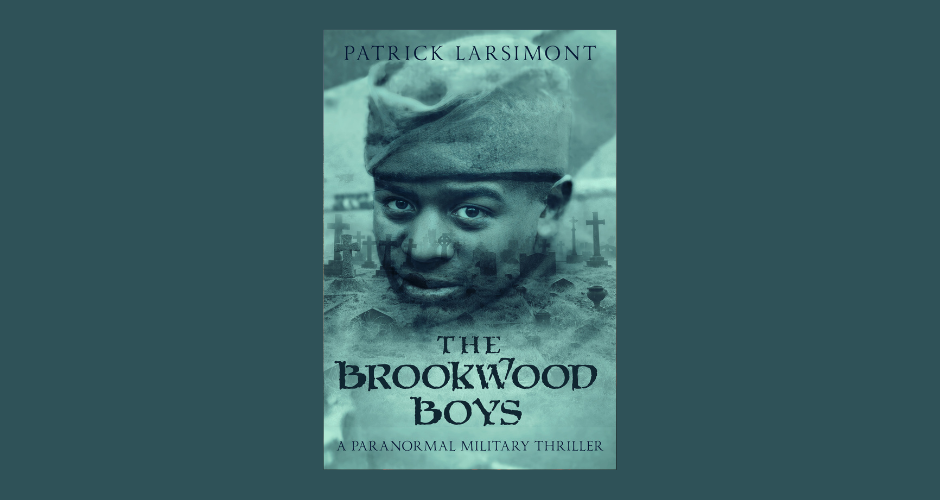
In my paranormal military thriller, The Brookwood Boys, ‘Mouse’ Forsyth has watched over Brookwood Cemetery since his death in 1917. For a hundred lonely years, he’s been the caretaker of lost souls, greeting the good, the bad, the damaged, the mad and the sad. Then one day, he is seen and can communicate with the living for the first time. He and his band of fellow soldiers from World War One and World War Two work together to help find a missing living girl. But what was the inspiration for this story and the historical flashbacks about the lives and deaths of the soldiers who are buried here?
My setting is Brookwood Military Cemetery in Surrey, England, the largest in the UK, set within what was once the largest cemetery in Western Europe. Created in the Victorian era, it was destined to hold all of London’s relocated dead and cater for future bodies delivered directly from London Waterloo. It never achieved this goal but is the final resting place of over a quarter of a million souls.
My first interactions with Brookwood began during the COVID-19 lockdowns. It was a quiet place where I could walk and not encounter too many people. I’ve always been fascinated by cemeteries, particularly military ones, and the more I visited, the more I realised the countless rows represented characters in a story — their own, but also our collective one. I thought, in a place like this, there must be ghosts, stranded by trauma and suffering. What if they told their story and together resolved something that happened in the living world?
Those familiar with my stories will know I include real people in my fiction, and there are no shortage of fascinating stories to be told in Brookwood: secrets, scandals, tragedies and horror. Many have made it into the novel and here are a few which you may find interesting.
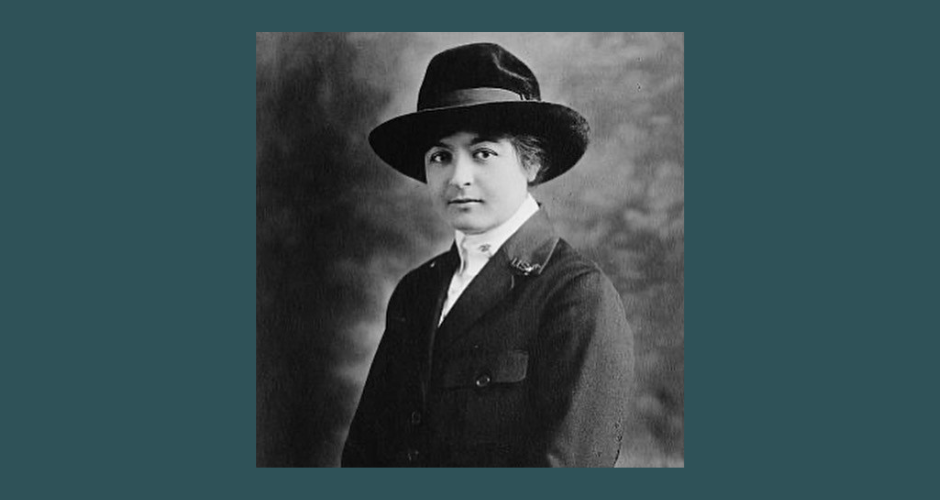
Hedwig ‘Hattie’ Raithel was a thirty-three-year-old American nurse who died of influenza in 1918, at a time when she could have been caring for patients in a war-weary world struck by Spanish flu. This frustration has kept her spirit here in my story, as a gentle, mother-like spirit to the others gathered here. The parallels between the deadly outbreak that led to the crowded graves at Brookwood back then, and the mass fatalities resulting from the current global pandemic were not lost on me.
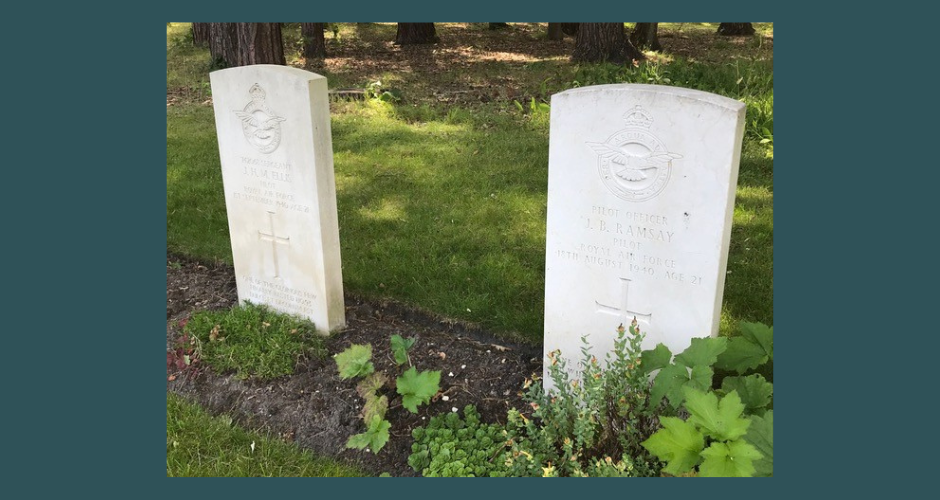
Pilot Officer John B. Ramsay and Sergeant J. ‘Hugh’ M. Ellis couldn’t have been more different in life. Both were fighter pilots during the Battle of Britain, one a public schoolboy from Dorset, the other nicknamed the ‘Cockney Sparrow’ by his squadron mates. Both were just twenty-one, killed within two weeks of each other during the terrible summer of 1940. Both were lost without a trace. It wasn’t until 1983 that Hugh was found and given a full military funeral at Brookwood, followed by John in 1993. They now lie side by side.
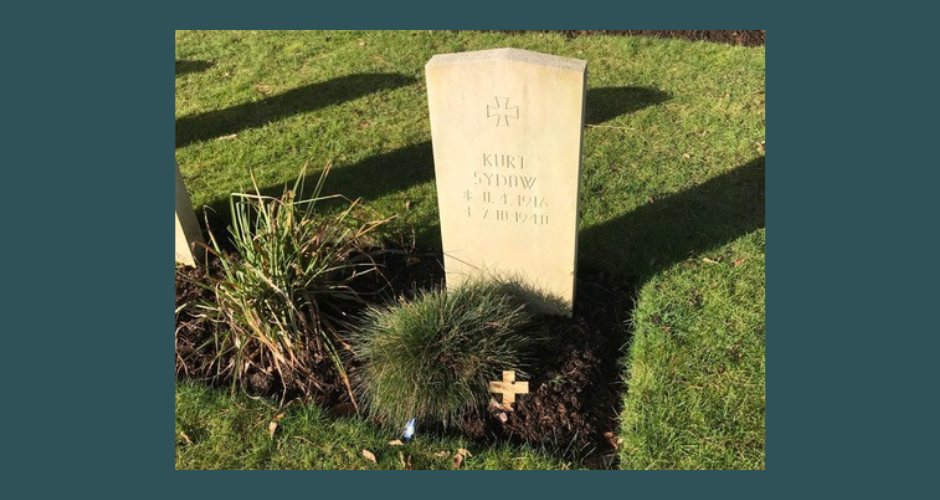
In my story, they become brothers, ‘haunting’ another ghost who might have shot them down. Leutnant Kurt Sidowwas a Luftwaffeace, aged twenty-four, who is also buried at Brookwood with about fifty of his Kameraden. In my story, he is an antagonist, an unrepentant Nazi. But after interacting with John and Hugh, he finds some redemption.
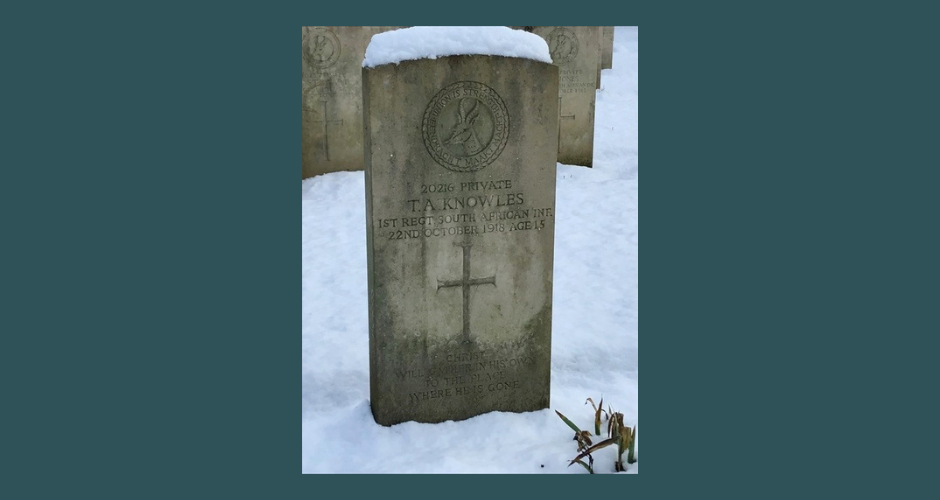
The youngest soldier buried in Brookwood is Tommy Knowles. This is his gravestone on a snowy winter’s day. He too was killed by influenza on the very same day as nine other South African men in the same hospital ward, who never made it to the trenches to do their bit for King and Country. In my story, Tommy plays endless games of football with his friends amongst their gravestones.
There are many other true stories in The Brookwood Boys. What was the fate of the US soldiers killed during rehearsals for D-Day? Who were the US Army’s murderers, and where were they buried after being hanged? Where were the casualties from the Dieppe raid who made it back to Britain buried? Where are the graves of the victims who were killed when the V1 ‘Doodlebug’ landed on the Guards’ Chapel just days after D-Day? And what happened to the countless soldiers of many nations who fought by Britain’s side during the dark days of World War One and World War Two? All are or were at Brookwood. I hope you’ll come and visit.
Image credits:
Image of Hedwig ‘Hattie’ Raithel sourced from Wikimedia Commons (public domain).
All images of graves taken by Patrick Larsimont.