

From historical sagas and legal thrillers to a pilgrim’s journey across France and Spain, there’s something exciting here for everyone. Scroll down to discover this month’s titles from your favourite Sapere authors.
May’s Fiction Releases

The Crowned Viper by Amy Licence is the sixth book in the Marwood Family Tudor Saga Series, set at Henry VIII’s court. When her uncle dies, newly-married Thomasin travels to London to settle his estate, and once more finds herself at the centre of court intrigue.
Shadows at the Manor by Cara Clayton is the third book in the Tapestry Tales Medieval Sagas. After a spate of robberies occur on the roads around the manor, seventeen-year-old Grace Amundeville d’Albert is determined to work out who is behind them. But could the culprit be close to home?
The Hunt for Boudica by Jeff Jones is the fourth instalment in the Legion of The Damned Roman Thrillers. Centurion Marcus Corvo and his Legion of The Damned are given a choice: face execution or accept another suicide mission — hunt down and capture Queen Boudica.
House of the Dancing Dead by Aola Vandergriff is an atmospheric Gothic mystery set in New Mexico. Abandoned by her partner and grieving the death of her mother, Christie Lynne agrees when her boss offers a year’s paid vacation in the mountains. But regrets are swift to follow when she arrives at the remote Harper abode, whose strange inhabitants sleep all day and dance all night. And when a horrifying discovery is made, everything around her is thrown into question.
The French Vendetta by Simon Michael is the eleventh novel in the Charles Holborne Legal Thrillers. When a rare gap opens in barrister Charles Holborne’s court diary, he and Sally seize the chance for their long-postponed honeymoon. But deep in the heart of rural Gascony Charles discovers a community still fighting the Second World War, where old crimes refuse to stay buried.
The Restless Wave by David Clancy is the fourth book in the Romulus Hutchinson Naval Adventures, set during the Second World War. While Romulus sees action in the Mediterranean for the Allied landings at Sicily and Salerno, as well as helping to lift the siege of Malta as part of Operation Pedestal, his twin brother Remus is once again unlucky enough to experience the wrong end of a torpedo strike.
The Scattering Murders by Keith Moray is the eighth crime thriller in the Inspector Torquil McKinnon Mystery Series, set on a remote Scottish island. When a well-liked farmer is found dead, Detective Inspector McKinnon soon finds himself with more than one mystery to solve.
An Angel’s Touch by Elizabeth Bailey is a touching Georgian romance featuring a spirited and passionate heroine. Can a young woman’s love bring a grieving recluse back into the world?
May’s Audio Releases
Lose yourself in a great audiobook this month!
Professor, friend, Soviet spy; who was the real Hugh Hambleton? Find out in Hugh Hambleton, Spy by Leo Heaps.
Two brothers are keen to start their naval careers. But could it all be over before they’ve barely begun? Find out in For Those in Peril by David Clensy.
Don’t miss this unique account of the Battle of the Atlantic from the perspective of a British destroyer captain in U-Boat Killer by Donald Macintyre.
Discover the unforgettable history of French intelligence agents and courageous British pilots who risked everything in the fight against Hitler in A House for Spies: SIS Operations into Occupied France from a Sussex Farmhouse by Edward Wake-Walker.
May’s Non-Fiction Releases
Hurricanes over Murmansk by John Golley tells the remarkable story of the RAF’s daring defence of the Soviet Union against the brutal Nazi onslaught of 1941. Drawing on first-hand accounts from RAF pilots as well as senior Soviet officials, Golley has crafted a thoroughly researched, vividly told account of bravery, sacrifice, and wartime ingenuity.
The Battle for European Skies by Chaz Bowyer is a comprehensive account of the savage aerial war fought over Europe during the Second World War. This book stands as a poignant tribute to the bravery and dedication of the men on both sides who took to the skies time and again, uncertain of their fate, in the service of their country.
To Drive the Enemy from Southern Soil by Michael W. Taylor draws upon the personal correspondence of Confederate Colonel Francis Marion Parker to recount the history of the brave men of the 30th Regiment North Carolina Troops, from its inception in September 1861 to its final surrender at Appomattox in 1865. The result is a deeply personal record of the daily life and cares of a Civil War soldier.
The Field of the Star is a searingly honest account of author Nicholas Luard’s pilgrimage along the Camino de Compostela, undertaken after the devastating illness and death of his eldest daughter.
Happy Reading! Team Sapere
Vibrant Voices. Sensational Stories. Beautiful Books.

Ahead of the publication of The Restless Wave, the fourth book in the Romulus Hutchinson Naval Adventure Series, author David Clensy takes a closer look at why Operation Pedestal was such a critical moment in the Second World War.
By the summer of 1942, Malta was perilously close to defeat. Isolated in the centre of the Mediterranean, the island had endured almost two years of relentless siege. Axis aircraft and submarines had reduced its ports, airfields and towns to rubble, while starvation and fuel shortages threatened to bring military operations to a standstill. Yet Malta remained strategically indispensable. From its harbours and airstrips, British forces could strike at Axis supply lines to North Africa, choking Rommel’s Afrika Korps just as it prepared for a decisive push towards Egypt.
Operation Pedestal was the Allies’ last throw of the dice to save the island. Conceived as a massive convoy operation and executed at extraordinary risk, it stands as one of the Royal Navy’s most hard-fought and costly triumphs of the Second World War.
It is at the heart of The Restless Wave, the fourth book in the Romulus Hutchinson Naval Adventure series: action-packed, authentic historical adventures following twin brothers fighting with the Royal Navy and the Merchant Navy during the Second World War.
Rom is now a first lieutenant, rapidly getting the chance to show his mettle on the bridge, seeing action in the Mediterranean for the Allied landings at Sicily and Salerno, as well as helping to lift the siege of Malta as part of Operation Pedestal.
In this blog, I wanted to take a closer look at why the operation was so significant.
Malta under siege
By mid-1942, Malta’s position was desperate. Previous attempts to resupply the island had suffered severe losses, with convoys harried from the air by the Luftwaffe and Regia Aeronautica, and attacked at sea by submarines and fast torpedo boats. Fuel for aircraft and ships was critically low, forcing the RAF to limit operations at the very moment when air defence was most urgently needed. Food stocks were so reduced that rationing had reached near-starvation levels for both civilians and servicemen alike.
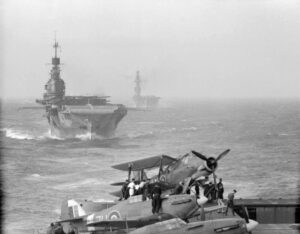
HMS Victorious’ flight deck showing HMS Indomitable and HMS Eagle
Despite this, the island continued to disrupt Axis operations. Intelligence from signals interception and reconnaissance imposed a heavy toll on shipping bound for North Africa. The Axis understood that neutralising Malta was essential. The Royal Navy knew that losing it could turn the Mediterranean decisively against the Allies.
Launched in August 1942, Operation Pedestal was the largest and most heavily escorted convoy yet to attempt to supply the island. Fourteen merchant ships were assembled, carrying food, ammunition and fuel. Their cargo included aviation fuel in bulk and, most critically, the oil tanker SS Ohio, the survival of which would prove vital to keeping the island in Allied hands.
The escort was formidable. Under the command of Admiral Sir Neville Syfret, the Royal Navy committed two battleships, four aircraft carriers, seven cruisers and more than thirty destroyers. It was an extraordinary concentration of naval power, reflecting the strategic stakes involved. Even so, planners knew losses would be heavy. The convoy had to pass through the narrow Sicilian Channel, within range of Axis airfields, submarines and surface craft.
Running the gauntlet
The convoy sailed from Gibraltar on 10 August 1942. Almost immediately, it came under attack. Axis aircraft struck repeatedly, launching coordinated bombing and torpedo attacks designed to overwhelm the escorts. U-boats and Italian submarines waited ahead, while fast torpedo boats prepared night assaults.
The Royal Navy’s carriers played a crucial early role, providing fighter cover that blunted the worst of the air attacks in the opening days. However, as the convoy pressed eastwards, the carriers were forced to turn back in accordance with operational limits, leaving the merchant ships increasingly exposed.
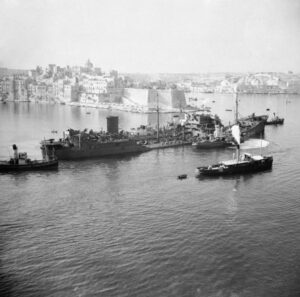
SS Ohio arrives at Malta
Losses mounted. The aircraft carrier HMS Eagle was sunk by submarine attack. Several cruisers and destroyers were badly damaged or sunk while defending the convoy. Merchant ships were picked off one by one, yet the escorts continued to fight tenaciously, laying smokescreens, counterattacking submarines and engaging enemy surface forces at close range.
At the centre of the drama was SS Ohio. Heavily damaged by bombing and torpedo strikes, the tanker was left barely afloat. Her engine failed, her deck was shattered, and she was down by the bows. Yet abandoning her was not an option. Without her fuel, Malta’s air defences and naval forces would grind to a halt.
In one of the most remarkable episodes of the naval war, Royal Navy destroyers and minesweepers refused to give up. Ohio was lashed between escorting ships and painstakingly shepherded towards Malta, under constant threat of further attack. When she finally entered Grand Harbour on 15 August, broken-backed but still afloat, she was greeted by cheering crowds. It was also the Feast of the Assumption, later commemorated on the island as the day Malta was saved.
A landmark moment
Of the fourteen merchant ships that set out, only five reached Malta. The Royal Navy suffered grievous losses: a carrier, two cruisers, a destroyer and numerous aircraft. By any conventional measure, it was a costly operation.
Yet strategically, Operation Pedestal was a success. The supplies that arrived, especially the fuel carried by Ohio, enabled Malta to survive the siege. Within weeks, the island’s air and naval forces were back in action, once again savaging Axis supply lines to North Africa. This pressure played a significant role in undermining Rommel’s offensive and set the conditions for the Allied victory at El Alamein later that year.
For Malta, the convoy became a defining moment, later recognised through the award of the George Cross to the island as a whole. For the Royal Navy, Pedestal remains one of its most hard-fought convoy battles, a stark reminder that maritime logistics, often overlooked, can determine the outcome of entire campaigns.
The Restless Wave is available to pre-order now.
Stay up to date with David’s news and latest releases here.
Image credits: Operation Pedestal Carriers and SS Ohio are from Wikimedia Commons (public domain).
From Georgian romance and Tudor espionage to compelling tales of wartime bravery — there’s something exciting here for everyone. Scroll down to discover this month’s titles from your favourite Sapere authors.
February’s Fiction Releases

The Queen’s Maid by Rozsa Gaston is the second book in the Anne Boleyn Chronicles: historical novels set in sixteenth-century Europe. In this instalment, Anne arrives at the Palace of Tournelles, only to learn that not everyone is pleased about the union between the ageing French king and his young English queen.
A Fragile Mask by Elizabeth Bailey is a touching historical love story set in Georgian England with a courageous heroine at its heart.
Death at Home by C. P. Giuliani is the eighth book in the Tom Walsingham Mystery series: page-turning espionage adventures set during the Elizabethan era. When his older brother dies suddenly, Tom Walsingham finds himself a suspect in a murder investigation.
The Mighty Ocean by David Clensy is the third book in the Romulus Hutchinson Naval Adventure series: action-packed adventures set during the Second World War. As the twins’ ships cut through the Arctic seas, will the brothers survive the gauntlet of U-Boats, icebergs and icy seas?
The King’s Stolen Jewels by Adele Jordan is the fourth book in the Shadow Cutpurses Tudor Thrillers, set during the reign of King Henry VIII. When her mother returns to Whitehall Palace during the Christmas festivities, thief-turned-espionage-agent Gwynnie Wightham must decide whether to help her once more or renounce the Shadow Cutpurses for good.
February’s Non-Fiction Releases
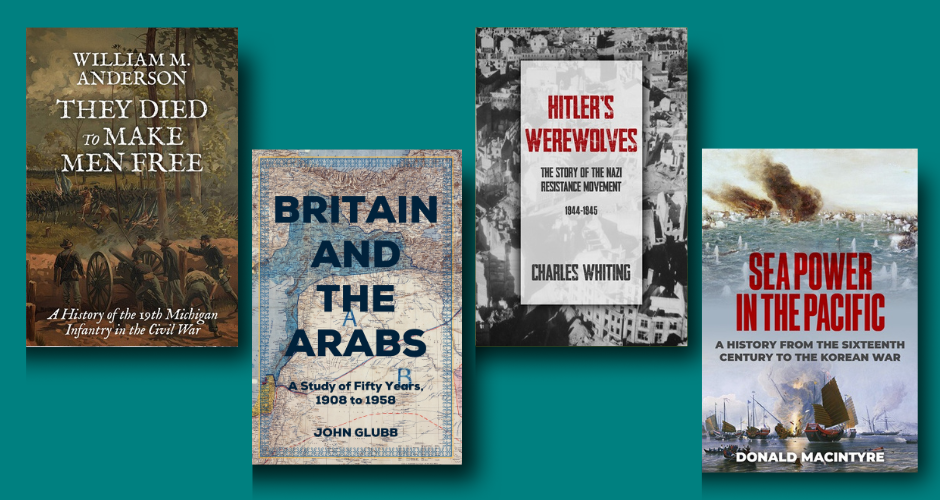
They Died to Make Men Free by William M. Anderson tells the gripping story of the 19th Michigan Infantry Regiment, fighting for the Union in the American Civil War. Drawing on more than 800 preserved letters and diaries, it is essential reading for everyone interested in the American Civil War, military history, and the enduring sacrifice of ordinary soldiers.
Britain and the Arabs by John Glubb is a comprehensive history of British–Arab relations over fifty years, spanning two world wars and the struggle for independence — and offering vital insight into the roots of today’s Middle East conflicts.
Hitler’s Werewolves by Charles Whiting is the terrifying true story of how a secret guerrilla force were recruited and trained by SS General Gutenberger to terrorize and murder not only the Allies but fellow Germans who might collaborate with the enemy.
Sea Power in the Pacific by Donald Macintyre charts the fierce struggle for supremacy over the world’s greatest ocean — the Pacific — from the sixteenth century to the Korean War.
Happy Reading! Team Sapere
Following the success of his Romulus Hutchinson Naval Adventure Series, we are delighted to have signed a new naval military series by David Clensy.
In David’s words:
“U-Boat Aces will be a sweeping, seafaring saga that charts the rise and fall of Germany’s submarine elite across two world wars.
“Spanning three decades, from 1914 to 1945, the five-book series will follow a handful of officers from idealistic cadets to disillusioned veterans, set against the relentless evolution of undersea warfare. Readers will travel the world alongside some of history’s most ruthless U-boat commanders, in a series that will be charged with the claustrophobic conditions of life aboard the German U-boat fleet.
“I am delighted to be working with Sapere Books once again on a second series of action-packed, authentic historical adventures. The team at Sapere brilliantly understand the passions of their audience, making them an absolute delight to work with.”
The Romulus Hutchinson Naval Adventures follow twin brothers fighting with the Royal Navy and the Merchant Navy during the Second World War. The third instalment in the series, The Mighty Ocean, is available to pre-order now.
Sign up to David’s newsletter and stay up to date with his news and latest releases here.
Featured image credit: German U-boat UB 14 with its crew from Wikimedia Commons (public domain).
Ahead of the publication of The Mighty Ocean, the third book in the Romulus Hutchinson Naval Adventure Series, author David Clensy takes a closer look at the infamous Arctic Convoy PQ17, which plays a central role in the story.
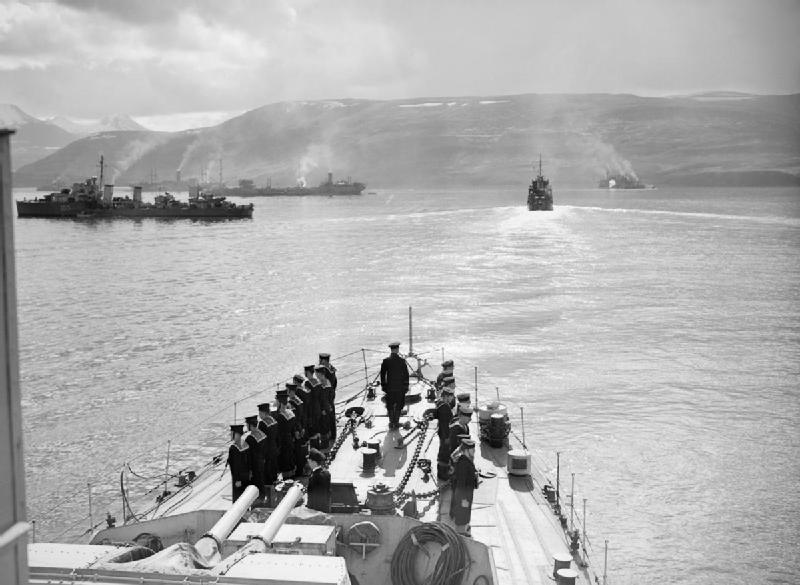
In the summer of 1942, a fleet of merchant ships set out from Iceland on a mission that would become one of the most extraordinary episodes of the Second World War. Convoy PQ17 was tasked with delivering vital supplies to the Soviet Union via the Arctic route — a lifeline for the Eastern Front. What followed was a disaster on a route that Churchill himself described as “the worst journey in the world.”
The Arctic convoys were not for the faint-hearted. Ships faced freezing seas, drifting ice, and relentless daylight that made them easy prey for enemy aircraft. PQ17 comprised thirty-five merchant vessels carrying tanks, aircraft, ammunition and food — escorted by destroyers, cruisers, and a distant covering force, including battleships. The stakes were immense: without these supplies, Soviet resistance against Hitler could falter.
The shadow of the Tirpitz
As PQ17 steamed towards the Barents Sea, British intelligence warned that the German battleship Tirpitz might sortie from its Norwegian fjord base. The mere threat of this leviathan — supported by cruisers and U-boats — was enough to trigger alarm in the Admiralty. On 4 July 1942, First Sea Lord Admiral Dudley Pound made a fateful decision: he ordered the convoy to scatter and the escorts to withdraw.
The order to scatter left the merchant ships defenceless in hostile waters. German aircraft and U-boats pounced. Over the next few days, PQ17 was decimated. Of the thirty-five ships that sailed, only eleven reached Archangel. Twenty-four were sunk, along with thousands of tons of cargo and hundreds of sailors. It was the worst loss in the history of the Arctic convoys.
Survivors recalled scenes of horror: ships ablaze, men clinging to rafts in freezing seas, strafed by enemy aircraft. Rescue was often impossible. Yet amid the carnage, acts of courage shone through — crews who stayed at their guns until the end, and those who risked their lives to save shipmates. For many, the ordeal lasted days as they drifted in icy waters, praying for a miracle.
HMS Ayrshire
Lieutenant Leo Gradwell RNVR commanded HMS Ayrshire (FY 225), a modest anti-submarine trawler pressed into convoy escort duty for PQ17. When the Admiralty ordered the convoy to scatter, Gradwell refused to abandon his charges. Instead, he gathered three merchant ships — Troubadour, Ironclad and Silver Sword — and led them northwards toward the Arctic ice pack, determined to seek safety rather than face destruction.
With no charts at hand, Gradwell navigated by sextant and a pocket geographic guide, eventually finding refuge amid the ice fields. When the convoy became stuck, he orchestrated an ingenious defence: the vessels were all painted white — with linen covering the decks — and their cargo of Sherman tanks formed a defensive perimeter armed for anti-aircraft use. This silent white convoy successfully eluded Luftwaffe aircraft while trapped in the ice.
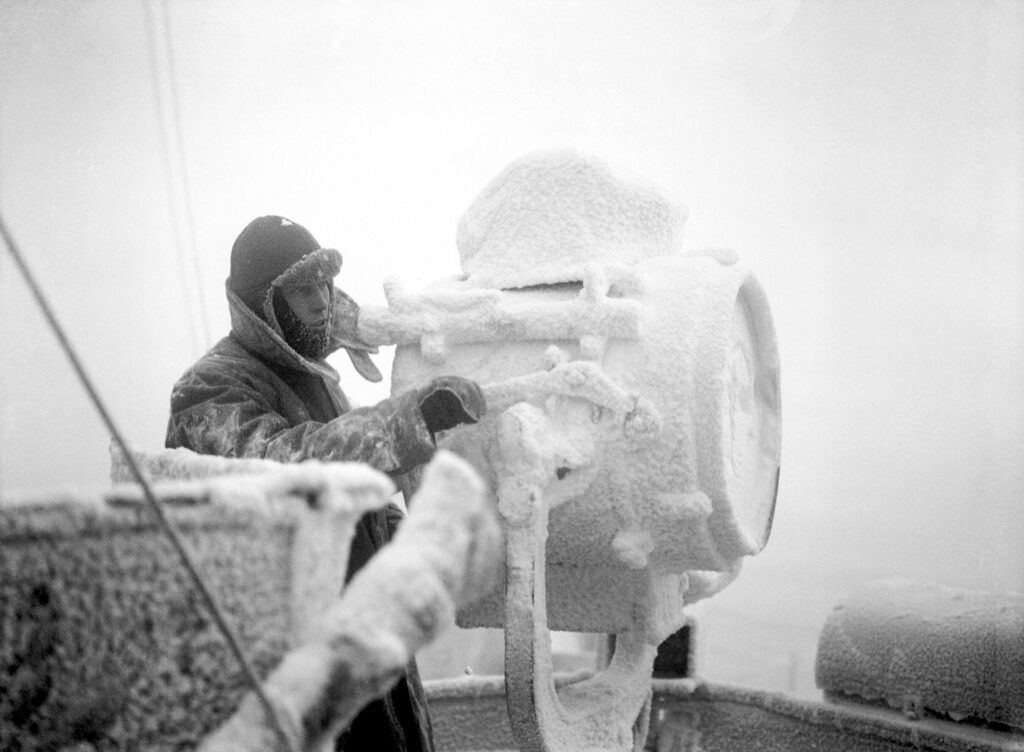
Eventually, the vessels slipped free of the ice and made their way to Matochkin Strait, where they were met by Allied corvettes. Together, they completed the journey to Archangel, arriving on 25 July 1942 — a remarkable feat, given the chaos elsewhere in PQ17. For his outstanding improvisation and leadership under fire, Gradwell was awarded the Distinguished Service Cross later that year.
The PQ17 disaster sparked outrage and soul-searching. Critics condemned the scatter order as premature, arguing that Tirpitz never engaged the convoy. The episode strained Allied relations, with Stalin furious at the losses. Yet the convoys continued, and lessons were learned: future operations featured stronger escorts and better coordination. Despite the risks, the Arctic route remained a vital artery until war’s end.
The Mighty Ocean is available to pre-order now.
Stay up to date with David’s news and latest releases here.
Image credits: Both the image of PQ17 in Hvalfjord and HMS Sheffield are from Wikimedia Commons (public domain).
From Tudor adventures and World War Two thrillers to fascinating accounts of historical battles — there’s something exciting here for everyone. Scroll down to discover this month’s titles from your favourite Sapere authors.
November’s Fiction Releases
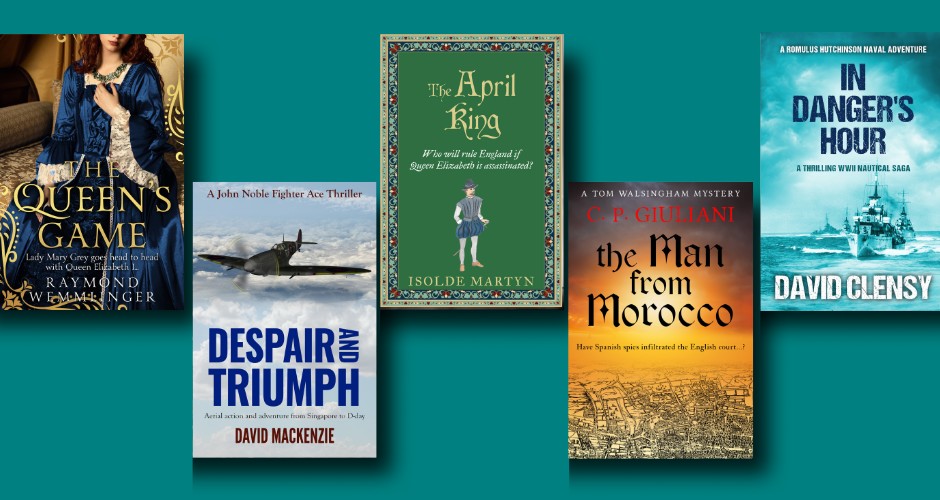
The Queen’s Game by Raymond Wemmlinger is a thrilling novel of succession set at the Tudor Court. Will Lady Mary Grey see her family name rise to victory, or tumble into obscurity…?
Despair and Triumph by David Mackenzie is the third book in the John Noble Fighter Ace Thrillers series. In this instalment, John finds himself sent on a mission halfway around the world.
The April King by Isolde Martyn is a compelling and romantic biographical historical mystery novel set in Tudor Elizabethan England.
The Man from Morocco by C. P. Giuliani is the seventh book in The Tom Walsingham Mysteries series: page-turning espionage adventures set during the Elizabethan era.
In Danger’s Hour by David Clensy is the second book in the Romulus Hutchinson Naval Adventure series: authentic historical adventures following twin brothers fighting with the Royal Navy and the Merchant Navy during the Second World War. With Operation Dynamo around the corner, will the Hutchinson brothers both make it out alive…?
November’s Fiction Backlist Releases

The Starling by Doris Leslie is a compelling historical novel of passion, new beginnings and the nature of true love, set in London and Florence, Italy.
November’s Non-Fiction Releases
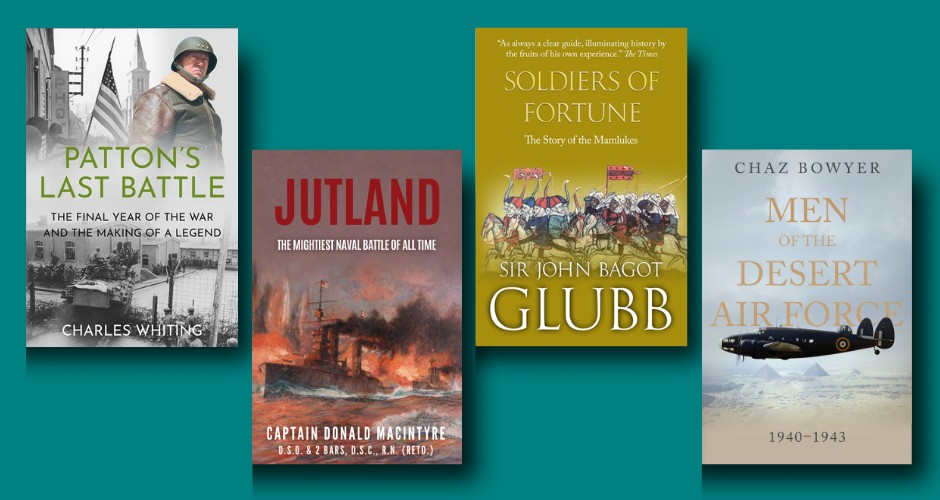
Patton’s Last Battle by Charles Whiting tells the dramatic story of American General George Patton’s final months of command in World War Two.
Jutland by Donald Macintyre uncovers the dramatic, in-depth story of the Battle of Jutland, the most significant naval clash of World War One.
Soldiers of Fortune John Bagot Glubb explores the captivating history of the Mamluk Empire, one of the Middle East’s most powerful forces from 1250 to 1517.
Men of the Desert Air Force by Chaz Bowyer is a gripping, real-life account of the brave pilots who flew over the deserts of North Africa and the Mediterranean during World War Two.
Happy reading! Team Sapere
With the forthcoming publication of In Danger’s Hour, the second book in his Romulus Hutchinson Naval Adventure Series, author David Clensy takes a closer look at the events surrounding Operation Excess during the Second World War.
In January 1941, the Mediterranean was a tense theatre of war. The British Royal Navy, stretched thin and under constant threat from Axis forces, launched a bold and complex operation known as Operation Excess. It was a high-stakes convoy mission designed to deliver vital supplies to Malta, Greece and Alexandria, while simultaneously striking a blow against enemy naval and air power in the region.
The convoy itself was a patchwork of merchant vessels and warships, departing from Gibraltar and heading eastward through waters teeming with danger. Malta, then under siege and of immense strategic importance, was a key destination. Supplies were desperately needed to sustain its defences and civilian population. The convoy was escorted by a formidable force of Royal Navy ships, including aircraft carriers, cruisers and destroyers, all tasked with protecting the vulnerable merchantmen from attack.
Operation Excess was a particularly challenging task for the Allied forces. Italian and German aircraft launched repeated assaults, particularly as the ships neared Sicily. The Royal Navy’s carrier-based aircraft, including Fairey Fulmars and Swordfish, fought valiantly to repel the attacks, often flying in difficult conditions and against superior numbers.
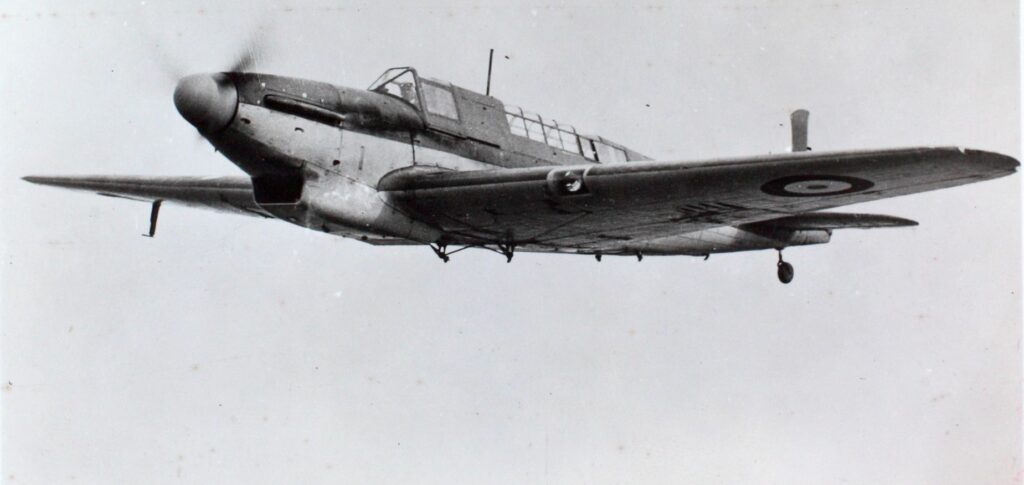
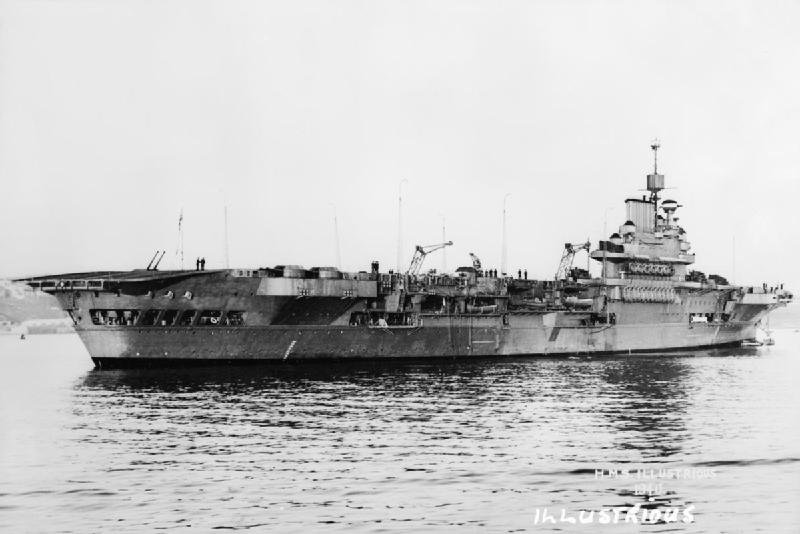
One of the most dramatic episodes of the operation occurred on the 10th of January, when HMS Illustrious, a key British aircraft carrier, came under ferocious air attack near Malta. The damage was severe, and casualties were high. Yet the carrier remained afloat and was eventually able to limp into Grand Harbour, where she became a symbol of resilience for the Maltese people.
Meanwhile, other elements of the operation were unfolding. British forces used the opportunity to launch diversionary attacks against Italian positions in the Dodecanese and to reinforce troops in Greece.
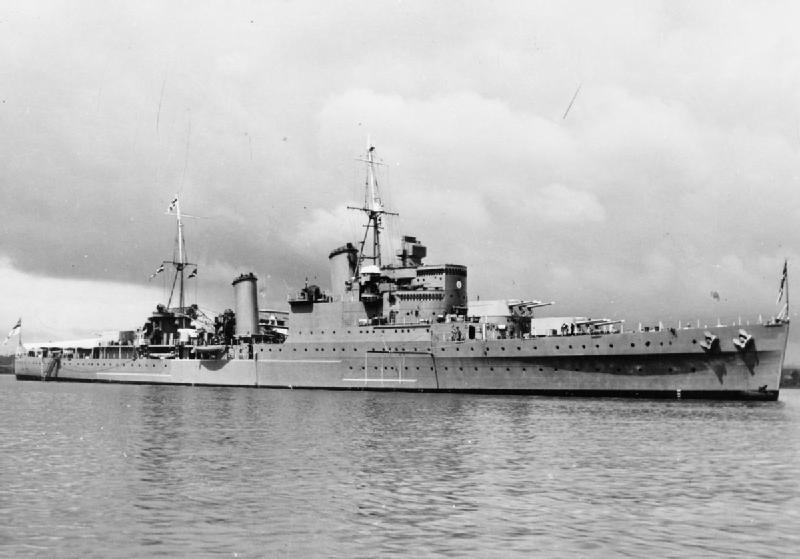
As part of Force B, HMS Southampton’s role was to transport troops from the Aegean to Malta before joining the main convoy. On the 11th of January, while operating south of Sicily, HMS Southampton came under sustained attack from German dive bombers of the Luftwaffe’s X Fliegerkorps. The Stukas struck with deadly precision, scoring multiple hits that ignited fires and caused catastrophic damage. With the cruiser listing and engulfed in flames, the order was given to abandon ship. HMS Southampton was eventually scuttled by torpedoes from HMS Gloucester to prevent her from falling into enemy hands.
Though the operation came at a cost, it was ultimately deemed a success. Supplies reached their destinations, and the Royal Navy showed it could still operate effectively in contested waters. Operation Excess was more than a supply run. It was a statement of intent, a show of defiance against Axis control of the Mediterranean.
November 2025 sees the release of In Danger’s Hour, the second book in the Romulus Hutchinson Naval Adventure Series. Following their earlier adventures in For Those In Peril, we follow twin brothers Romulus and Remus throughout 1941, from the Mediterranean to the coast of West Africa. It covers a series of key strategic operations, including Operation Demon — the British-led evacuation of Allied forces from mainland Greece in April 1941. At the opening, readers will join our central character, Rom, as he faces an enemy attack while serving on HMS Southampton at the height of Operation Excess.
In Danger’s Hour will be published on the 28th November 2025.
Stay up to date with David’s news and latest releases here.
Congratulations to David Clensy, whose thrilling war-time naval thriller, For Those In Peril, is published today!
For Those In Peril is the first book in the Romulus Hutchinson Naval Adventure series.
Liverpool, 1939
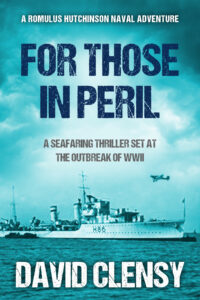
Twin brothers Romulus and Remus Hutchinson grew up in a proud seafaring Liverpool family. So when war breaks out in Europe, they are both keen to sign up and do their part.
With their parents’ consent, both boys join up on their 16th birthday in October 1939 – Romulus as an RNVR sub-lieutenant on a Royal Navy destroyer and his brother as a deck hand with their father’s employer, John Holt & Company.
But with Romulus’s sadistic training officer seemingly intent on breaking the cadets’ spirits before their careers have even set sail, he struggles with the intense training.
There is no time for doubts, however, as the two brothers are quickly thrown into combat.
With Operation Dynamo around the corner, will the Hutchinson brothers both make it out alive…? Can they make their mark as their forefathers did before them?
Or will the bottomless deep claim yet more victims…?
The winners of Sapere Books’ second writing competition have now been announced. Sapere Books pitched six briefs that writers could choose from for their entries, ranging from naval thrillers to Gothic mysteries. The winners have now been chosen – one for each of the six categories – and they have been offered a five-book contract to turn their pitches into a series.

Top row: Jennifer Bruton, David Clensy and Lucy Smith. Bottom row: Jonathan Eyers, Clare Hawkins and Julian Barr.
Amy Durant, editorial director, said: “We had an unbelievable response to this year’s competition with an incredibly high standard of entrants. It was not easy, but we picked our winners due to their clear knowledge of the period they were writing in and brilliant storytelling that left us all wanting to read more. We are very excited to be adding so many talented writers to our Sapere family.”
The Bletchley Park Codebreaker series brief was won by debut author Jennifer Bruton. Jennifer said: “The courageous contributions of the women at Bletchley Park have long held a special place in my heart. To be able to share their story in collaboration with a publisher like Sapere Books is a dream come true.”
Assistant editor Matilda Richards said: “Jen’s brilliantly authentic entry not only provided a detailed description of what Bletchley Park was like for the codebreakers who worked there during the Second World War, but also captures the horrors of war for the soldiers fighting on the front line.”
The World War Two Naval Thriller series brief was won by indie author David Clensy. David said: “I am delighted to be working with Sapere Books on this series, which will allow readers to immerse themselves in the kinds of extraordinary experiences endured by our Royal Navy and Merchant Navy sailors during the Second World War. It is an honour to have this opportunity to commemorate the dedication of a generation who served our nation so valiantly.”
Editorial assistant Claire Smith said: “David’s inspired use of twin main characters joining up to the Royal and Merchant Navies is a fantastic way to explore the thrilling action and perils faced by both services during the war.”
A series chronicling the lives of England’s Medieval Queens has been won by debut author Lucy Smith. Lucy said: “I’m delighted to have been selected by Sapere to write a new series about England’s medieval queens. I can’t wait to immerse readers in the fascinating medieval era and tell the stories of the remarkable Plantagenet women.’
Assistant editor, Natalie Linh Bolderston, said: “Lucy’s submission pulled me straight into the knotty intrigues of medieval Europe. Eleanor of Aquitaine is such a compelling historical figure, and Lucy has done a fantastic job of capturing her cleverness and defiance.”
Non-fiction writer Jonathan Eyers has been chosen to write the fictional Age of Sail naval series. Jonathan said: “I am very pleased my new series will set sail with Sapere Books. I can’t wait for readers to follow Midshipman Newt Beresford across the oceans, into the heart of battle, and up the ranks. I can only hope his adventures are as thrilling and fun to read as they are to write.”
Matilda Richards said: “Jonathan’s well-researched submission showed a passion for the era and a good insight into life aboard ship during the eighteenth century. I’m excited to read more!”
Fantasy author Julian Barr is the winner of the King Arthur Origins brief. Julian said: “Combining historical grit with the otherworldly, the Arthurian Chronicles captures the tragedy and epic scope of this timeless myth. The series situates the legend in sixth-century Britain, following Arthur as he rises from beer-swilling mercenary to true nobility. It’s an honour to work with Sapere Books on bringing the series to life, and I am very grateful that they selected my pitch.’
Editorial assistant Helen Jennings said: “As soon as I started reading Julian’s submission I was immersed in Arthur’s world. His knowledge of Arthurian legend shines through in an exciting series proposal, and his storytelling is vivid and compelling.”
And finally, historical novelist Clare Hawkins is the winner of the Gothic Houses brief. Clare said: “I was delighted to have my entry selected. I love writing to a brief that offers plenty of scope for creating unique plots and characters in engaging historical settings.”
Natalie Linh Bolderston said: “Reading Clare’s submission, I was struck by the strength of her voice and how deftly she planted the seeds of the central mystery. With Clare’s shrewd sense of pacing and her close attention to her story’s setting, it is clear that she has a gift for creating a sinister atmosphere.”
Runner-up spots have also been offered to the following authors, with the prize being three-book contracts to work on a new series: Lynn Bryant, Melanie Golding, Philippa Elliott, Claire Dunn, Christopher Cevasco, Megan Clarke, Samantha Wilcoxson, Jules Larimore, Laura Karim and Carlo Gibbs.