

Ahead of the publication of The Mighty Ocean, the third book in the Romulus Hutchinson Naval Adventure Series, author David Clensy takes a closer look at the infamous Arctic Convoy PQ17, which plays a central role in the story.
In the summer of 1942, a fleet of merchant ships set out from Iceland on a mission that would become one of the most extraordinary episodes of the Second World War. Convoy PQ17 was tasked with delivering vital supplies to the Soviet Union via the Arctic route — a lifeline for the Eastern Front. What followed was a disaster on a route that Churchill himself described as “the worst journey in the world.”
The Arctic convoys were not for the faint-hearted. Ships faced freezing seas, drifting ice, and relentless daylight that made them easy prey for enemy aircraft. PQ17 comprised thirty-five merchant vessels carrying tanks, aircraft, ammunition and food — escorted by destroyers, cruisers, and a distant covering force, including battleships. The stakes were immense: without these supplies, Soviet resistance against Hitler could falter.
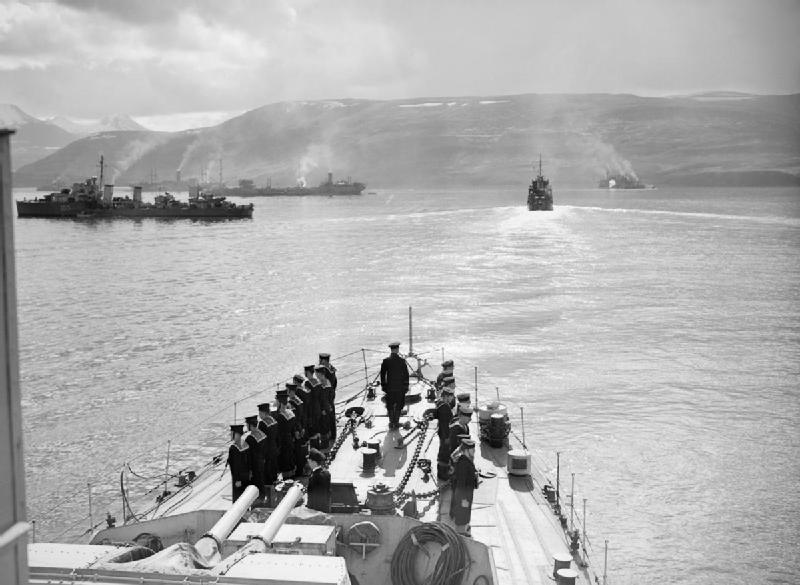
The shadow of the Tirpitz
As PQ17 steamed towards the Barents Sea, British intelligence warned that the German battleship Tirpitz might sortie from its Norwegian fjord base. The mere threat of this leviathan — supported by cruisers and U-boats — was enough to trigger alarm in the Admiralty. On 4 July 1942, First Sea Lord Admiral Dudley Pound made a fateful decision: he ordered the convoy to scatter and the escorts to withdraw.
The order to scatter left the merchant ships defenceless in hostile waters. German aircraft and U-boats pounced. Over the next few days, PQ17 was decimated. Of the thirty-five ships that sailed, only eleven reached Archangel. Twenty-four were sunk, along with thousands of tons of cargo and hundreds of sailors. It was the worst loss in the history of the Arctic convoys.
Survivors recalled scenes of horror: ships ablaze, men clinging to rafts in freezing seas, strafed by enemy aircraft. Rescue was often impossible. Yet amid the carnage, acts of courage shone through — crews who stayed at their guns until the end, and those who risked their lives to save shipmates. For many, the ordeal lasted days as they drifted in icy waters, praying for a miracle.
HMS Ayrshire
Lieutenant Leo Gradwell RNVR commanded HMS Ayrshire (FY 225), a modest anti-submarine trawler pressed into convoy escort duty for PQ17. When the Admiralty ordered the convoy to scatter, Gradwell refused to abandon his charges. Instead, he gathered three merchant ships — Troubadour, Ironclad and Silver Sword — and led them northwards toward the Arctic ice pack, determined to seek safety rather than face destruction.
With no charts at hand, Gradwell navigated by sextant and a pocket geographic guide, eventually finding refuge amid the ice fields. When the convoy became stuck, he orchestrated an ingenious defence: the vessels were all painted white — with linen covering the decks — and their cargo of Sherman tanks formed a defensive perimeter armed for anti-aircraft use. This silent white convoy successfully eluded Luftwaffe aircraft while trapped in the ice.
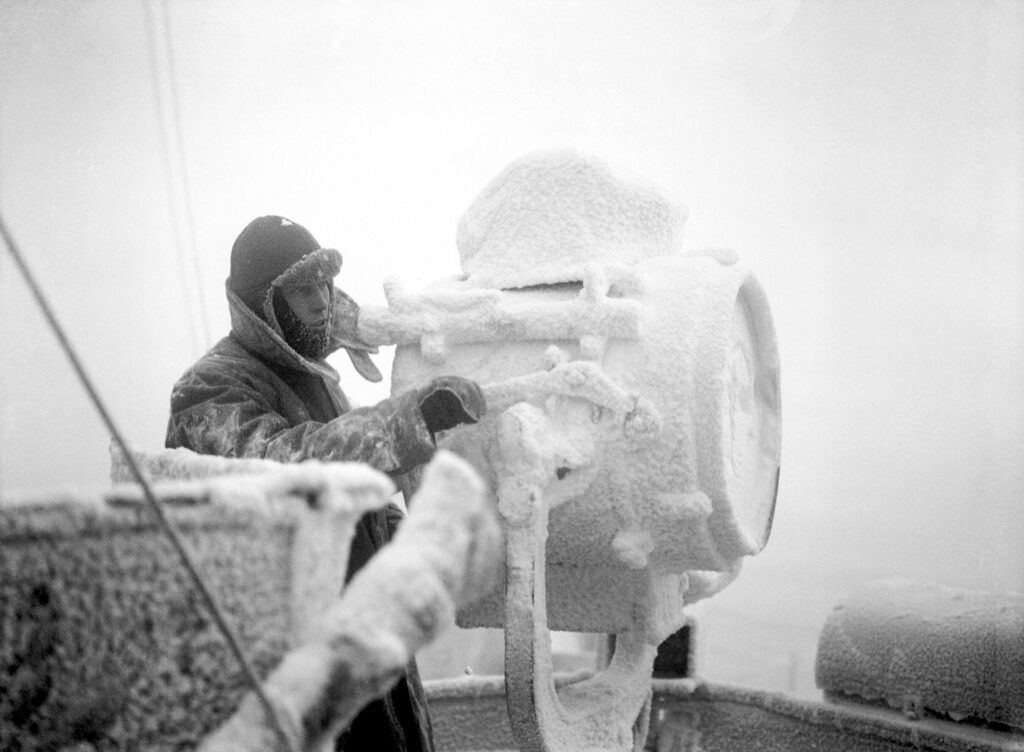
Eventually, the vessels slipped free of the ice and made their way to Matochkin Strait, where they were met by Allied corvettes. Together, they completed the journey to Archangel, arriving on 25 July 1942 — a remarkable feat, given the chaos elsewhere in PQ17. For his outstanding improvisation and leadership under fire, Gradwell was awarded the Distinguished Service Cross later that year.
The PQ17 disaster sparked outrage and soul-searching. Critics condemned the scatter order as premature, arguing that Tirpitz never engaged the convoy. The episode strained Allied relations, with Stalin furious at the losses. Yet the convoys continued, and lessons were learned: future operations featured stronger escorts and better coordination. Despite the risks, the Arctic route remained a vital artery until war’s end.
The Mighty Ocean is available to pre-order now.
Stay up to date with David’s news and latest releases here.
Image credits: Both the image of PQ17 in Hvalfjord and HMS Sheffield are from Wikimedia Commons (public domain).