

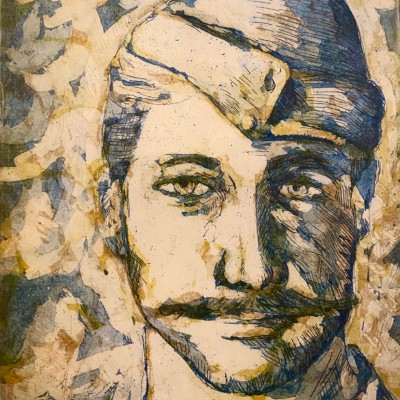
Australian-born John Vader (25 March 1919 – 2 December 2005) saw service during the Second World War with the 6th AIF in Libya, Greece and Syria. He later transferred to the RAAF and flew Spitfires in the South Pacific theatre. He is reputed to have walked away from two Spitfire crashes, and flown a Wirraway bomber so low that the propeller blades were bent. In the infantry, having fallen asleep on a beach in Greece, he missed boarding his ship, which resulted in avoiding another near fatality: the ship was bombed. And in Libya, a Panzer explosive fired at him failed and bounced over him. These experiences are part of the tapestry that informed his war history writings.
In the late 1960s John travelled to London to work as a journalist; he wrote articles for Purnell’s Magazine and became editor of a weekly journal. It was at this stage he was commissioned to write Spitfire (1969). It was followed by Pacific Hawk (1970), Anzac (1971) and New Guinea: The Tide is Stemmed (1971).
Living in London, the Cotswolds and the south of France during this period, John began researching his other wartime histories — The Fleet Without a Friend (1971), about the French navy after surrender, and The Prosper Double-Cross: A Factual History Mystery of French Resistance (1977) which detailed the betrayal of an Englishman code-named Prosper, and the French Resistance group he led.
After eight years abroad, John returned to Australia, eventually to live on a dairy farm near Byron Bay, after farming sheep in Boorowa and a magazine publishing career in Sydney.
Illustration of John Vader in 1943 by Lucy Vader (2006)